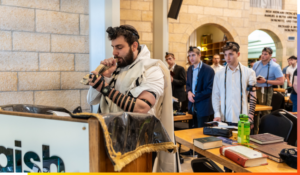
As I mentioned last week, Rosh Hashanah is always an emotional time for me. My father’s yahrzeit falls on Rosh Hashanah, and I started blowing shofar for my father 40 years ago. It became one of the special traditions that connected us each Rosh Hashanah. Since his passing, I have found myself each year thinking carefully about where and how I want to spend these sacred days.
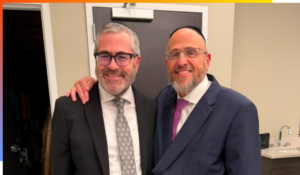
Last year, my close friend and partner in so much of what I do at Aish, Yaakov Gade, CEO of Cross River Bank and one of the premier Jewish leaders whom I look up to in every way, told me about a Rosh Hashanah program he has been involved with for many years.
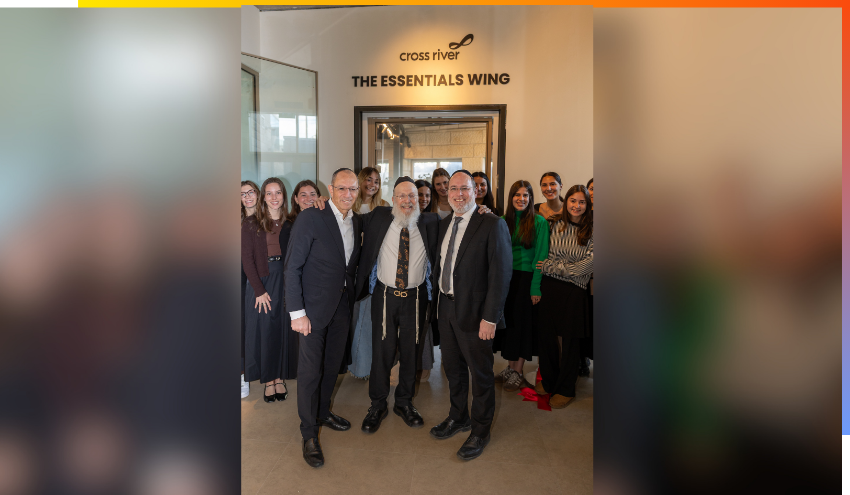
The program actually began close to 20 years ago as an Aish initiative, started by Yaakov together with Rabbi Pasternak, who at the time ran Aish in Baltimore and today serves as the incredibly talented CTO of ArtScroll. Over the years, the program was adopted and run by Madraigos, a phenomenal organization led by Rabbi Silver that provides education, support, prevention programs, and clinical services to help teens, young adults, and families navigate life’s challenges.
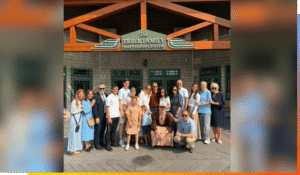
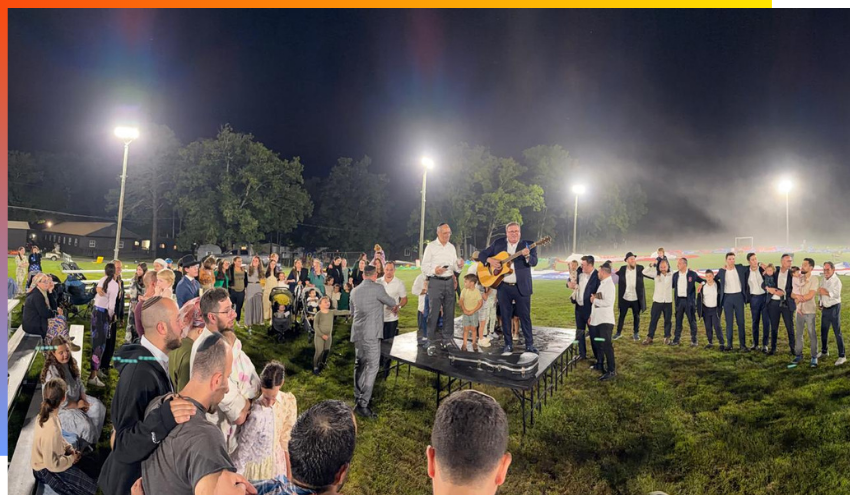
For years, the program gathered in hotels, so I was a little surprised when Yaakov told me that this year they were going to Camp Sternberg. The last time I had been at Camp Sternberg was about 35 years ago, when I was the head advisor for an NCSY national convention.
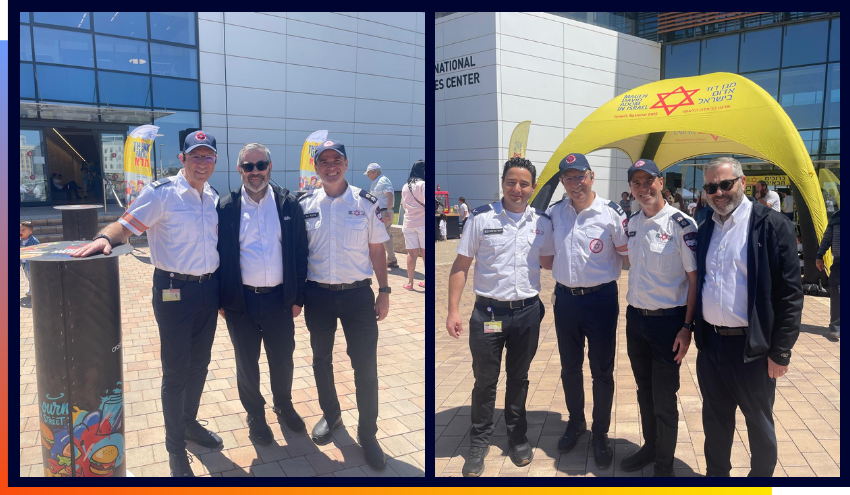
Yaakov explained that this year, in addition to members of the Madraigos family, there would be participants from Brothers in Lifesaving, Achim Matzilim Chayim, an organization that trains and certifies American medics in Israel, as well as a significant group connected to Nevut, an organization serving lone soldiers.
I have developed a rule over the years. When Yaakov Gade tells me that I should go somewhere, even if I do not entirely understand what I am getting myself into, I generally go. I have learned that it is almost always worthwhile. So I was already seriously considering it.
Then, just a few days later, something happened that made the decision for me.
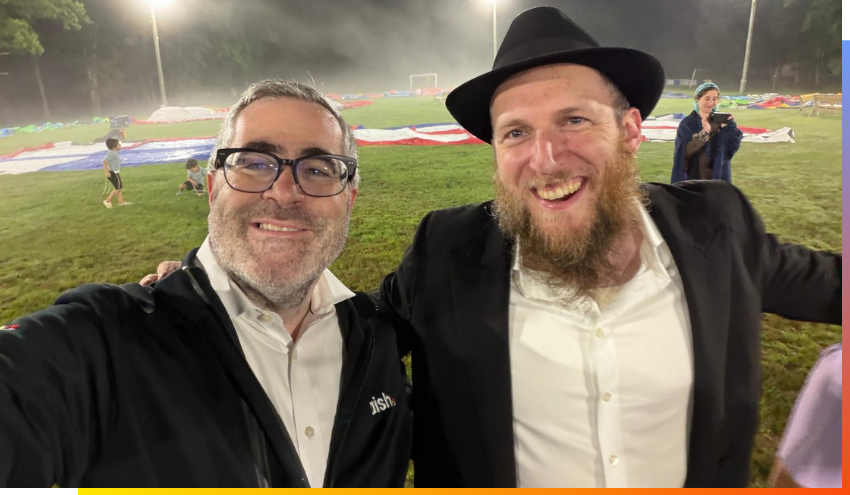
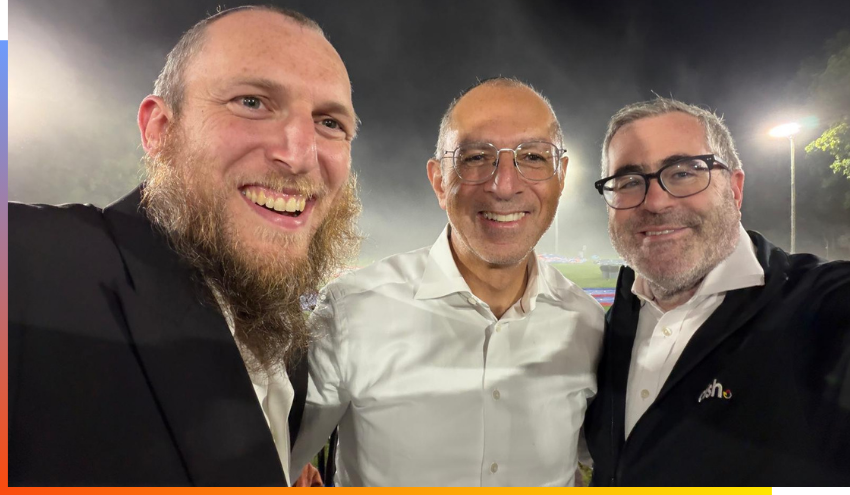
I found myself in Monsey for Shabbos, where I was speaking at a local shul. At kiddush, I happened to be sitting across from someone I had gotten to know a little bit, Ari Abramowitz. I casually mentioned that Yaakov had been encouraging me to attend this Rosh Hashanah program at Camp Sternberg.
Ari looked at me and said, “Wait. That’s us.”
It turned out that Ari was the person who had created and built Nevut. “You have to come,” he told me.
At that point, the message was getting a little difficult to ignore. First, Yaakov, someone whose judgment I trust deeply, tells me that I should spend Rosh Hashanah at Camp Sternberg. Then, within a matter of days, I happen to sit across from the person behind Nevut, who tells me exactly the same thing.
Sometimes God sends us messages in ways that are difficult to miss.
I decided I was going, and I had no idea how grateful I would be that I listened.
It turned out to be one of the most spiritual Rosh Hashanahs I have experienced in my entire life. The davening was beautiful. Camp Sternberg is picturesque, and there was something extraordinary about praying on Rosh Hashanah while looking through the windows at the lake and the natural beauty surrounding us. I felt blessed to give several shiurim as well.
Yet the highlight for me was spending time with the lone soldiers.
I came away realizing how much I had never fully understood about their experience. They were an amazing, eclectic, inspiring group of young Jews. Think about what it means for someone who grows up in North America, often in a comfortable home and community, to put everything aside, travel thousands of miles away, and serve alongside his brothers and sisters in the Israeli army.
Nobody is forcing them to go. They choose to go. They choose to give years of their lives in service of the Jewish people.
That is awe inspiring.
It is also why I am so proud of something happening this year at Aish.
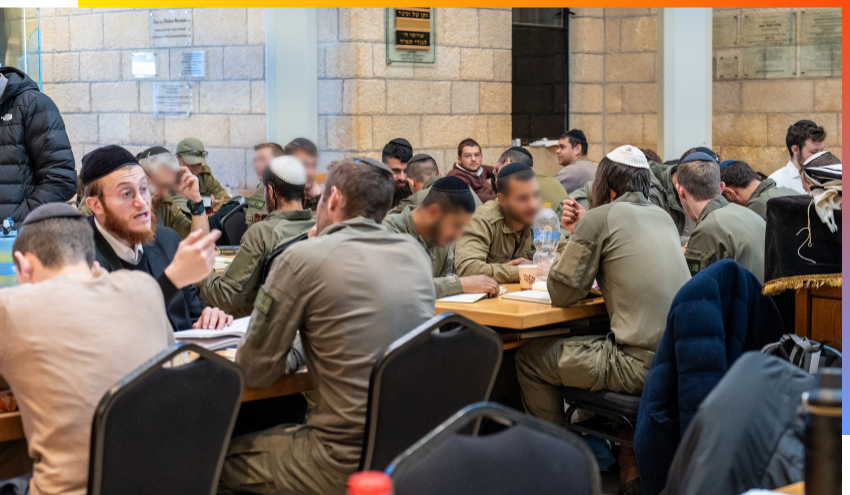
Aish has long had our own Hesder yeshiva in Tel Aviv, where young men combine Torah learning with service in the IDF. This year, for the first time, we expanded that opportunity into the Beis Medrash at Aish Yeshiva. Students learning in our yeshiva who choose to serve in the IDF can now continue their Torah learning at Aish as part of a fully accredited Hesder program, and this year we welcomed our first students into that program.
For me, that is an enormous point of pride. We talk constantly at Aish about building Jewish leaders and about our core value of Responsibility. Here are young men taking the Torah they are learning in our Beis Medrash and translating it into one of the most profound expressions of responsibility for the Jewish people.
Something else was happening at almost the same time that made all of this even more meaningful to me.
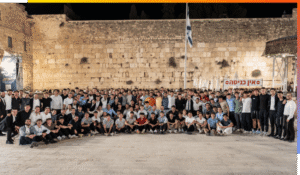
While I was at Camp Sternberg spending Rosh Hashanah with these lone soldiers and beginning to understand their experiences more deeply, back in Jerusalem, Aish was hosting soldiers from Achim LaChaim, an extraordinary organization that supports IDF soldiers who were wounded in combat as they rebuild their lives. These injured soldiers came to Aish and stood on our rooftop overlooking the Kotel for Selichos.
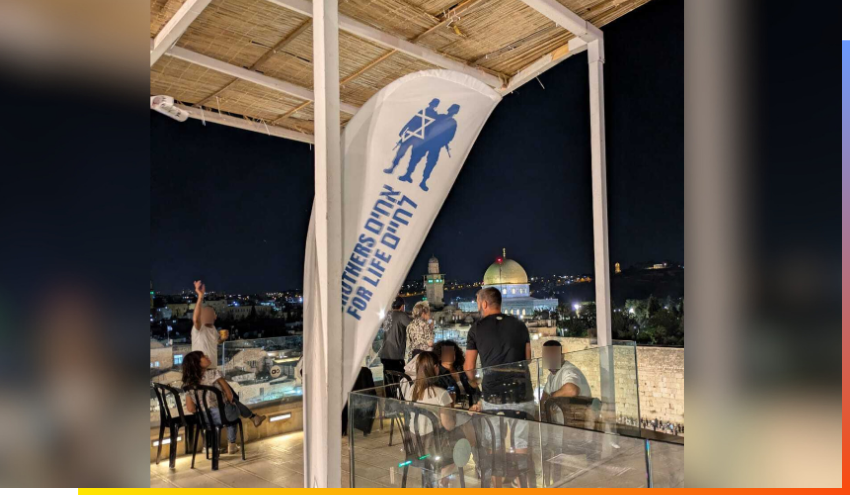
The symmetry struck me. I was thousands of miles away, sitting with lone soldiers and learning about what they carry. At that same time, Aish was in Jerusalem opening our home to soldiers who had already sacrificed so much defending the Jewish people.
I am incredibly proud of that. I am proud that Aish has a Hesder yeshiva and that we have now brought that opportunity into our Beis Medrash in Jerusalem. I am proud that injured soldiers can come through our doors and stand on our rooftop overlooking the Kotel for Selichos. Still, I came away from Rosh Hashanah convinced that we need to do more.
Over the meals, I heard story after story. Some of these lone soldiers had Israeli parents. Others simply developed a deep love for Israel and decided that defending the Jewish state was their responsibility. Some grew up in strongly connected Jewish homes. Others traveled complicated roads before finding their way to Israel and the IDF.
One young man from New Jersey had joined the Israeli Navy. Another spoke openly about having been arrested as a teenager. Some had bounced through different schools and yeshivas, searching for their place. Their journeys could not have been more different, yet in giving themselves to something larger than themselves, many had found something they were searching for: purpose, responsibility, and family.
I also began to understand another side of their experience.
I heard about soldiers struggling with trauma and PTSD. I heard about heroes who had spent extraordinary stretches of time in miluim (military reserve duty), away from spouses, children, jobs, homes, and normal life. I heard about friends lost in battle and about soldiers who survived the battlefield only to later take their own lives.
We sometimes read those stories in the news. We feel terrible, and then the news cycle moves on. Sitting across the table from these soldiers was different.
The stories had faces.
For lone soldiers, there can be another layer to the challenge. An Israeli soldier may come home for Shabbos to parents, siblings, grandparents, and a family that has known him or her forever. A lone soldier may have none of that. Some are thousands of miles away from the people who love them most. Some come from difficult family situations even back home. They may leave a military base carrying experiences most of us cannot begin to imagine, with no natural place to put them down.
That is why what Ari Abramowitz has built through Nevut is so powerful. They have created a family.
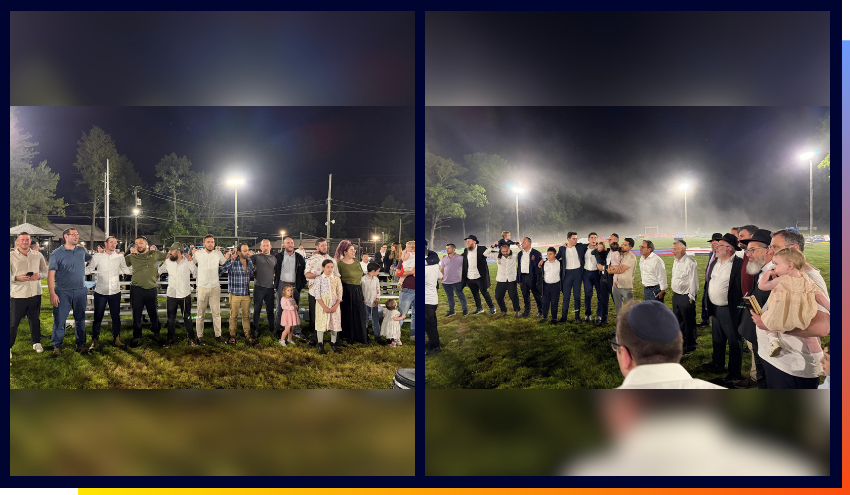
Toward the end of Rosh Hashanah, we gathered for a closing symposium. Yaakov asked me to say a few words. We did not have much time, so instead of giving a speech, I told a story that had been running through my mind.
When I was in rabbinical school, students were given positions where we could apprentice and begin learning what it actually meant to be a rabbi. There was one student who was a little scattered. He always seemed to have papers flying everywhere. He was not exactly the most polished person in the class, and apparently they were not quite sure where to place him.
Believe it or not, they sent him to a prison to serve as a chaplain.
Before one of the High Holidays, he was preparing to address a room filled with prisoners. As he walked toward the front, he tripped on the steps. His glasses went in one direction, his papers went in another, and he landed flat on his face.
The prisoners erupted in laughter.
The rabbi slowly got up, found his glasses, gathered his papers, and walked to the lectern. Then he looked out at the room and said, “I just wanted to show all of you that just because you fall down doesn’t mean you can’t get back up.”
Then he sat down.
The room became silent.
That was the message I wanted to leave with these soldiers. Every one of us falls in life. Sometimes we stumble. Sometimes we fail. Sometimes life knocks us down with a force we never imagined.
The question is not whether we fall. The question is whether we get back up.
Right after I spoke, a young man whom I had gotten to know over Rosh Hashanah stood up. He had attended some of my classes, and I had been incredibly impressed by him. He had served in Egoz, one of Israel’s elite units.
He told us that he almost had not come for Rosh Hashanah. Several years ago, his unit went on a mission that went terribly wrong. Dozens of soldiers were wounded, and six were killed. As it occurred on Rosh Hashanah, those memories come rushing back for him every year.
He had seriously considered staying away. Now, standing in front of us, he spoke about how grateful he was that he had come. He had spent Rosh Hashanah surrounded by friends, people who understood him, and a community that gave him strength.
I sat there listening to him and realized that the story I had just told was not merely a nice parable.
For some of the people sitting in that room, getting back up is the work of a lifetime.
At the end of the program, I turned to Yaakov and told him that I felt as if I had been educated over Rosh Hashanah. I had arrived admiring lone soldiers. I left understanding them differently.
More importantly, I left realizing that admiration is not enough.
I told Yaakov that I want Aish to get more involved and find meaningful ways to help these soldiers. His response was exactly what I expected. He said he would partner with us.
One of Aish’s core values is Responsibility. I cannot imagine a more powerful expression of responsibility than a young Jew who is under no obligation to serve in the IDF, yet leaves home and volunteers to defend the Jewish people.
Another of our core values is Love.
Responsibility is what they have shown us. Love is what we owe them in return.
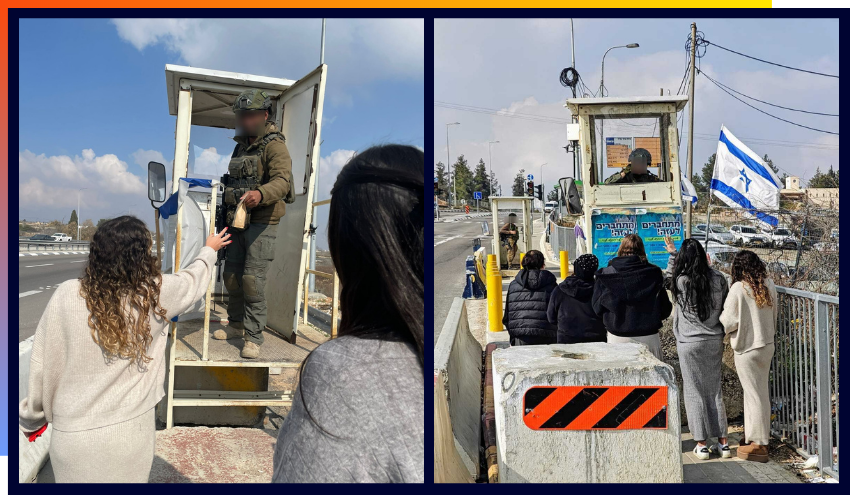
That cannot simply mean applauding them or telling them how proud we are. It means being there when they come home. It means asking how they are doing and caring enough to hear the real answer. It means opening our homes, our communities, and our hearts. It means remembering that the young man or woman who appears strong enough to carry a rifle and defend a country may still need someone else to help carry what is inside.
So I want to ask something very simple of every member of the Aish family reading this.
Think of one person you know who served in the IDF, particularly a lone soldier. Call them. Invite them for a Shabbos meal. Send them a message. Ask them how they are doing. Thank them for what they have done.
Most importantly, let them know that they are not alone.
Perhaps there is someone in your community who fell and is trying to get back up. Help them rise.
God willing, this coming year will finally bring the peace for which we pray. May the day come when we can beat our swords into plowshares, when soldiers can return permanently to their families, and when the Jewish people can live securely and peacefully in our homeland and throughout the world.
Until that day comes, we must stand behind those who stand in front of us. They have taken responsibility for us, and now we must take responsibility for them. They have shown their love for the Jewish people, and now it is our turn to show our love for them.
We all fall. Our task is to help one another rise.
Wishing you and your families a meaningful and uplifting Yom Kippur and an easy and meaningful fast.