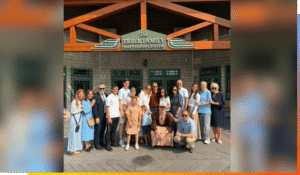
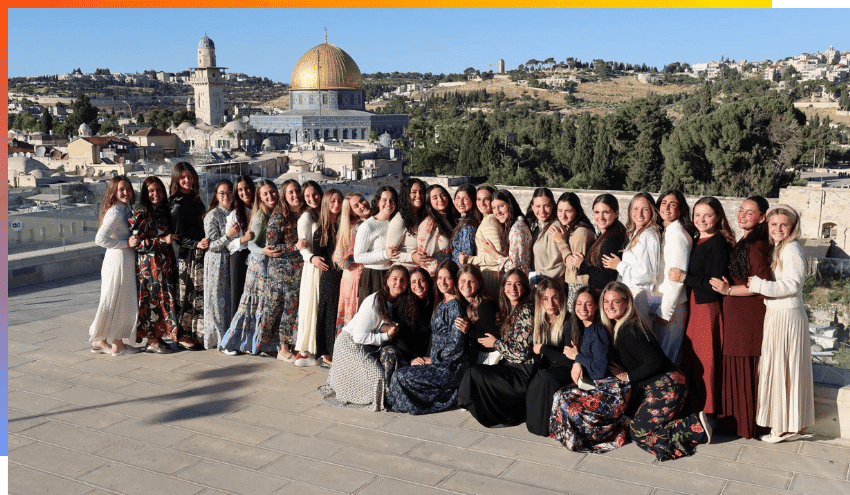
As we inch closer to Rosh Hashanah and Yom Kippur, Aish Jerusalem is alive. The Yeshiva is packed and overflowing. New students are arriving for the first time, former students are returning home, and our family continues to grow. There is something profoundly moving about watching young Jews come to Jerusalem searching for greater meaning, deeper learning, and a stronger connection to who they are.
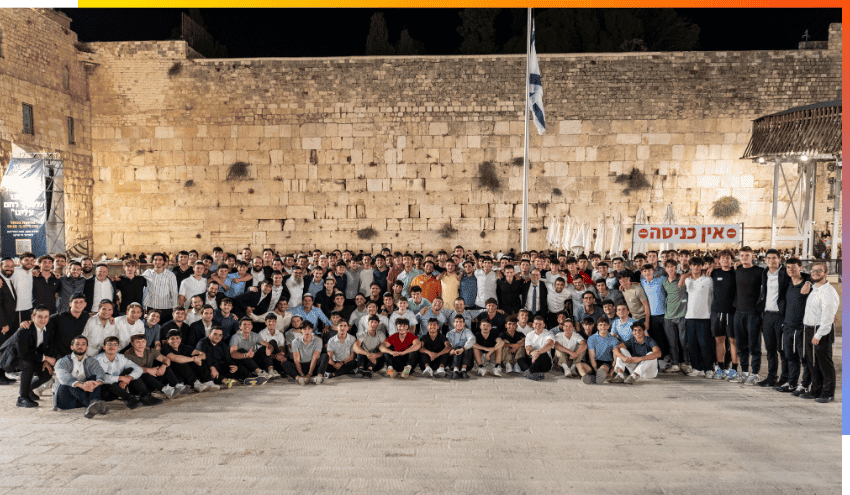
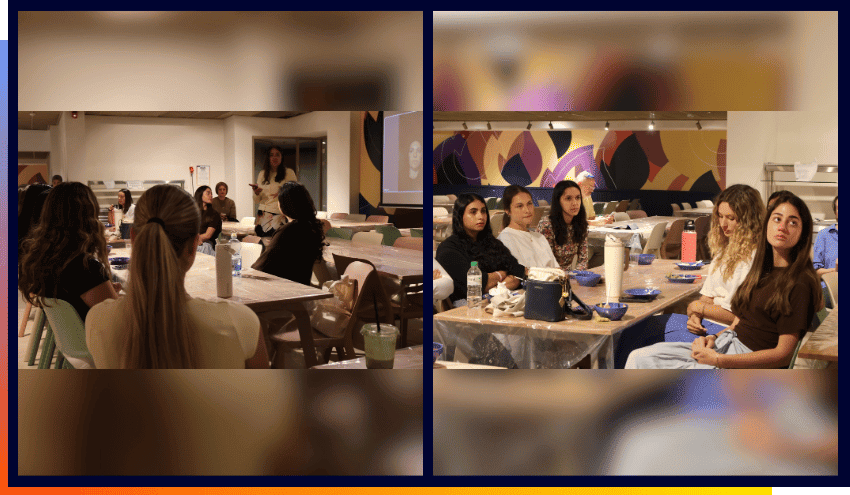
I am looking forward to spending this Shabbos with our students. I also want to extend an invitation to all of you. When you come to Jerusalem this year, come visit us. Come learn, pray, and meet our students. Aish has our renowned Mominary program for women, and this year we will also be offering an incredible learning experience for men. Our classes are free, our doors are open, and this is your home too.
Perhaps that invitation feels particularly meaningful to me this week.
I spent part of the week traveling through Europe on my way to Israel. Whenever I visit European cities, I try to visit the old synagogues. In one city, I walked into an absolutely magnificent synagogue and began reading the history of the Jewish community that had built it.
For centuries, the Jews there had been confined to a ghetto. Then came emancipation. The walls opened. Jews entered universities, professions, and broader society. They could finally leave their cramped Jewish quarter and build a synagogue worthy of their newfound freedom.
So they built something spectacular.
What struck me most was something I read inside the synagogue itself. One of the people connected to its creation wrote about what happened during those very years. The magnificent new synagogue represented a Jewish community finally emerging from behind the walls of the ghetto. Yet almost as soon as that newfound freedom came, something devastating followed: assimilation.
The physical walls came down, and slowly the walls protecting Jewish identity came down with them. Jews left their communities and, over generations, far too many were lost to the Jewish people.
I stood inside that enormous, breathtaking synagogue and looked around.
It was largely empty.
The irony was impossible to miss. The Jewish community had finally gained the freedom and resources to build one of the most beautiful synagogues imaginable. Yet as the building grew grander, the community that built it began to disappear.
In many ways, that is exactly why Aish exists.

The process that accelerated with emancipation never ended. Generations later, millions of Jews around the world remain disconnected from their heritage. Most are not rejecting Judaism. Too many simply never had the opportunity to discover what Judaism actually is.
Aish refuses to accept the disappearance of even one Jew.
Every Jew is precious. Every Jewish soul matters. Every Jew, wherever he or she lives, deserves the opportunity to discover the beauty, wisdom, and meaning of our inheritance.
That is why Aish reaches millions of Jews online. It is why we teach on campuses, bring people to Israel, create films and videos, build technology, fill classrooms, and sit one-on-one with Jews searching for something more. The tools have changed dramatically since Aish was founded, but the mission has not.
Bring Jews home.

From my office at Aish, I look directly out at the Western Wall. What do I see? No roof, no chandeliers, no soaring sanctuary, no magnificent architecture.
Just stones.
Yet millions of Jews come to those stones every year to cry, celebrate, whisper prayers, and pour out their hearts to God. They come asking for children, health, livelihood, forgiveness, peace, and hope. Somewhere deep inside the Jewish soul, we know that these stones are home.
There is something remarkable you can see when looking closely at the Kotel. The stones are noticeably darker near the bottom, where people can reach them, than they are higher up. Generations of Jews have pressed their hands against those stones as they prayed, and the natural oils from countless hands have helped darken the stone.
Think about that.
Jewish hands have literally left their imprint on the Kotel.
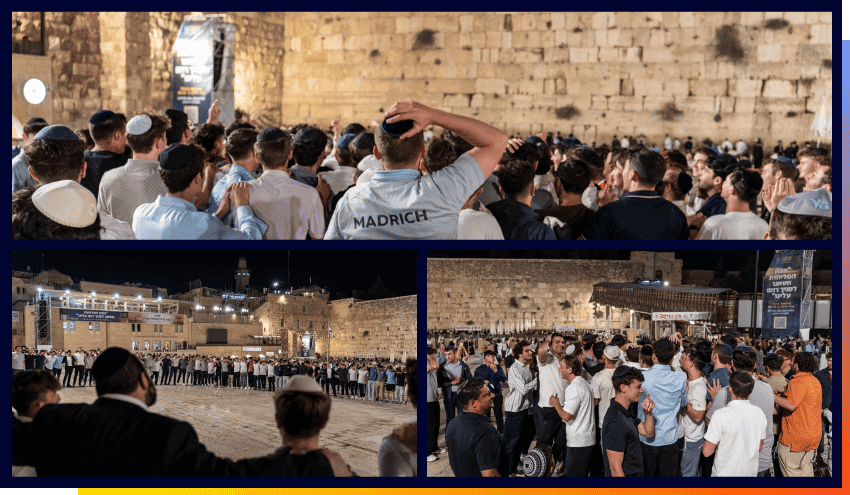
How many mothers have pressed their hands there and prayed for their children? How many soldiers before going to battle? How many people facing illness, loneliness, loss, or uncertainty? How many Jews who did not even know the words of the prayers simply put their hands against those stones and poured out their hearts to God?
Rabbi Tzvi Yehuda Kook wrote that there are human hearts and there are hearts of stone, yet there are also stones that are hearts. Years later, Israeli poet Yossi Gamzu captured the idea in words that became famous:
“There are people with hearts of stone, and there are stones with human hearts.”
This week, I understood those words differently.
I had just sat inside a magnificent European synagogue filled with extraordinary stones and very few Jewish hearts. Then I came home to Jerusalem and looked at an ancient wall whose simple stones draw millions of Jewish hearts every year.
Buildings do not guarantee Jewish continuity.
Jewish hearts do.
Perhaps that is also why Aish was established where it was, overlooking the Western Wall.
Aish was built here so that a Jew could come from anywhere in the world, walk through our doors, learn a little Torah, ask a question, discover something about who they are, and then walk outside and stand before a simple stone wall and speak to God.
No admission ticket. No membership. No magnificent sanctuary required.
Just a Jew, a wall, and God.
That is Aish. We build programs, technology, educational platforms, buildings, and institutions, yet none of those is ultimately the goal.
We are building Jewish hearts.
Every class, every video, every program, every Shabbos table, every trip to Israel, and every conversation is a vehicle for something infinitely more important: helping another Jew fall in love with Torah, the Jewish people, Israel, and God.
The prophet Yeshayahu described the ultimate vision of Jerusalem with words that feel especially powerful to me this week:
“Ki beiti beit tefillah yikarei l’chol ha’amim.”
“For My house shall be called a house of prayer for all peoples.”
At precisely the moment when so much of the world is telling Jews to distance themselves from Israel, we must draw closer. Israel is not a political inconvenience from which Jews can detach themselves when things become uncomfortable.
Israel is home.
Jerusalem is home.
The Kotel is home.
The great empires disappeared. The Jewish heart kept beating.
Perhaps that is why the stones of Jerusalem have hearts.
They have absorbed ours.
As Rosh Hashanah approaches, may we never give up on a single Jew, wherever that Jew may be. May we bring more of our brothers and sisters home to their people, their Torah, their land, and their God.
May we build beautiful things for the Jewish people.
More importantly, may we build beautiful Jewish hearts.