What an extraordinary week it has been. I began the week in Florida, spent Election Day in New York City, and ended the week back in Israel. In many ways, those three stops captured so much of what has been on my mind lately about the Jewish people, our future, and our responsibility to one another.
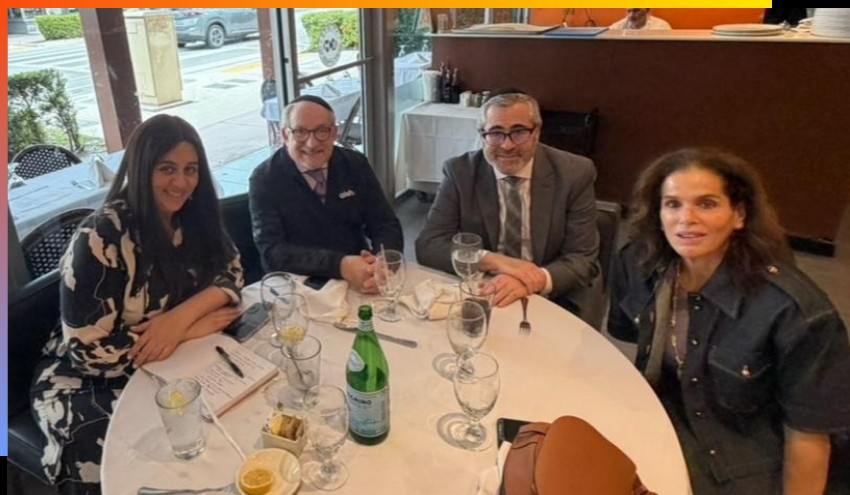
While in Florida, I had a beautiful lunch with two incredible Jewish leaders and Aish Pillars Fancy Saka and Miriam Skydell. I was joined by our Executive Vice President, Rabbi Meir May, and Reyna Dominitz, our new Director of Development for the Southern Region. We had a wonderful conversation about the future of the Jewish people, the programs we need to build, and how Aish can continue expanding its impact. Having just returned from our extraordinary missions to Poland, I have been thinking a great deal about how we take the inspiration of those experiences and translate it into lasting Jewish growth and commitment. It was one of those conversations that reminds me how fortunate we are to have passionate Jewish leaders who care so deeply about our future. I am very much looking forward to continuing that conversation and building on the ideas we discussed.
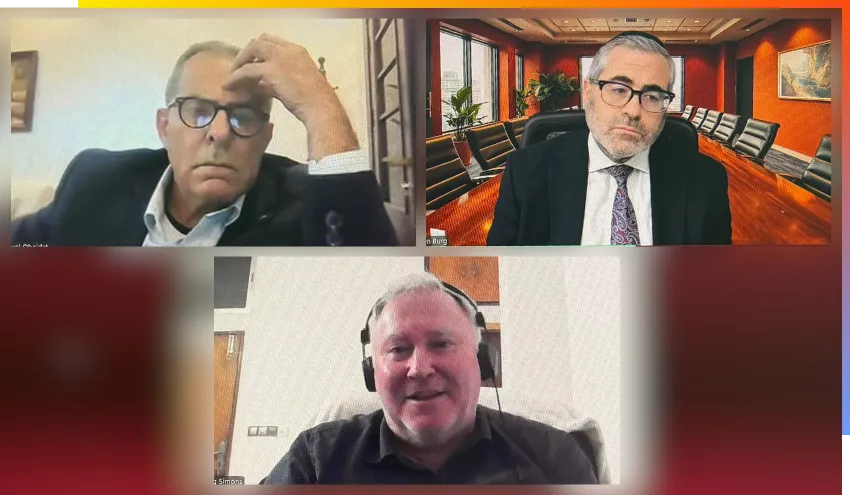
From Florida, I headed to New York City, where I found myself in one of the most fascinating situations I have experienced in quite some time. Raphael Poch, who heads our public relations department at Aish, called to tell me that NewsX, a major television news network in India, was looking for commentators to discuss the American elections. Would I be interested? Absolutely! I wound up spending an hour on live television on Election Day, from 8:30 to 9:30 in the morning, and another hour the following morning, from 7:30 to 8:30, analyzing the results. It was absolutely fascinating to be part of a conversation broadcast to an enormous audience in India, alongside panelists from around the world. One had served in the Jordanian parliament, another in the Swedish parliament, and others were academics and political commentators from across Europe. Listening to their perspectives and hearing what people thousands of miles away were thinking about American politics was an extraordinary experience. It was also a reminder of just how much attention the entire world pays to what happens in America.
There is a question I am occasionally asked, and frankly, it is a fair one. Aish exists to educate Jews. Our mission is to bring the wisdom of Torah to Jews everywhere, to help people discover the beauty of their heritage and develop a meaningful relationship with the Almighty. So why does the CEO of Aish spend so much time writing opinion pieces, speaking publicly about politics, and involving himself in issues affecting Israel, America, and the Jewish people? Is that really part of my job?
My answer is that I don’t believe you can separate the spiritual well-being of the Jewish people from their physical well-being. If we want to educate Jews, we also have to care about the world in which they live and the challenges they face. I often point out that Moshe Rabbeinu did not simply bring the Jewish people the Torah. He first stood up to Pharaoh, confronted the oppression of Egypt, and led our people out of slavery. The same Moshe who brought us to Har Sinai also fought for our freedom and our very survival. These were not two separate missions. They were part of the same responsibility. The physical and spiritual futures of the Jewish people have always gone hand in hand.
I remember hearing a story about 25 years ago that has stayed with me ever since. A prominent Jewish communal leader in New York told me about a conversation he had with Abe Foxman, who led the Anti-Defamation League for so many years. Abe had urged him to become more outspoken on issues affecting the Jewish community. His message was simple: You have a platform. You have a voice. You have a responsibility to use it. The Jewish people need responsible voices willing to speak on their behalf. That particular leader ultimately decided that, given his position and other considerations, public advocacy was not really his role. I understood his reasoning, but I never forgot Abe’s message. Having a platform is not simply a privilege. It comes with an obligation.
That obligation feels particularly urgent today. We are living in a world in which Israel is subjected to an extraordinary level of scrutiny, condemnation, and demonization. For decades, the United Nations has devoted a wildly disproportionate amount of its attention to criticizing the Jewish state, often while far more egregious abuses elsewhere receive a fraction of the attention. There is something deeply troubling about this obsession with Israel and, increasingly, with Jews themselves.
It reminds me of a fascinating observation my Rebbe, Rabbi Tzvi Sobolofsky, once shared about the Megillah. Our Sages explain that the enormous feast at the beginning of Megillat Esther was connected to Achashverosh’s belief that the time for the Jewish people’s redemption had passed and that the Beit HaMikdash would not be rebuilt. My Rebbe asked a remarkable question. Here was Achashverosh, ruler of one of the greatest empires in history, controlling an enormous portion of the civilized world. He had wealth, power, armies, and influence beyond imagination. Of all the things he could celebrate, he was celebrating the fact that the Jews had not returned to Jerusalem to rebuild their Temple? Really? That was what occupied the mind of the most powerful ruler in the world? The answer is that the nations of the world have always been extraordinarily preoccupied with the Jewish people. Even when we are small in number, even when we appear powerless, the world cannot seem to stop watching us. Sometimes that attention takes the form of admiration, but far too often it becomes resentment, hostility, and hatred.
As I watched the election returns this week, I could not help thinking about that lesson. I spent hours following the results, reading commentary, and watching the reactions unfold on X. I found myself writing four or five opinion pieces and sending them to different publications because I am genuinely concerned about where we are heading.
We are watching political figures turn hostility toward Israel into an almost singular obsession, with some crossing the line into rhetoric that echoes centuries of antisemitic accusations against the Jewish people. We are seeing the demonization of Israel increasingly spill over into the lives of ordinary American Jews. Just before Election Day, school buses in New York were defaced with swastikas.
Think about that for a moment. School buses. Vehicles that carry children to school every morning. The symbol of the Nazis, who murdered six million of our brothers and sisters, appearing in places associated with the safety and innocence of children. These are not abstract political debates taking place thousands of miles away. This hatred is reaching into our neighborhoods, our schools, and our everyday lives. I said in one of my interviews this week that American Jews had better buckle their seatbelts because I fear we are in for a very bumpy ride. I pray that I am wrong, but I believe we have to take these developments seriously.
This brings me back to Aish and to our beloved founder, Rav Noach Weinberg, zt”l. Rav Noach understood something fundamental about what it means to be a Torah Jew. Aish was built on the wisdom of Torah, but wisdom was never meant to remain confined to a classroom. Our values of Wisdom, Love, and Responsibility are inseparable.
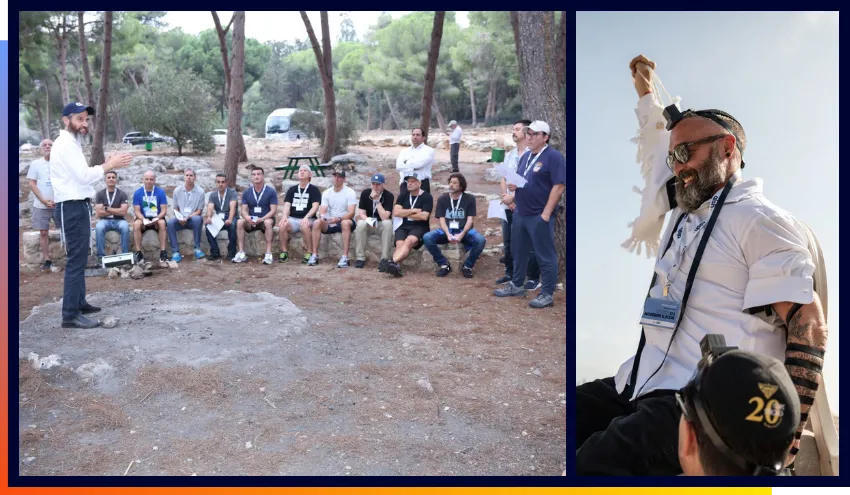
Rav Noach was passionate about teaching Torah, but he was equally passionate about protecting the Jewish people. In the 1990s, he became involved in efforts to advocate for missile defense systems that could protect Israeli civilians. He helped pioneer advocacy efforts for communities such as Sderot, long before many people fully appreciated the dangers those communities would face. There are countless stories of Rav Noach stepping outside what people might consider the traditional role of a yeshiva to fight for the physical safety and future of our people.
I am sure some people wondered what a rabbi running a yeshiva was doing getting involved in missile defense or public advocacy. Rav Noach understood that when Jews are in danger, you do not get to say that protecting them is someone else’s responsibility. The more connected we become to Hashem and His Torah, the more deeply we must care about His children. A connected Jew is not simply someone who studies Torah, keeps Shabbos, or davens three times a day. A connected Jew feels the pain of another Jew and is prepared to stand up and fight for our people.
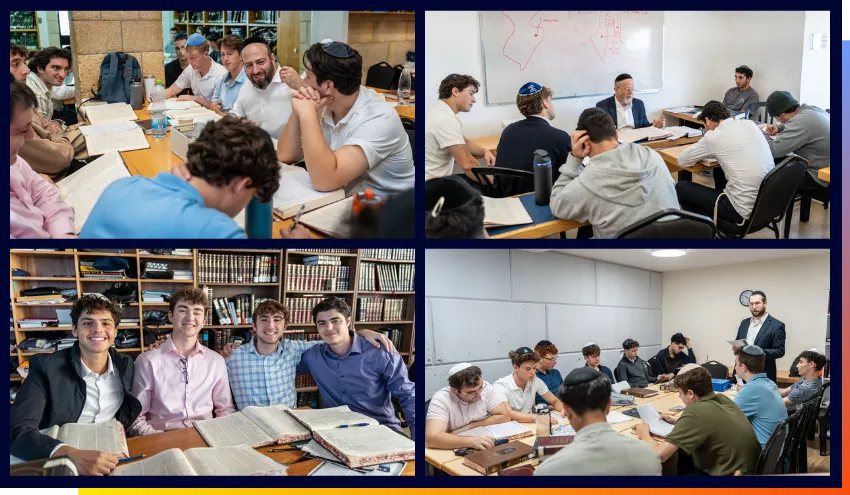
That is why I believe so strongly that all of us have a role to play. I tell our students this all the time. We live in an extraordinary age in which virtually everyone has a platform. Social media has given ordinary people the ability to reach audiences that previous generations could never have imagined. You do not need to be the head of a major organization, a politician, or a television commentator to make a difference. You can speak out when you see antisemitism. You can challenge lies about Israel. You can defend a fellow Jew who is being attacked. You can share something meaningful about our people and our values. Most importantly, you can refuse to be silent when silence becomes a form of abandonment. We will not all agree on every political issue, nor should we. The Jewish people have never been known for a shortage of opinions! Yet whatever our disagreements, we must never lose sight of our responsibility to one another.
I think back to the days immediately following October 7th. One of the questions I heard most frequently from Israelis was whether the Jews of America were standing with them. Were they behind us? Did they understand what we were going through? Were we alone? My answer was always an emphatic yes.
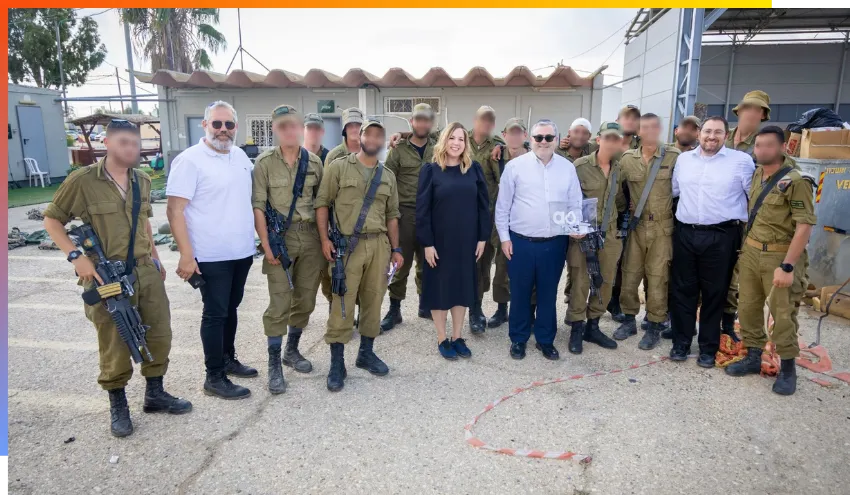
I watched tens of thousands of duffel bags make their way from America to Israel, filled with everything from socks and underwear to equipment and drones. People can debate how much of that material was actually needed or whether every item reached the right place, but there was something in every one of those bags that was desperately needed. There was love. There was caring. There was the unmistakable message that Jews thousands of miles away were thinking about their brothers and sisters and wanted to help. Those duffel bags represented something much bigger than the items inside them. They represented the unbreakable bond of the Jewish people. Today, as American Jews face growing hostility and uncertainty, we need that same love and solidarity flowing in the other direction. The Jews of Israel must stand with the Jews of America, just as American Jews stood with Israel. Wherever a Jew is threatened, every other Jew must feel a responsibility to respond.
There are two thoughts I want to leave you with this week. The first is something I believe every Jew, wherever they live, should seriously consider at some point in life, and that is aliyah. I am not suggesting that everyone can pack their bags tomorrow or that the decision is simple. Believe me, as someone who runs a major institution in Israel, I have a very healthy appreciation for how complicated life and government in Israel can be! There are families, careers, financial realities, and countless personal considerations that make aliyah a major decision.
Yet I believe every Jew should have Israel somewhere in their future plans and dreams. There is something profoundly beautiful about living in our ancestral homeland, in a country where the army keeps kosher, where Jewish holidays shape the national calendar, and where Jews take responsibility for protecting other Jews. Israel is not merely another country. It is our home. It is the place our ancestors dreamed of returning to for two thousand years, and it is a miracle that we have the opportunity to live there today. Whatever our individual circumstances, I hope we never stop thinking about what it means to come home.
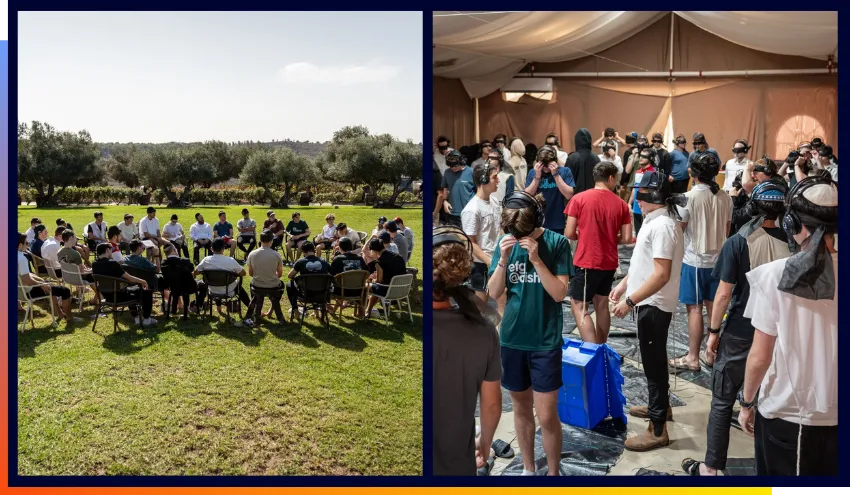
The second thought is even more important, and it is the one I most want you to carry with you into Shabbos. Hashem runs the world. I know that sounds simple, perhaps even obvious, but I think we sometimes forget just how profound that truth really is. Over the past several months, as I have written and spoken about some very difficult issues facing our people, I have received messages from people thanking me for reminding them that the Almighty is in charge. They tell me that hearing those words gives them strength, comfort, and even a reason to smile in the middle of frightening times. I understand that feeling completely. There is something incredibly reassuring about knowing that the world is not spinning out of control, no matter how chaotic it may appear.
Our Rosh Yeshiva, Rabbi Yitzchak Berkovits, often teaches that the mitzvah of believing in Hashem is about much more than acknowledging that God exists. It means recognizing that Hashem has a plan for His world, that history is moving somewhere, and that every one of us has a role to play in that plan. Our job is to figure out where we fit and what the Almighty is asking of us. That does not mean we understand everything that happens. It certainly does not mean that suffering is easy or that we should sit back and do nothing. Quite the opposite. We are obligated to act, to protect one another, to speak out against injustice, and to do everything in our power to make the world better. Yet we do all of that with the knowledge that we are not alone and that the ultimate direction of history is in the hands of the Almighty.
My dear brothers and sisters, there is something much bigger happening in this world than any single election. Political parties rise and fall. Presidents, prime ministers, governors, and members of Congress come and go. Some will be friends of the Jewish people, and others will disappoint us terribly. There will be moments of great triumph and moments when the headlines make us wonder what kind of world our children and grandchildren are inheriting. We must remain vigilant, we must remain united, and we must never surrender our responsibility to stand up for one another. At the same time, we must never allow fear to become the defining emotion of Jewish life. We are a people who have survived empires, expulsions, persecutions, and horrors that should have destroyed us many times over. We are still here, still learning Torah, still raising Jewish families, still building Jewish communities, and still returning to our homeland. That is not an accident. Hashem has never abandoned the Jewish people, and He never will.
So as we head into Shabbos after a week of election results, political arguments, and unsettling headlines, I want you to remember something that should put a smile on your face. The Almighty loves us. He has a plan for us. He has given each of us a role in the extraordinary story of the Jewish people. We do not know what tomorrow’s headlines will bring, but we know that we are part of something eternal. Elections matter, and our responsibility to act matters enormously, but no election can change the covenant between Hashem and the Jewish people. Politicians will come and go. Governments will rise and fall. The Almighty will never forget us, and He will never stop standing with us. That is the greatest source of strength we have, and perhaps the most important lesson we can take from this remarkable week.
Have a wonderful Shabbos, filled with love, faith, and the confidence that Hashem is always with us.