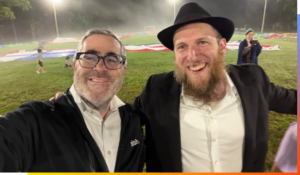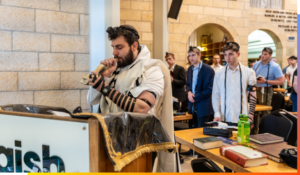
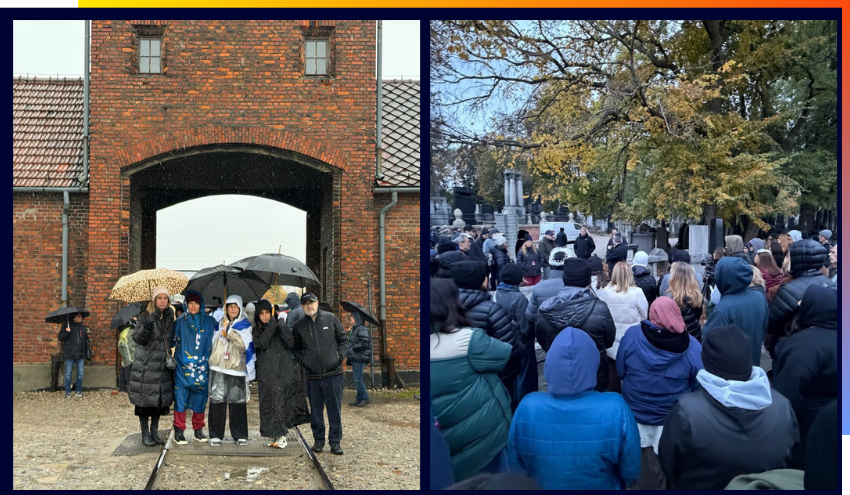
This has been an incredibly powerful week for me. For the first time in my life, I can tell you that I am writing this weekly email from Auschwitz-Birkenau. I am physically here, standing in one of the darkest places in human history, surrounded by the very ground where so many of our people were murdered. I am writing these words while walking through this place with an extraordinary group of Jews, confronting the horrors of our past and thinking deeply about the future of our people.
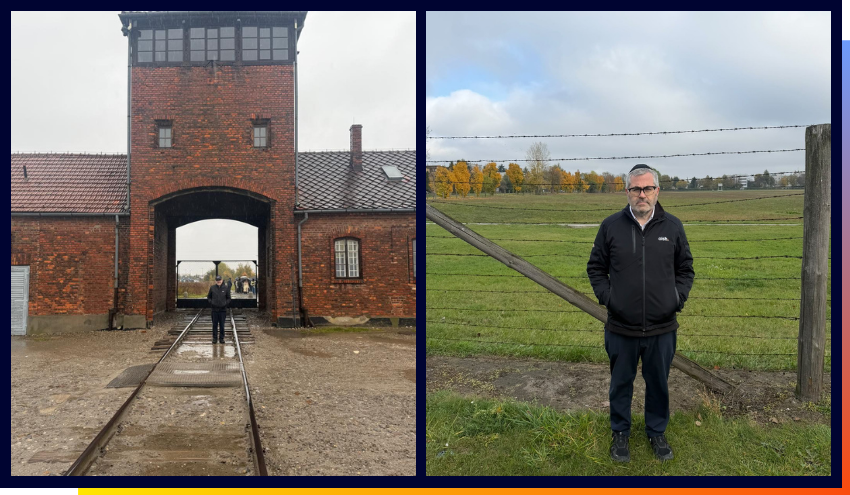
There is so much I want to share with you. So many moments, so many emotions, and so many lessons that I am still trying to process. I want to take you through this remarkable week, starting not in Poland, but last Friday in Jerusalem.
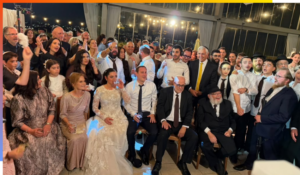
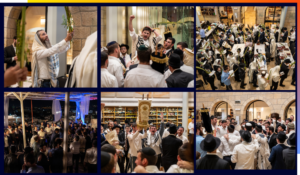
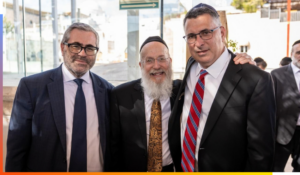
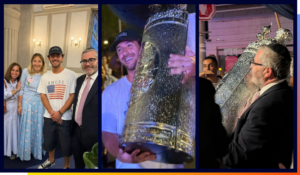
As I mentioned last week, we had the tremendous joy of celebrating the beautiful wedding of David and Miriam Milstein. On Shabbat, we gathered for dinner on the roof of the Dan and Hytman Family Aish World Center, overlooking the Western Wall and the Temple Mount. Two extraordinary conversations that day, looking back, were the perfect introduction to my journey to Poland.
Earlier that Friday, I received a call from Mark Levin, who has become a dear friend and someone I consider a brother. Mark is David’s stepfather, and he asked whether he could film some additional footage for his Fox News program from the roof of Aish. Naturally, I said yes.
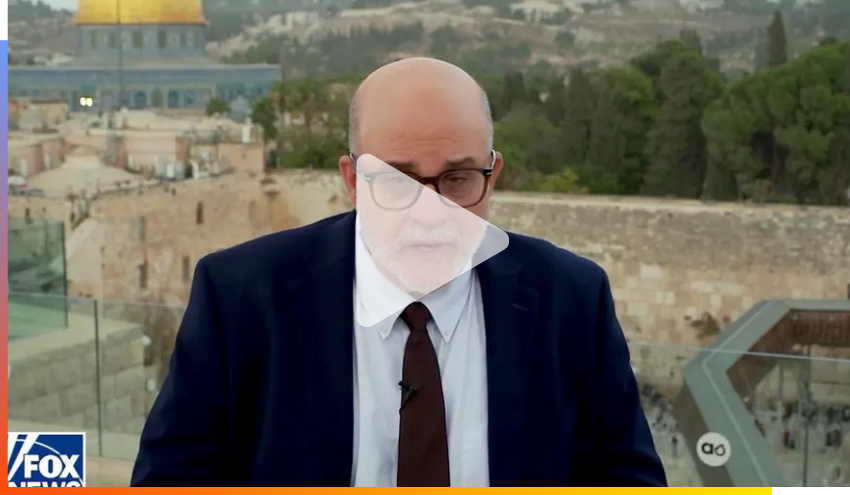
Before the filming, Mark and I sat together in my office and had one of the most extraordinary chavruta, Torah-learning sessions, of my life.
We discussed Har HaBayit, the Temple Mount, the place where heaven and earth meet. We spoke about how this very mountain is Har HaMoriah, Mount Moriah, where Abraham brought Isaac, and how Jewish tradition connects this sacred place to Jacob’s dream of the ladder reaching toward heaven. We spoke about King David’s desire to build the Temple, his son Solomon, who ultimately built it, and the Holy of Holies, where the Ark of the Covenant containing the Tablets of the Ten Commandments once stood. Jewish tradition teaches that the Ark remains hidden beneath the Temple Mount to this very day. We discussed how the Maccabees reclaimed and rededicated our Holy Temple, giving us the miracle of Chanukah.
Thousands of years of Jewish history, faith, sacrifice, and connection, all centered on this one sacred mountain.
What made this so special was watching Mark take that Torah learning and share it with millions of Americans through Fox News. Here was someone using his extraordinary platform to educate people about the Jewish people’s connection to Jerusalem, our history, our faith, and our homeland.
That is exactly what Aish exists to do.
I hope you will take ten minutes to watch his beautiful presentation.
Later that evening, at our Shabbat dinner, I had the privilege of sitting next to United States Ambassador to Israel Mike Huckabee.
We had a wonderful conversation about our families, our children, and especially our grandchildren. We agreed that being a grandfather may be one of the greatest jobs either of us has ever had.
Eventually, our conversation turned to good and evil. Perhaps Poland was already on my mind.
I told the ambassador that one of my heroes is Oskar Schindler. Schindler was hardly a perfect human being. He was a war profiteer, a womanizer, and someone with serious moral failings. Yet when confronted with unimaginable evil, he found within himself the courage to do what was right. He saved approximately 1,200 Jews.
Ambassador Huckabee told me that he has led more than 100 missions to Israel and regularly takes groups to Schindler’s grave in Jerusalem to teach precisely that lesson.
We spoke about the mystery of human nature. How can highly educated, sophisticated people participate in unspeakable evil? How can intelligent, accomplished people convince themselves that evil is good and good is evil?
Our conversation naturally turned to what we are witnessing today, particularly the extraordinary campaign of lies, distortions, and misinformation being spread about Israel around the world. We spoke about how easily falsehoods can become accepted as truth, how even educated people can be swept up in hatred, and how dangerous it becomes when people lose the moral clarity to distinguish good from evil.
It was a sobering conversation, particularly knowing that in just a few days I would be standing in places where the consequences of hatred, propaganda, and moral blindness were so devastatingly clear.
I could not have imagined a more meaningful conversation before traveling to Poland.
On Monday, I left Jerusalem to join Aish’s Living Legacy Experience mission to Poland.
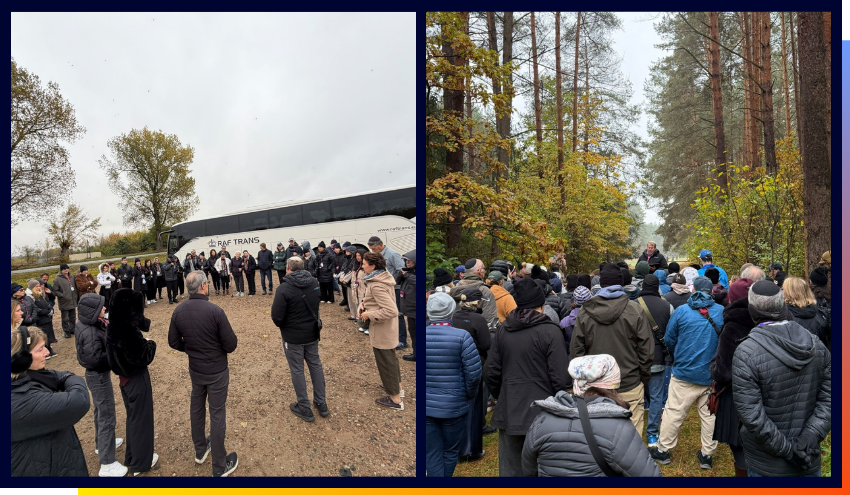
Living Legacy is an extraordinary program led by Isaac Oziel. It began through Aish Toronto and has now grown into a global initiative, bringing Jews from across the world to Poland to experience our history, learn from Holocaust survivors, and emerge with a deeper sense of Jewish identity and responsibility.
Across two weeks, approximately 250 participants are joining these journeys. The first week brought 140 participants from New York, New Jersey, Miami, Detroit, and Toronto. The second week will bring another 110 from Los Angeles, Denver, Peru, Toronto, and Israel.
Our group traveled on three buses, filled with remarkable Jews from different communities and backgrounds, united by a shared desire to understand our past and strengthen our future.
I have been to Poland approximately a dozen times, often leading groups of Jewish teenagers earlier in my career. Yet it had been many years since my last visit, and I found myself experiencing Poland very differently this time.
Perhaps it is my age. Perhaps it is the experience of having children and grandchildren. Perhaps it is everything our people have endured since October 7.
Whatever the reason, this trip touched me in ways I had not anticipated.
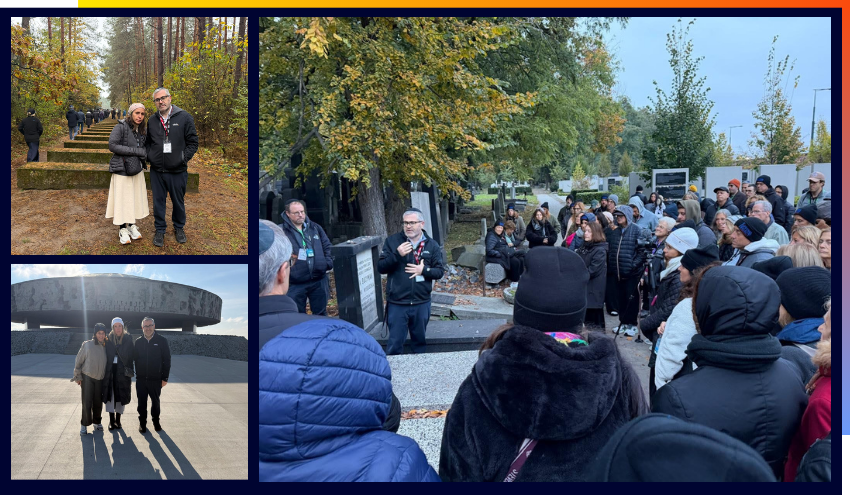
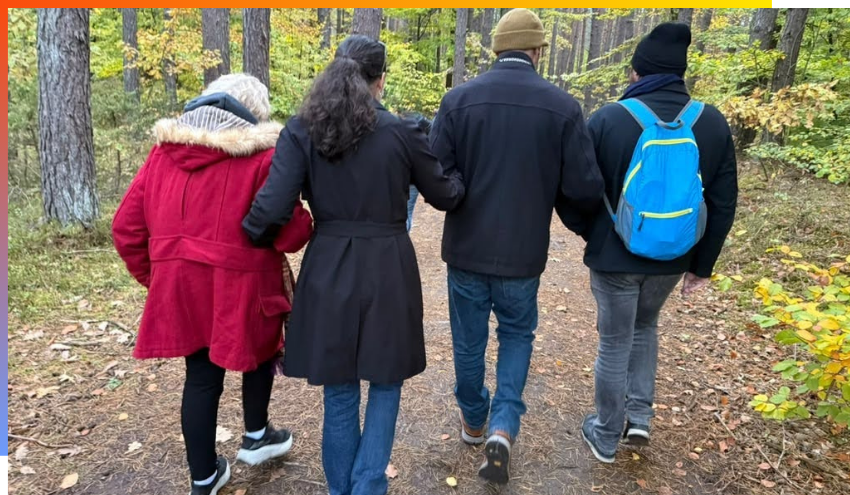
What made this journey especially powerful was the privilege of traveling with Holocaust survivors. We are living in the final years when we can still walk through these places alongside the people who actually experienced their horrors. That opportunity is an extraordinary privilege, and one that future generations will not have.
Two moments with our survivors will remain with me forever.
The first was with Tova Friedman, author of the powerful memoir The Daughter of Auschwitz.
Tova shared a story about visiting Auschwitz with her daughter years ago. They were walking through the camp on a quiet day, with very few visitors around. At one point, her daughter reached into her bag, took out an apple, and began eating it.
Tova immediately turned to her and asked, “How can you eat that in front of all these people? They’re starving!”
Her daughter looked around, confused.
“Mom, what people? There’s nobody here.”
For Tova, they were all still there.
The starving children. The desperate mothers. The people she had watched suffer and die.
Decades had passed, yet in that instant she was back in Auschwitz, surrounded by the people whose memories had never left her.
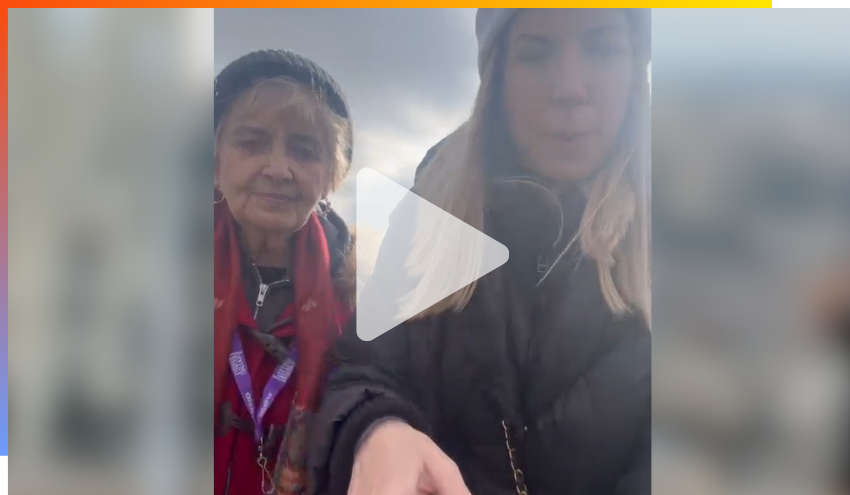
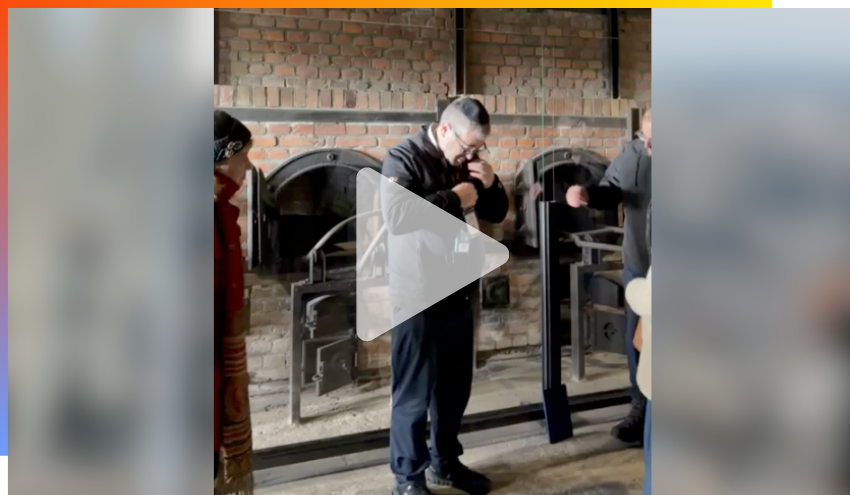
We walk through these camps and see empty barracks, train tracks, fences, and crematoria. We try to imagine the people who were there. For the survivors, those people are not simply figures from history. They are their parents, their siblings, their friends, and their families.
They are still with them.
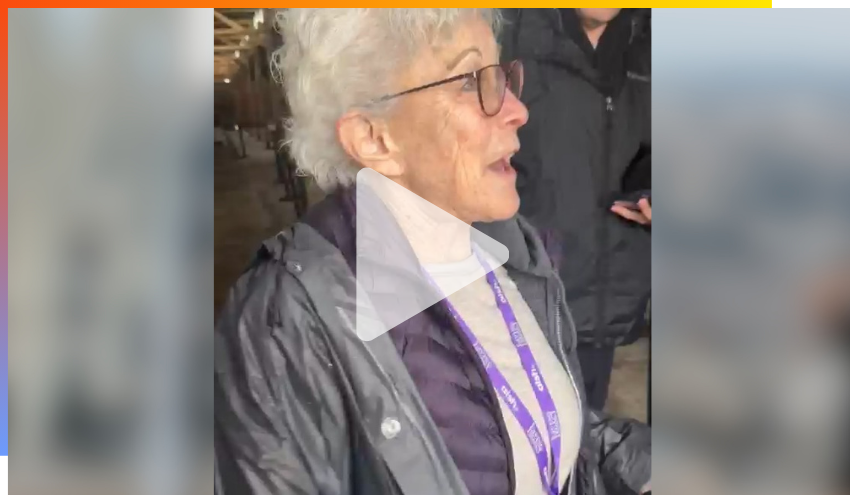
The second moment took place at Treblinka with Holocaust survivor Marion Weinzweig.
Marion’s mother was murdered at Treblinka at just 25 years old.
Standing in the place where her mother was killed, Marion took out her phone and showed us a photograph of her mother as a young woman. She had been so young when she lost her that she barely had the opportunity to know her.
Imagine standing there, decades later, holding a photograph of your mother, forever 25 years old, at the very place where she was murdered.
You have heard me say many times that there is nothing in this world more powerful than the broken heart of a Jew.
Standing with Marion at Treblinka, I felt the truth of those words more deeply than ever.
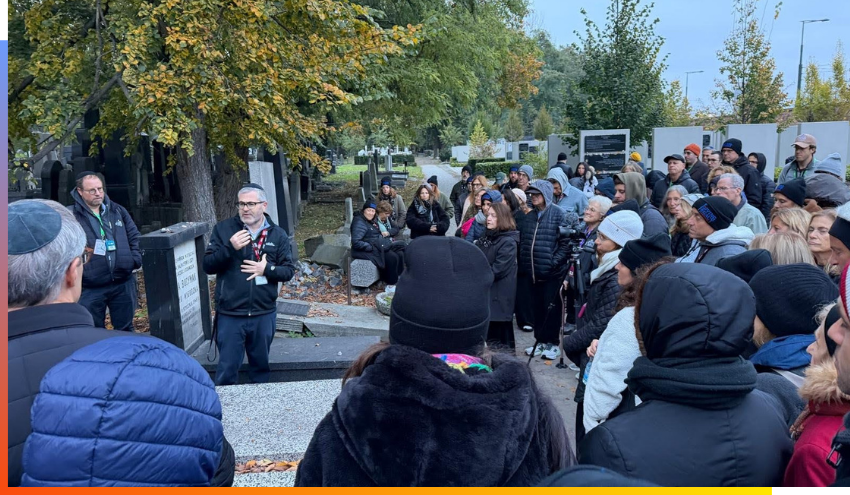
I had the opportunity to speak to our group at Treblinka about a verse from Psalms that has become especially meaningful to me.
“Zeh hasha’ar LaHashem, tzaddikim yavo’u vo.”
“This is the gateway to God; the righteous shall enter through it.”
These words have appeared for generations on the paroches, the beautiful curtain covering the Holy Ark in our synagogues. The Nazis desecrated countless synagogues and sacred objects, attempting to destroy not only Jewish lives but the very symbols of our faith. They took many of these parochot and hung them over the doors to the gas chambers so when the Jews saw this they started dancing.
I told our group that when a generous family helped us create a magnificent new entrance to our yeshiva in Jerusalem, I made one unusual request.
I wanted those very words inscribed above the entrance.
Every day, young Jewish men walk through that gateway to study Torah, grow in their relationship with God, and discover their responsibility to the Jewish people.
The Nazis tried to erase Torah and Jewish life from Europe. Today, in Jerusalem, our young men walk through a gateway bearing those same words as they prepare to build the Jewish future.
Standing at Treblinka, I could think of no greater expression of Am Yisrael Chai.
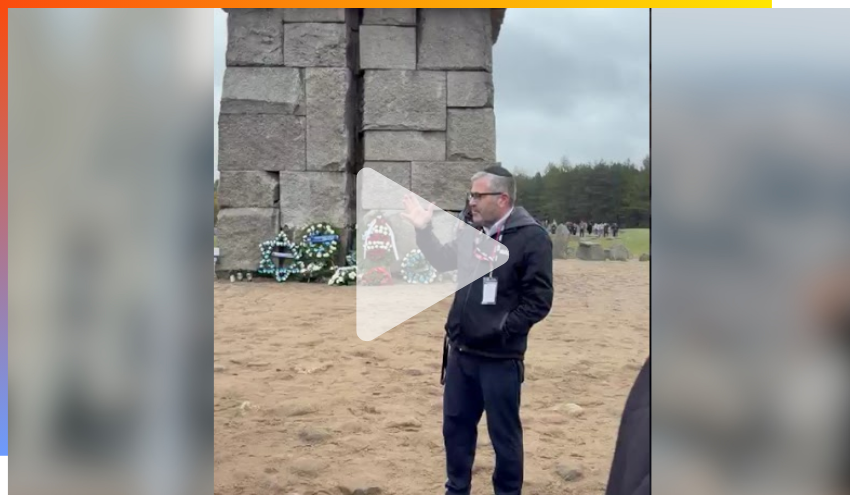
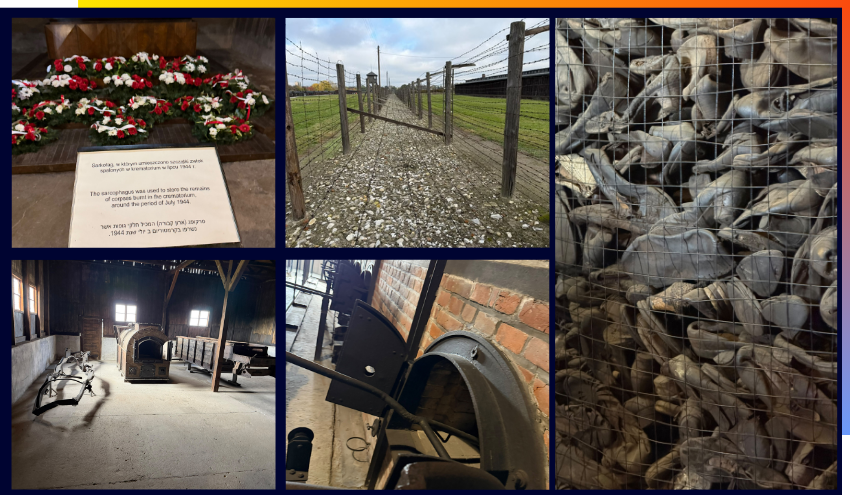
Throughout the week, we visited the Warsaw Ghetto, Treblinka, Majdanek, Auschwitz, and Birkenau. Each place carried its own unimaginable suffering and its own stories of courage, loss, and faith.
Yet our journey was not only about death and destruction.
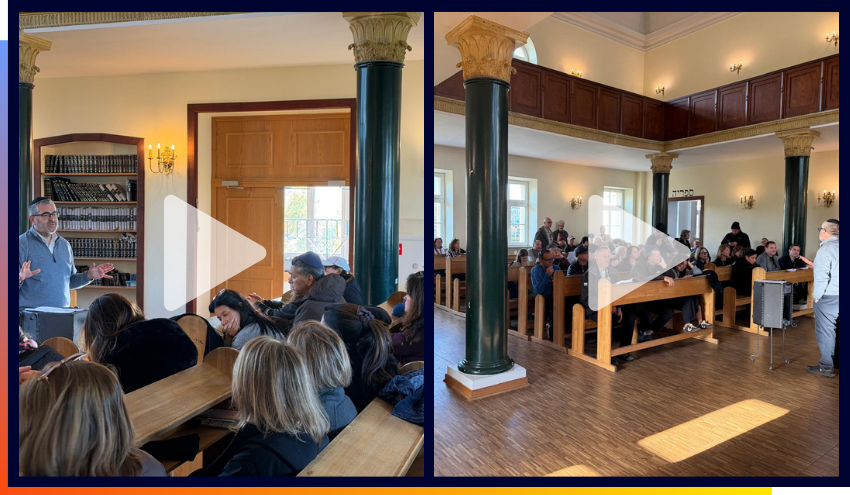
We also visited Yeshivas Chachmei Lublin, once one of the great centers of Torah scholarship in Europe. I had the tremendous privilege of delivering a shiur there, teaching Torah in a building that had once been filled with the voices of young men learning Torah before the Holocaust.
What a feeling it was to bring the sound of Torah learning back into those walls.
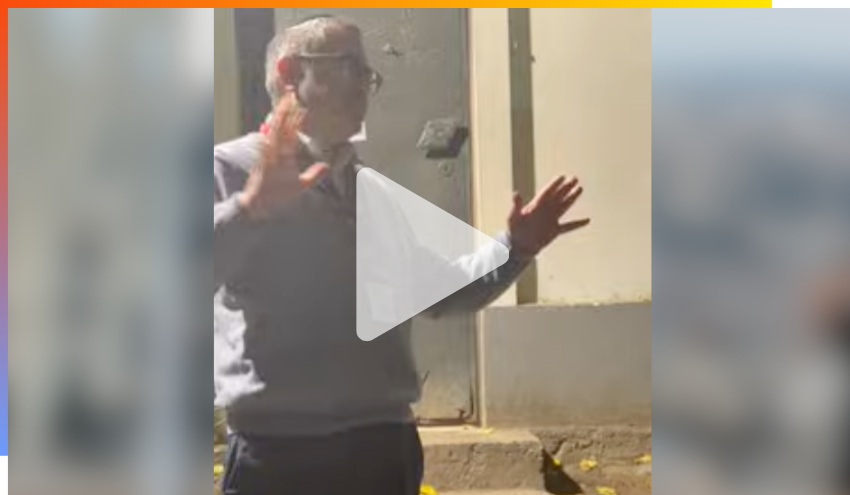
We also traveled to the resting place of the great Chassidic master Rabbi Elimelech of Lizhensk, the Noam Elimelech, whose teachings and prayers have inspired generations of Jews.
Poland is not only the story of how Jews died. It is also the story of how Jews lived, learned, prayed, raised families, built communities, and brought extraordinary light into the world.
Throughout the trip, I kept returning to two central messages.
The first is something I have shared with you many times, but I believe it is more important today than ever.
The Jewish people are a family.
In fact, I want to share something with you that I may never have explained before.
Every single week, I begin this email with the same words: “Dear Aish Family.”
That is not a casual greeting. It is not simply a nice way to open an email. I write those words because I genuinely believe that we are a family. I believe that every person reading this email is part of my family, and that every Jew, wherever they live and whatever their background, is part of one extraordinary Jewish family.
I don’t write to you simply as the CEO of an organization communicating with its supporters. I write to you as one member of a family speaking to another.
Standing in Poland this week, I felt that truth more deeply than ever.
The world has always struggled to understand us.
We are not simply a religion. We are not simply a nationality. We are certainly not a race. Jews come from every corner of the world, with different backgrounds, appearances, languages, and traditions.
The only way to truly understand the Jewish people is to understand that we are a family.
Family is not defined by geography. Family is not defined by whether we agree on every issue. Family is not defined by how religious we are or what language we speak.
Family means that when one of us suffers, all of us feel it.
The Nazis understood the power of Jewish family, which is why so much of their cruelty was directed at destroying it.
Everywhere we went, we heard stories of families being torn apart. Parents separated from children. Brothers and sisters sent in different directions. Mothers desperately trying to protect their babies. Entire generations erased.
The Nazis were not simply trying to murder individual Jews. They were trying to destroy the Jewish family itself.
Yet here we are.
We are still a family.
This truth has become even clearer to me over the last three years.
Shortly after October 7, I was interviewed by Greta Van Susteren, one of the sharpest and most thoughtful journalists I have ever met. She asked me to join her for a live broadcast from Tel Aviv in the middle of the night.
She wanted to understand something that puzzled many people watching Israel from abroad.
Why were the Jewish people so determined to recover and bury every single person who had been murdered? Why was it so important to bring home not only the living hostages, but also the bodies of those who had been killed?
My answer was simple.
They are our family.
When someone in our family dies, we do not abandon them. We bring them home. We bury them with dignity. We say Kaddish. We honor their memory.
I was reminded of President Trump speaking about the hostages at a White House Chanukah celebration. He described how he had initially thought that bringing the hostages home meant bringing back those who were alive. He came to understand that for the Jewish people, bringing home those who had been murdered was also an essential part of the mission.
I recently wrote about an extraordinary story involving an Israeli sailor serving aboard a submarine far from Israel’s shores.
He learned that his brother had been killed in Gaza.
The submarine was engaged in a sensitive mission and could not simply turn around. Yet an extraordinary effort was organized, involving boats, helicopters, and aircraft, to bring this young man home so he could mourn his brother and attend his funeral.
Why would so much effort be made for one grieving sailor?
That is what family does.
Standing in Poland, I thought about that story again and again.
The second message I shared throughout the week was about responsibility.
There is a danger in visiting places like Auschwitz and Treblinka. We can become overwhelmed by grief, anger, and despair. We can leave feeling emotionally devastated, yet unsure what to do with those emotions.
I told our participants that I did not want anyone leaving Poland simply feeling sad.
I wanted them leaving Poland determined to become leaders.
Every single Jew has a role to play in the future of our people. Every one of us has been given gifts, talents, relationships, and opportunities that can make a difference.
God has a plan for each of us.
We have a responsibility to strengthen Jewish life, deepen our connection to Torah, defend our people, build our communities, and ensure that the next generation understands what it means to be Jewish.
This is precisely why Aish is built around three fundamental values: Wisdom, Love, and Responsibility.
Wisdom gives us the Torah knowledge and clarity to understand who we are and what God wants from us.
Love connects us to every Jew, regardless of background, observance, or geography.
Responsibility demands that we do something with that wisdom and love.
The question I kept asking our participants was simple:
When you leave Poland, what are you going to do differently for the Jewish people?
What responsibility are you prepared to take?
What will you build? Whom will you inspire? How will you make our people stronger?
Those are the questions that transform a trip to Poland from an emotional experience into a life-changing one.
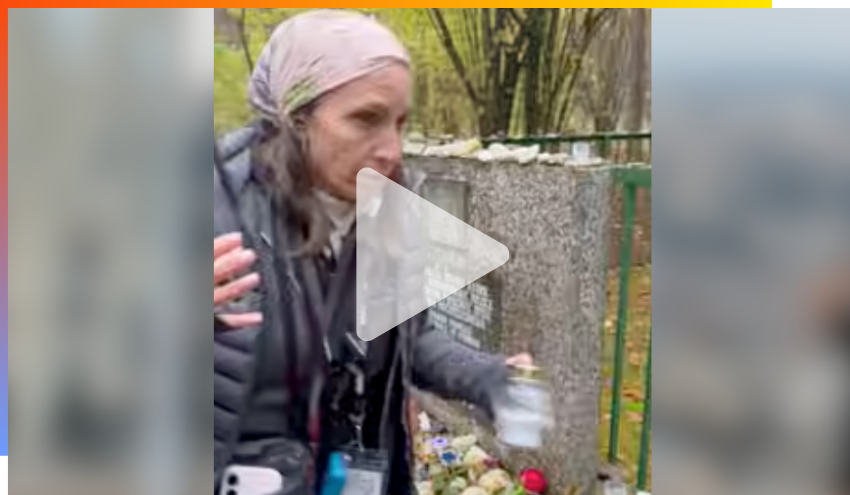
I was especially blessed to share this journey with my wife, Rachel, who spoke so beautifully and passionately at so many of our stops. Watching her connect with our participants and help them process these extraordinary experiences was deeply meaningful to me.
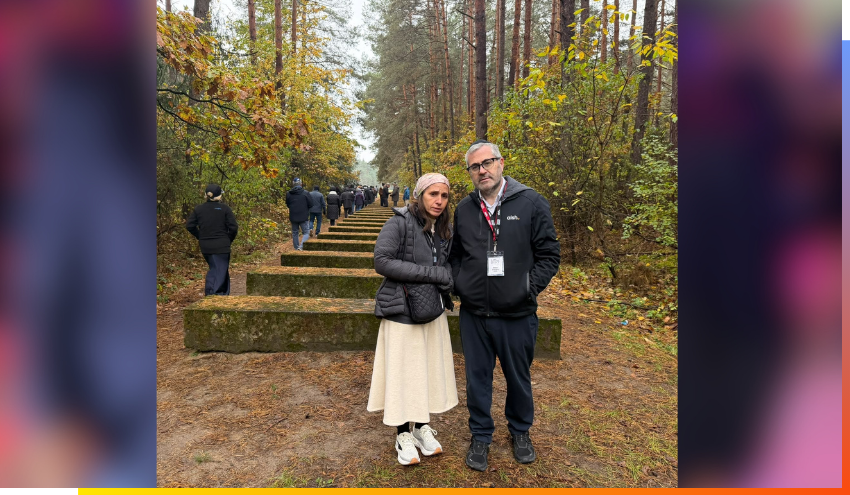
I was also tremendously proud to see the leadership that emerged from our Aish family.
At our Aish Legacy Summit last winter, we spoke about the importance of bringing more people on these journeys. Two extraordinary women took that message to heart.
Miriam Skydell, together with her husband Jamie, helped bring a wonderful group from Florida and New Jersey. Jill Lavitsky, together with her husband Eric, helped create a remarkable partnership with the Jewish Federation of West-Central New Jersey.
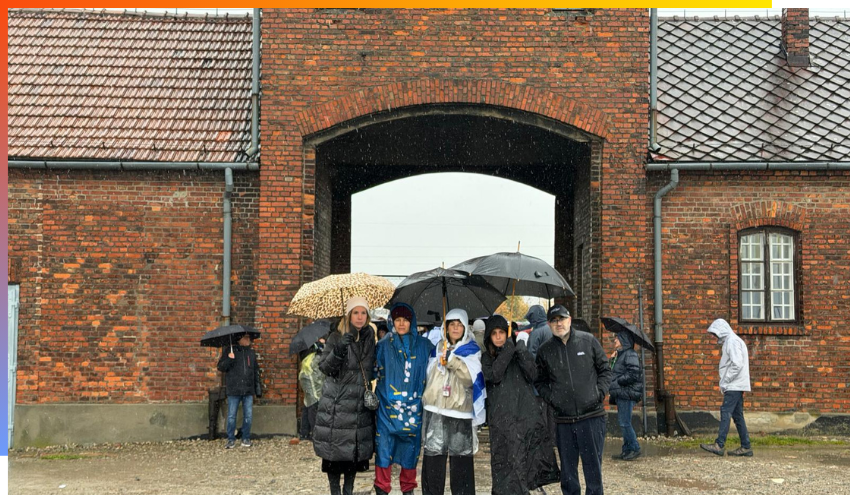
It was a tremendous honor to partner with the Jewish Federation of West-Central New Jersey and especially to have its CEO, Robin Freedman-Kramer, join us personally on this journey. Through that partnership, we were also able to bring Holocaust survivor Tova Friedman, who has been a longtime member of their community. What an extraordinary gift to have her share her story with all of us.
It was also wonderful to have Rabbi Simcha and Estie Tolwin, who lead Aish Detroit, joining us and bringing members of their community.
I also want to recognize Jamie Geller, Aish’s Global Spokesperson, who joined us on this journey and has done a marvelous job helping us share these extraordinary experiences with the broader Jewish world. There are emotions and moments that are almost impossible to put into words, yet Jamie has helped convey the power of this journey to members of the Aish family across the globe.
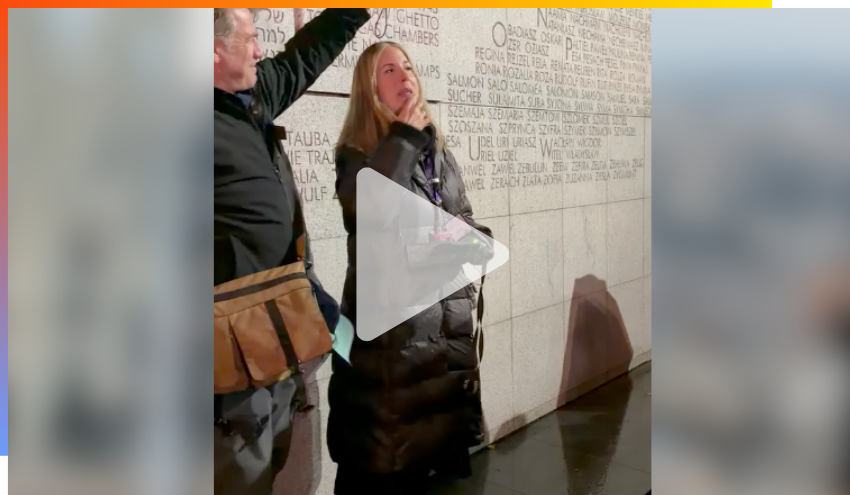
My deepest gratitude goes to Isaac Oziel, whose passion and vision have made Aish Living Legacy Experience such an extraordinary program, and to JRoots, an organization that began within the Aish world and has grown into a remarkable force for Jewish education through meaningful journeys across the globe.
There is one final image from this week that I cannot get out of my mind.
We had a survivor of the Nova music festival with us on this journey, Raz Ravid. Watching Raz, a young survivor of October 7, sitting and speaking with a Holocaust survivor was almost beyond words.
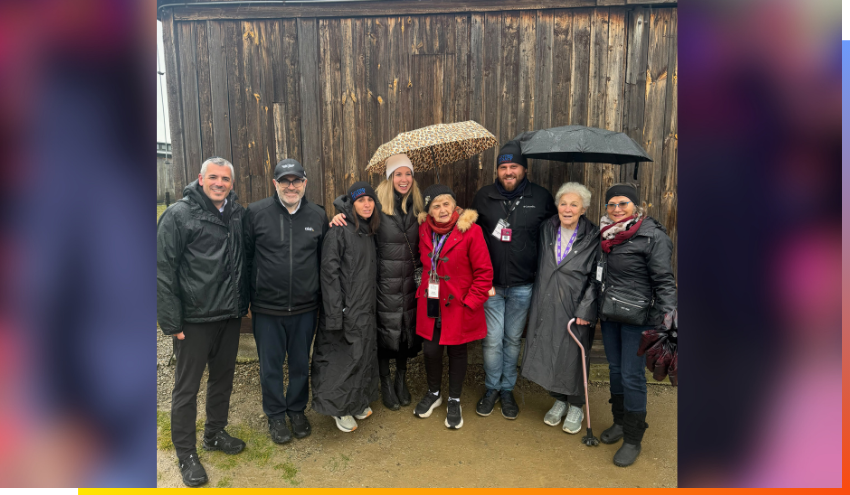
Two Jews. Two generations. Two very different moments in history. Both carrying the trauma of unimaginable evil.
When I first visited the Nova festival site after October 7 and walked among the photographs of the beautiful young people who had been murdered, I remember thinking about Treblinka.
I remember thinking, this does not belong in Israel.
This is why we have Israel. This is why we rebuilt our homeland. This is why we have a Jewish state and a Jewish army.
Yet there I was, looking at the photographs of young Jews murdered simply because they were Jews.
Standing in Treblinka this week, those memories came rushing back.
We must be spiritually connected to our heritage and to God. We must be prepared to defend ourselves physically. We must be united in our love and responsibility for one another.
Most importantly, we must never forget that we are one family.
I have begun every one of these weekly emails with the words “Dear Aish Family.” I hope that after reading about this week, you understand a little more deeply why.
I do not see the Jewish people as strangers who happen to share a religion, a history, or a homeland. I see us as family. I saw that family in the eyes of Tova Friedman, who still sees the starving Jews of Auschwitz. I saw it in Marion Weinzweig, holding a photograph of her mother at Treblinka. I saw it in Raz Ravid, a survivor of October 7, sitting with a survivor of the Holocaust.
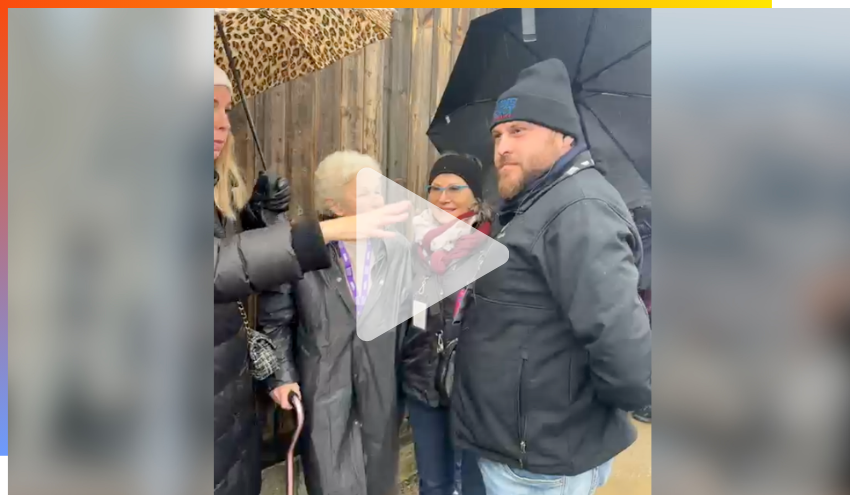
I saw two generations of Jewish survivors sitting together. Two people who had witnessed unimaginable evil, separated by more than 80 years, yet united by something infinitely stronger than the hatred directed against them. They were both part of the same Jewish family.
I am leaving Poland with a broken heart, but also with a renewed determination to do everything I can for our people. My prayer is that everyone who joined us leaves with that same determination.
I love our people. I love our land. I love our God.
This week, I think I learned to love our family even more.
Am Yisrael Chai.
Shabbat Shalom from Krakow, Poland.