I am writing to you this week from Florida, after having spent the past several days traveling between the tristate area and here, meeting with friends, supporters, and partners of Aish. In Florida, I have had the pleasure of traveling and meeting with people alongside our fabulous new Director of Development for the Southern Region, Reyna Dominitz, and Aish’s Executive Vice President, Rabbi Meir May. After returning from Poland on Sunday, it has been a whirlwind of meetings and conversations with people who care deeply about the Jewish people and our future.
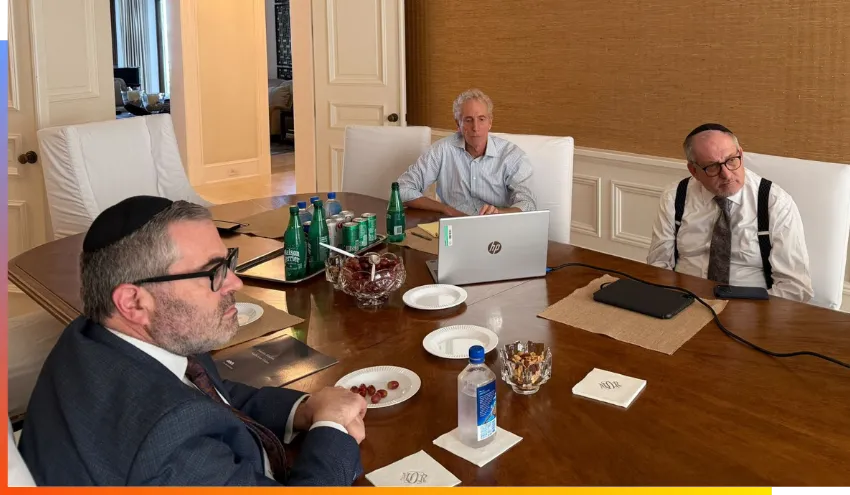
As I have shared many times, one of the great privileges of my role is getting out on the road and spending time with people who believe in our mission. There is something incredibly energizing about these conversations, especially at a time when so much is happening in Israel and throughout the Jewish world.
One thing continues to amaze me. Wherever I go, wherever I turn, I meet people whose lives have been touched by Aish.
Sometimes it happens during a scheduled meeting with a major Jewish communal leader. Other times it happens in a synagogue, a restaurant, or simply walking down the street. Someone will tell me how much they love Aish.com, how they read these weekly emails, or how they follow our content on Instagram, TikTok, and our many other platforms. What amazes me even more is how personally connected people feel to our educators. Everyone seems to have a favorite! One person follows Jamie Geller religiously, another loves learning from Rabbi Dov Ber Cohen, another cannot get enough of Rabbi Daniel Rowe, and still others have their own favorite Aish rabbis and teachers who have become part of their daily lives.
Many of these relationships go back decades. Someone will tell me about an Aish Discovery Seminar they attended thirty years ago, a class that changed their perspective on Judaism, or a moment when Aish helped them reconnect with their Jewish identity. For some, Aish has literally been a Jewish lifeline for much of their adult lives.
I cannot begin to describe how moving it is to hear these stories.
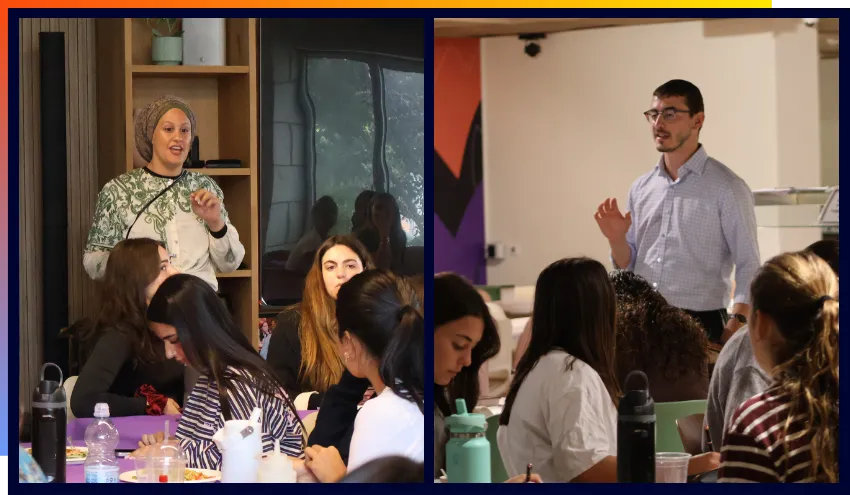
There is another change I have noticed, however, and I believe it is one of the most significant developments in Jewish communal life since October 7th.
For many years, those of us involved in Jewish outreach and education had to work hard to explain why reaching unaffiliated and disconnected Jews was so critically important. Today, those conversations are very different.
The unprecedented explosion of antisemitism around the world has awakened something in the Jewish community. People are beginning to understand that fighting antisemitism cannot simply mean fighting those who hate us. Of course, we must confront hatred wherever it appears. Anyone who follows my writing or public advocacy knows how strongly I believe in speaking out, challenging lies, and defending the Jewish people and the State of Israel.
Yet there is something even more fundamental.
When the Almighty gave the Jewish people the Torah, He gave us an extraordinary source of wisdom, strength, purpose, and identity. Jewish wisdom is not simply a collection of beautiful ideas or ancient traditions. It is the source of our spiritual strength. The more connected we become to our Judaism, the stronger we become. The more we understand our heritage, the more confident we become in our identity, and the less we allow the hatred of others to define who we are.
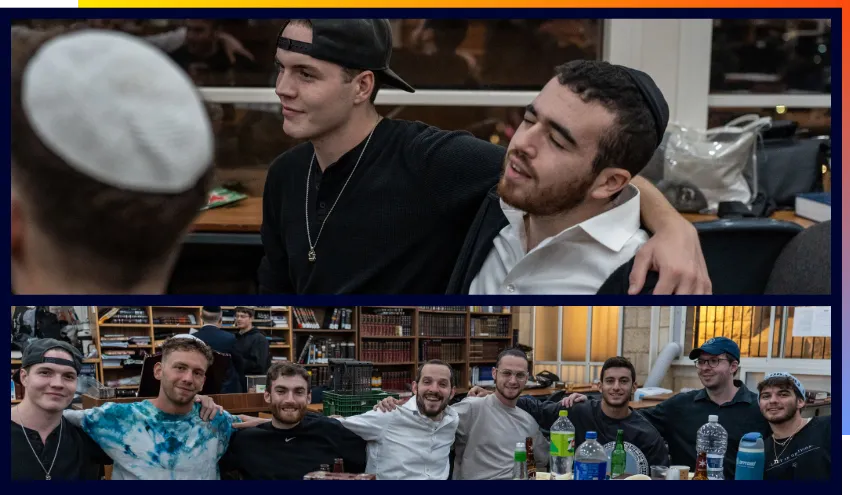
At Aish, our mission is not to spend our days trying to convince every antisemite in the world to love the Jewish people. There are organizations doing important work confronting hatred, and that work is necessary. Our primary mission is something different. We want to reach every single Jew, especially those who are the most disconnected, and help them discover the extraordinary gift of their Jewish heritage.
We want Jews who have never experienced the beauty of Shabbat to experience it. We want Jews who have never opened a Jewish text to discover the wisdom that has sustained our people for thousands of years. We want Jews who feel disconnected from Israel, Jewish history, or their fellow Jews to understand that they belong to something magnificent.
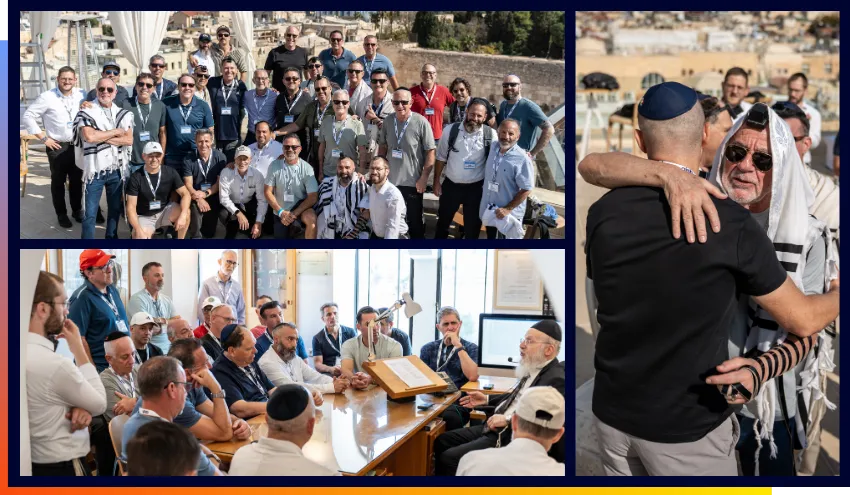
We cannot control how the world chooses to see us. We can, however, help ensure that every Jew understands how to see themselves.
Perhaps this message is resonating so deeply with me because of where I was just one week ago.
Last Shabbat, I was in Krakow, Poland, together with our Aish Living Legacy mission. After spending the week walking through the places where Jewish life flourished for centuries and where so much of that life was brutally destroyed, celebrating Shabbat together was an experience I will never forget.
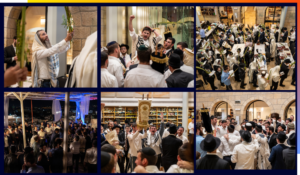
On Friday night, our group joined another Jewish Federation mission and other visitors for Kabbalat Shabbat. There we were, Jews from different communities, backgrounds, and walks of life, singing and dancing together in Krakow. In a city that had witnessed the destruction of so much Jewish life, the sounds of Jewish prayer and song once again filled the air.
I kept thinking about what our grandparents and great-grandparents would have given to witness such a moment.
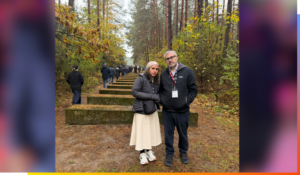
Earlier that Friday, we had visited Tarnów, a Polish city that before the Holocaust was home to approximately 25,000 Jews, roughly half its population. We traveled to a site of mass graves, including a grave where Jewish children had been murdered and buried.
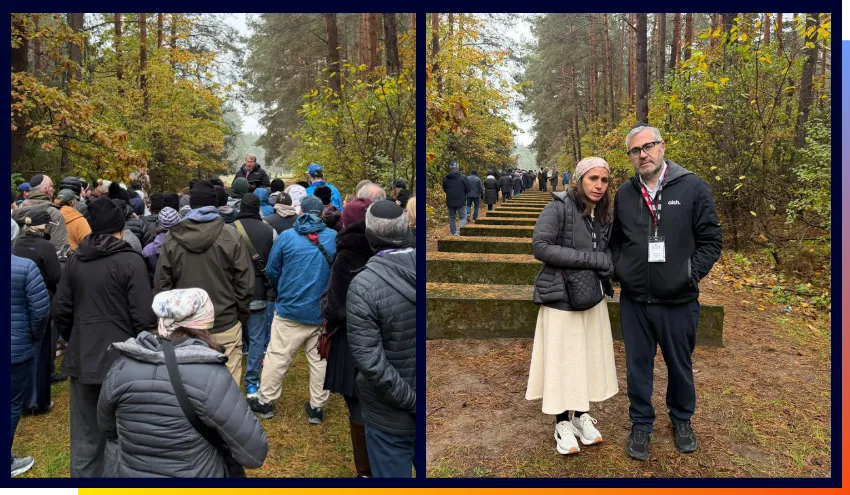
There are moments in life when words simply fail.
As we walked toward that terrible site, we suddenly heard something unexpected. In the distance, a group of Israelis had begun singing Hatikvah. Imagine that scene for a moment.
We were standing on ground where Jewish children had been murdered simply for being Jewish, and suddenly the national anthem of the Jewish state was rising through the trees.
We approached the group and began speaking with some of the parents accompanying the students. Within moments, strangers became family. We sang together, we cried together, and we embraced one another. Nobody asked which synagogue anyone attended, how religious anyone was, or what political party anyone supported. None of that mattered.
We were Jews standing together, bound by a history larger than any one of us, a pain we all shared, and a future we were all determined to protect.
I have thought about that moment repeatedly since returning home. What allowed people who had never met one another to feel such an immediate and profound bond?
It was our shared Jewish identity. Our history, our heritage, our faith, and our sense of responsibility for one another.
That connection does not emerge out of nowhere. It has to be nurtured, taught, and passed from one generation to the next.
That is why Jewish education matters so profoundly. That is why Aish matters
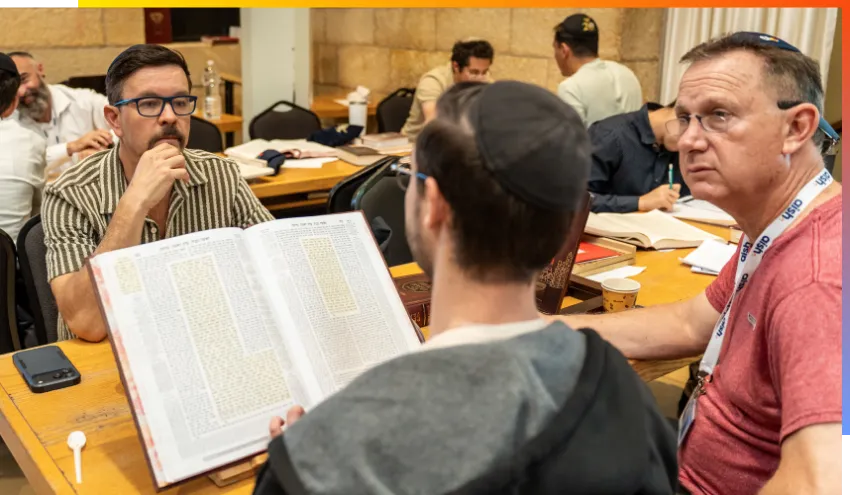
These thoughts have been particularly meaningful to me this week as I have followed the Israeli elections.
As many of you know, Aish is an Israeli institution, headquartered in the heart of Jerusalem, and one of the country’s major nonprofit educational organizations. We interact with people from every corner of Israeli society, from senior government leaders to students who are just beginning their Jewish journeys. Over the past decade, I have had the privilege of developing relationships across the Israeli political spectrum and learning a great deal about the complexities of Israel’s parliamentary system.
I have no intention of using this letter to offer political commentary about which parties should form the next government or what the final coalition should look like. My concern is something far more fundamental.
Elections are inherently divisive. People argue passionately about their beliefs, their candidates, and the direction they want their country to take. Strong words are exchanged. Emotions run high. Sometimes things are said or done that leave lasting wounds.

Yet when the voting is over, we are still one people.
The challenge before us is not simply how to form a government. It is how to heal the divisions within our Jewish family.
I have often felt that one of the greatest dangers facing the Jewish people is allowing our differences to become the defining feature of our relationships. We begin to see one another through political labels, religious affiliations, and ideological disagreements rather than through the extraordinary bond that connects us.
I experienced this firsthand during our participation in the World Zionist Congress elections. Before the results were even announced, I wrote publicly that regardless of the outcome, Aish would make every effort to build relationships with representatives across the political spectrum.
That was not simply something I wrote. It was a commitment we made, and it is a commitment we have honored.
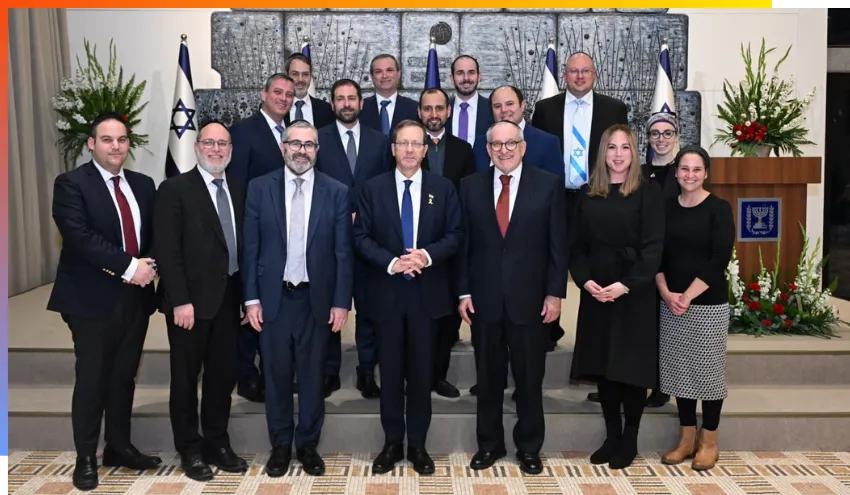
Over the years, I have sometimes been criticized for the people I have met, hosted, or engaged in conversation. My answer has always been the same. Nobody who meets with me is confused about who I am. They know that I am an Orthodox rabbi, that Aish is deeply committed to Torah and Jewish tradition, and that we stand firmly by our principles.
What I hope they also know is that our convictions do not prevent us from loving them.
This brings me to something I believe is at the very heart of Aish.
Several years ago, when we were articulating the values that would guide our organization, we settled on three principles that continue to shape everything we do: Wisdom, Love, and Responsibility.
Wisdom represents our belief in the transformative power of Torah and the importance of helping every Jew discover that wisdom through their own personal journey. Responsibility reflects our obligation to one another, to the Jewish people, and to the world that the Almighty has entrusted to us.
Yet there is a reason that love stands at the very center of these values.
I remember that during our original conversations, there was a suggestion that we should make unity one of our guiding principles instead of love.
I resisted that suggestion.
Not because unity is unimportant. Quite the opposite. Unity is critically important, especially during times of crisis. We have seen extraordinary examples of Jewish unity since October 7th, and I pray that we never lose that sense of shared destiny.
Yet I believed then, and I believe even more strongly today, that love is something deeper than unity.
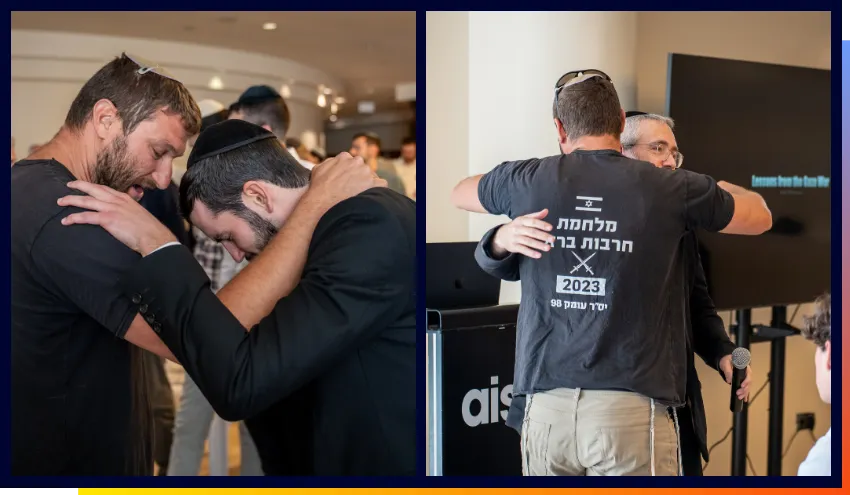
Unity often means coming together around a common goal. It sometimes requires people to put aside their differences, compromise, or temporarily set aside parts of themselves for the sake of a greater purpose. That can be beautiful and necessary. Yet unity can also be fragile. When the crisis passes, when the common goal disappears, or when disagreements return, the unity can begin to unravel.
Love is different.
Think about the love of a parent for a child. Parents do not stop loving their children when they disagree with them. Think about the love between siblings, who may argue passionately and see the world in completely different ways, yet remain bound together by something that transcends those disagreements.
Think about our love for the Almighty, and the extraordinary love that Avraham Avinu brought into the world. Abraham did not build the Jewish people on hatred of others. He built his life around his love for God, his love for humanity, and his desire to bring goodness, kindness, and moral purpose into the world.
Love does not require us to surrender our convictions. It requires us to recognize that the person standing across from us is more important than the argument separating us.
Unity asks us to stand together. Love reminds us why we belong together.
That distinction is especially important today.
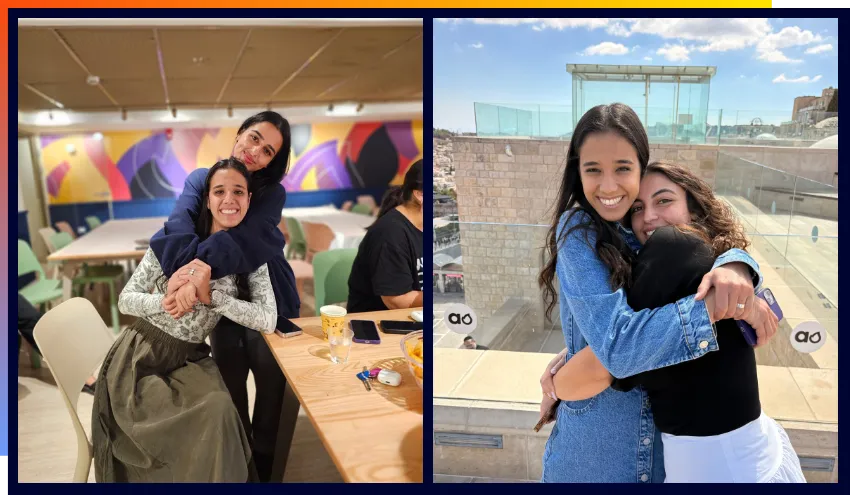
We are living in a world filled with anger, hatred, blame, and the constant search for someone to hold responsible for everything that has gone wrong. Social media amplifies our disagreements. Political rhetoric encourages us to divide ourselves into opposing camps. Too often, we surround ourselves only with people who think like us, believe like us, and vote like us.
The Jewish people cannot afford to become another collection of competing tribes that have forgotten they are one family.
We have something infinitely more precious.
We have thousands of years of shared history. We have the Torah. We have the extraordinary gift of belonging to the Jewish people. We have a responsibility to one another that does not disappear when we disagree.
Standing in Tarnów last Friday, listening to Israelis sing Hatikvah beside the graves of murdered Jewish children, nobody needed to explain that responsibility. We felt it in our hearts.
Standing in Krakow on Friday night, singing and dancing with Jews from communities around the world, nobody needed to ask whether we belonged together. We knew.
My prayer is that we do not need to stand at a mass grave or confront another terrible crisis to remember how much we love one another.
As I reflect on these past two weeks, from the haunting sites of Poland to the inspiring conversations with Aish supporters across America, and now watching the future political leadership of Israel begin to take shape, I keep returning to this same message.
We need more Jewish wisdom, because wisdom gives us the strength to understand who we are.
We need more Jewish responsibility, because every Jew must know that the future of our people belongs to all of us.
Most of all, we need more Jewish love, because without love, even our greatest achievements lose something essential.

I want to leave you with a simple request this Shabbat.
Reach out to someone who sees the world differently than you do. Perhaps it is someone whose politics you strongly disagree with. Perhaps it is a fellow Jew whose religious observance or philosophy is very different from your own. Perhaps it is a friend or family member from whom you have grown distant.
Call them. Invite them for Shabbat. Sit down for a conversation. Listen to them.
You do not have to agree with everything they say. You do not have to change your beliefs or ask them to change theirs.
Simply remind them that they are your brother or sister, that they are part of your Jewish family, and that you love them.
The world has more than enough hatred. Let us make sure that the Jewish people are known for something infinitely greater.
Let us be known for our wisdom, our responsibility, and above all, our love.
Wishing you and your families a beautiful, meaningful, and love-filled Shabbat Shalom.