Before anything else, I want to begin this week simply by thanking Hashem.
We are taught to thank Hashem constantly. Gratitude is woven into our prayers and into the rhythm of Jewish life. We wake up in the morning, and the first words we say are Modeh Ani. Thank You.
Still, there are moments when those words hit differently. There are moments when you see something happen and feel overwhelmed by gratitude to Hashem, not only for what happened, but for what that moment says about who we are as a people.
I had one of those moments this week.
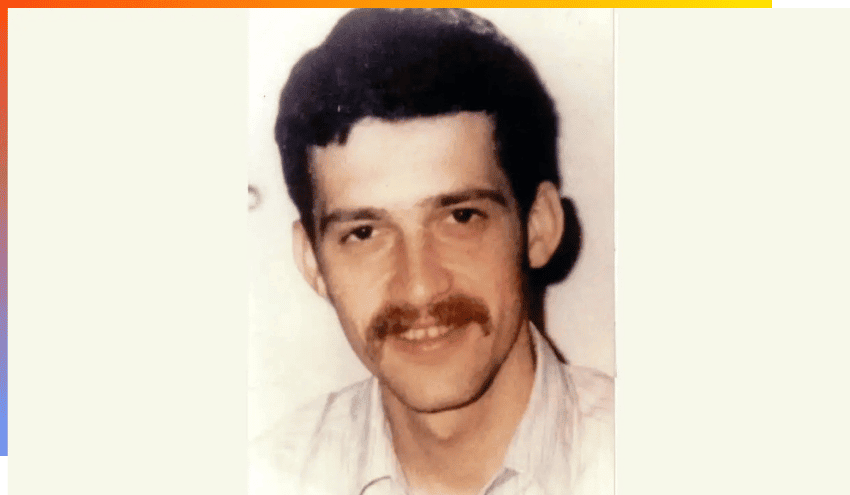
After more than four decades, Sergeant First Class Yehuda Yekutiel Katz, Zt”l, who disappeared during the Battle of Sultan Yacoub in the First Lebanon War in June 1982, was finally brought home.
Forty-four years.
Forty-four years of waiting. Forty-four years during which his family lived without the closure of a grave in Israel. Forty-four years during which the Jewish people refused to forget him.
This story is deeply personal for me.
My father, Rabbi Melvin Burg, z”l, was a rabbi in Brooklyn for close to four and a half decades. He absolutely loved Israel. Israel somehow found its way into virtually every speech he gave. He loved the Jewish people, he loved the soldiers of the IDF, and he felt an extraordinary connection to those who put their lives on the line to protect us.
I can still picture him standing in shul every single Shabbos making a Mi Sheberach for missing Israeli soldiers. These were soldiers who had disappeared years earlier, some presumed to have died long before, whose bodies had never been brought home.
Yehuda Katz was one of those names.
I heard that name again and again from my father at the bimah. My father passed away almost five years ago, yet I can still hear his voice saying it.
Yehuda Katz.
This week, Yehuda finally came home.
Our perspective, of course, has been transformed by October 7. Since that horrific day, we have said again and again that this chapter cannot truly close until everyone comes home. Those who are alive must come home to their families, and those who were murdered must come home to be buried with dignity among their people.
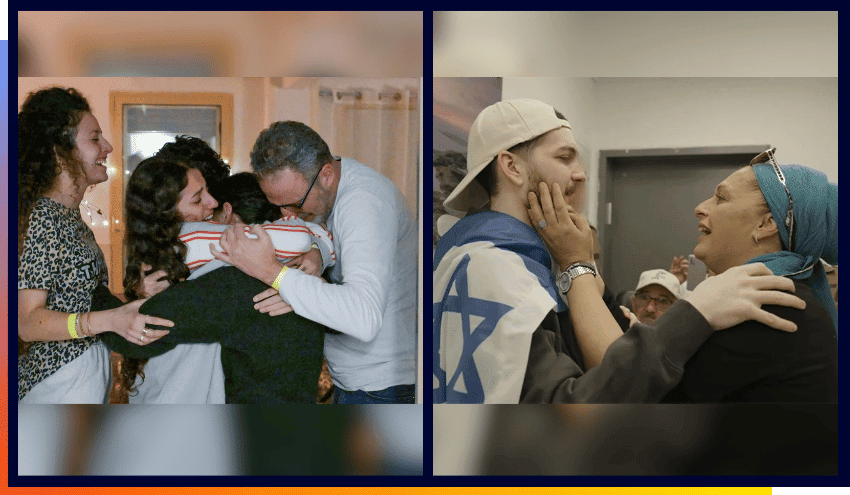
That commitment did not begin on October 7. It is part of who we have always been.
Years ago, while studying for my master’s degree in medieval Jewish history, I came to understand just how far back this idea goes. Throughout history, people knew that Jews were connected to one another. That connection helped Jewish communities build networks across enormous distances. Tragically, our enemies understood it too. Taking a Jew hostage could be profitable precisely because everyone knew that other Jews would care.
Why?
We are not merely a collection of people who share a religion. We are not simply a nation or a race.
We are a family.
Families do not forget their children.
Governments changed. Wars were fought. Generations were born. The Middle East changed beyond recognition.
We remembered.
This week, our brother came home.
I imagine there are Jews in shuls around the world who heard the news and immediately recognized his name. Perhaps their rabbis, like my father, had been saying Yehuda Katz’s name for decades.
There is something breathtaking about a people who can carry someone’s name for forty-four years.
So before I write about anything else this week, I simply want to say: Thank You, Hashem.
Thank You for bringing Yehuda home. Thank You for giving his family the ability to finally bury him in Israel. Thank You for making us part of a people that does not give up on its children.
That same feeling of Jewish family was on my mind this past Sunday for a very different and much happier reason.
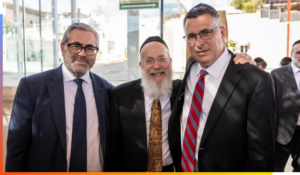
Israel is starting to fill up again as students arrive for the new year. At Aish, the energy is incredible. We are in the middle of a major expansion in the Old City, including new dormitories, and everyone is racing around as the final touches are completed.
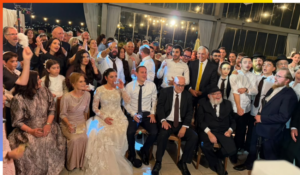
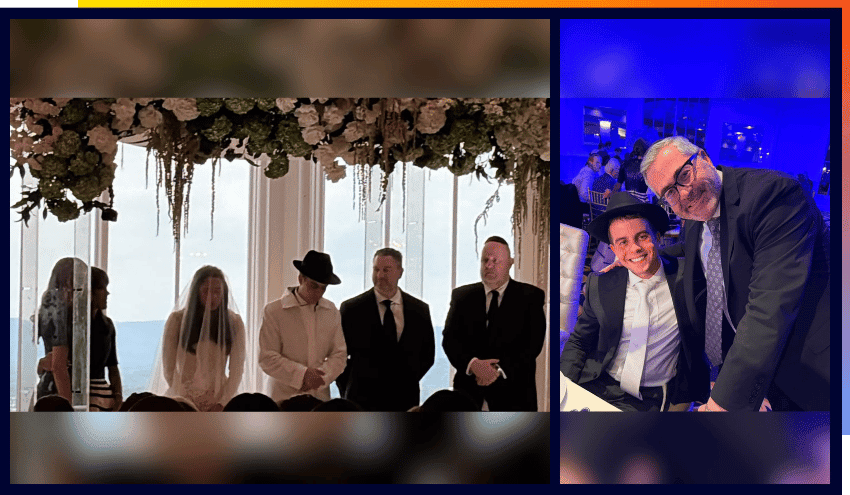
Amid all of that, I had the tremendous privilege on Sunday of racing from one wedding to another.
The first was the wedding of Yosef Morrison and Ariella Mero.
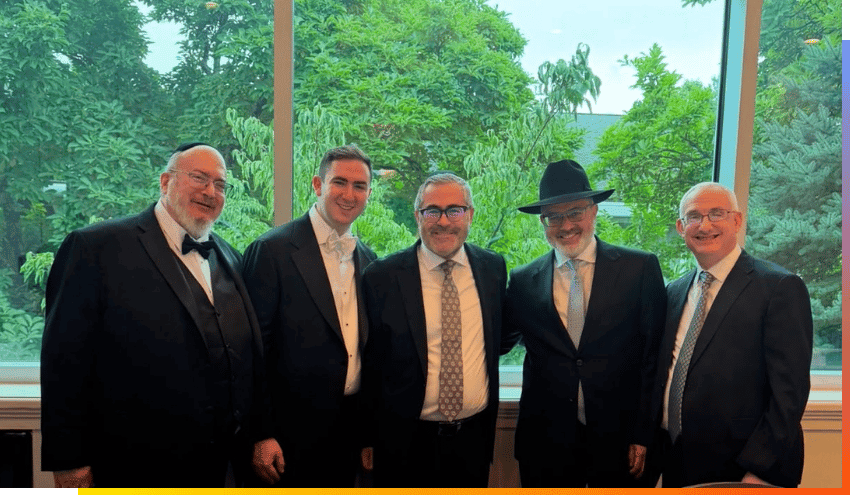
I remember Yosef arriving at Aish. I remember watching him learn in our Beit Midrash, watching him grow, become a leader, and influence the people around him.
Suddenly, there he was under the chuppah, building a Jewish home.
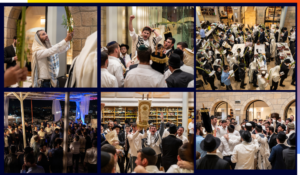
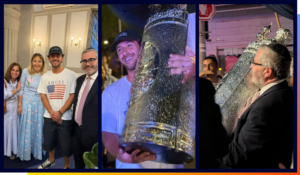
Then I raced to the wedding of Jared Stern and Gabi Riffkin. Jared is another remarkable young man who has influenced so many people. He has become a genuine leader and has done incredible work helping provide pairs of tefillin to Jews around the world.
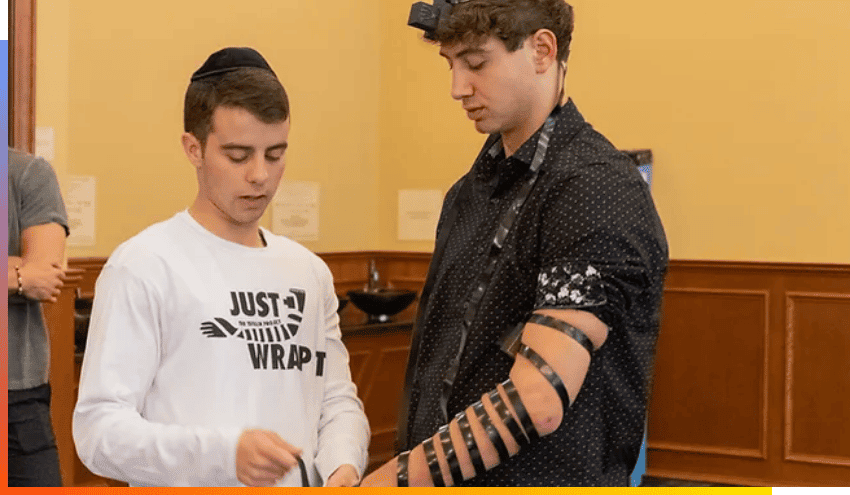
Once again, I walked into a room filled with dancing, singing, friends, students, and alumni celebrating the creation of another Jewish family.
Standing there, I thought: This is Aish.
Aish is classes. Aish is the Beit Midrash. Aish is Aish.com. Aish is our magnificent building overlooking the Kotel. Aish is programs, trips, learning, and inspiration.
Those are all vehicles.
The real goal is what I was watching under those chuppahs.
Jewish lives. Jewish marriages. Jewish homes. Jewish futures.
Aish is now the second-largest overseas program in Israel, with thousands of young Jews coming through our doors. They learn, ask questions, struggle, discover, become inspired, and become leaders.
Then they go out into the world and build.
That matters more today than I can possibly express.
Since October 7, I have spoken many times about the dark cloud that descended over the Jewish people. There was so much pain that many of us wondered how we would ever celebrate normally again.
How do you dance when people are mourning? How do you sing when families are shattered? How do you celebrate when your brothers and sisters are fighting a war?
I remember when we hosted Bar Mitzvah celebrations at Aish for around ten boys whose original celebrations had been impacted by October 7. Watching those boys, I realized something.
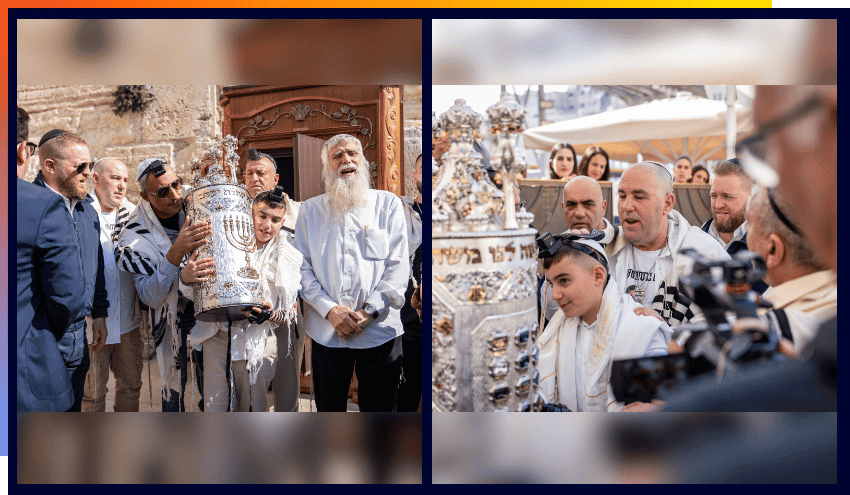
We were going to keep celebrating.
Our hearts could be broken, and we could still dance.
We could mourn, and we could still build.
We could cry, and we could still sing.
This Sunday, standing at those weddings, I felt it again.
Our enemies would love nothing more than to make Jewish life feel frightening, small and temporary. Antisemitism tries to convince Jews to hide, to be afraid of our identity and uncertain about our future.
Our response is a chuppah.
Our response is another Jewish home.
Our response is a young Jewish couple saying: We are building the future.
There may be no greater Jewish act of defiance.
There may also be no greater Jewish act of love.
That word, love, is especially important right now.
We are in the month of Elul, preparing ourselves for Rosh Hashanah. Elul is famously connected to the words from Shir HaShirim: Ani l’dodi v’dodi li.
“I am my beloved’s, and my beloved is mine.”
Elul is the month of love.
We often think about this period in terms of judgment, repentance, and accountability. All of that is true. Underneath everything, though, is a love story.
We are God’s beloved.
Elul is our opportunity to rediscover that relationship.
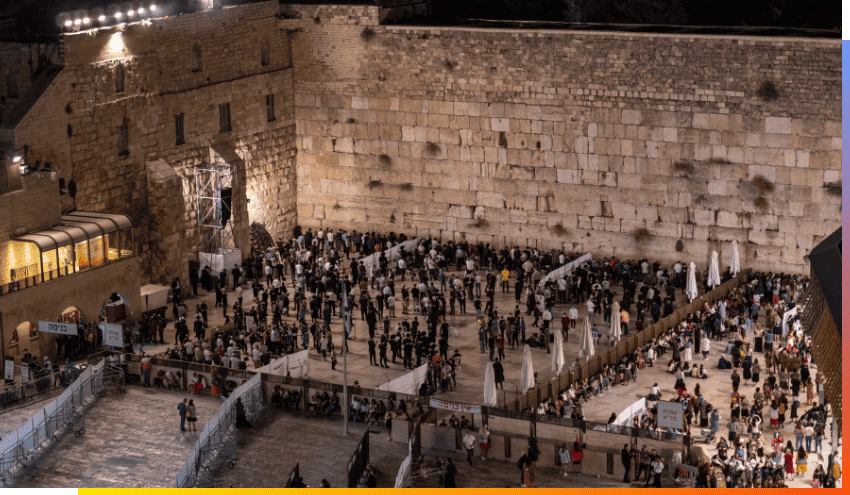
I sometimes describe Elul as the dating phase of our relationship with Hashem. We are reconnecting. We are paying attention again. We are remembering why the relationship matters, preparing ourselves for Rosh Hashanah and ultimately Yom Kippur, when we stand face to face with our Creator.
A real relationship requires introspection.
Love cannot only be about what the other person gives me. Love asks: What am I giving?
What kind of person am I? How do I speak? How do I listen? How do I treat my family and the people I work with? How quickly do I judge? How quickly do I forgive? How willing am I to say that I was wrong?
Those questions are Elul.
At Aish, we talk constantly about our three core values: wisdom, responsibility, and love.
Wisdom teaches us what matters.
Responsibility tells us that knowing what matters is not enough. We have to act.
Love gives everything life.
Hashem gives us the greatest love imaginable, and our job is to reflect some of that love back into the world: to our spouses, our children, our parents, our colleagues, and Jews who think differently from us.
Perhaps that is why this week felt so perfectly timed.
I began the week watching two young couples build Jewish homes based on love.
Then our entire nation witnessed what happens when love refuses to surrender.
Forty-four years ago, Yehuda Katz disappeared.
The Jewish people could have said it was too long ago. We could have decided that the world had moved on.
We didn’t.
Love does not work that way.
Love remembers.
Love searches.
Love carries someone’s name for forty-four years.
Love tells a grieving family: Your son is our son too.
Perhaps that is the message I am taking into Elul this year.
Ani l’dodi v’dodi li.
I am my beloved’s, and my beloved is mine.
The Jewish people belong to Hashem.
We also belong to one another.
From a soldier who disappeared in Lebanon in 1982, to a young man walking into an Aish Beit Midrash searching for meaning, to a couple standing beneath a chuppah beginning their lives together, the thread connecting all of it is love.
Love does not mean our hearts will never break.
Love means we stay.
Love means we remember.
Love means we take responsibility.
Love means we keep building.
Love means we never give up.
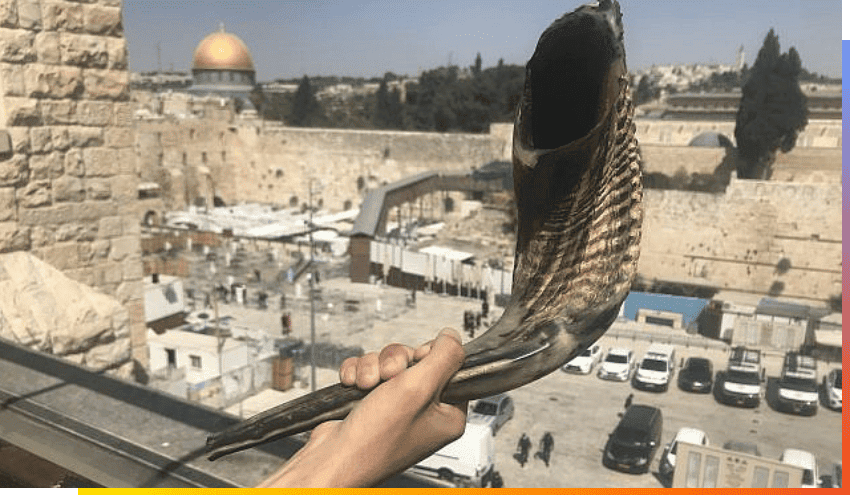
May this Elul be a time when each of us looks inward and asks how we can bring a little more love into our homes, our communities, and our relationship with Hashem.
May we merit to see more Jewish weddings, more Jewish children, more Jewish learning and more Jewish homes. May we continue to bring every one of our brothers and sisters home.
Most of all, may we never lose the extraordinary love that has sustained the Jewish people through thousands of years and, with Hashem’s help, will carry us forward for thousands more.
Wishing all of you a beautiful Shabbos filled with love, laughter, family and hope for the incredible things still ahead.