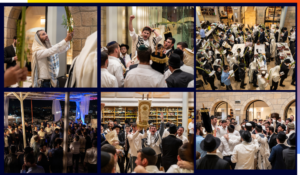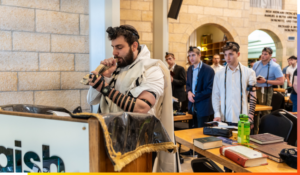
I had a truly incredible Shabbos this past week with our students in Jerusalem, and while I admit that I may be a little biased, I genuinely believe that our students are among the best in the world.
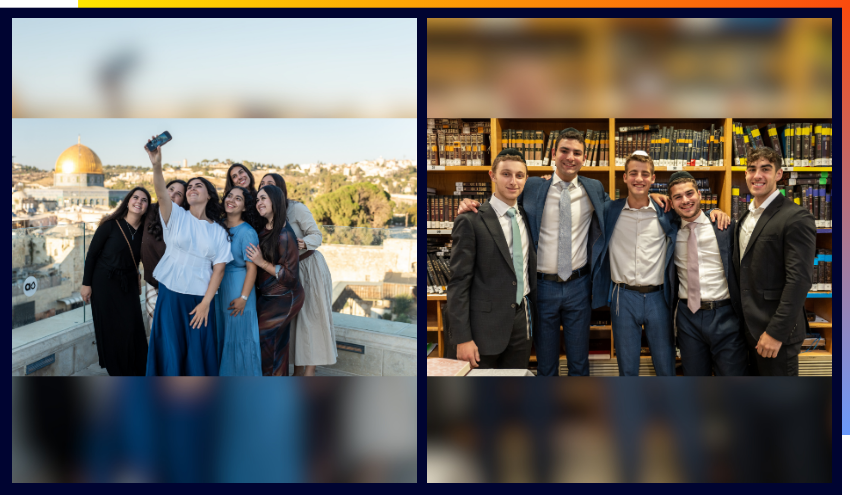
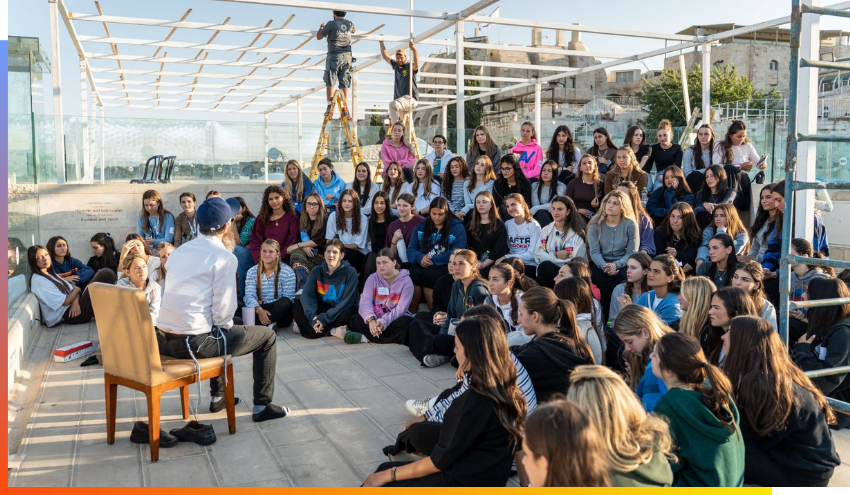
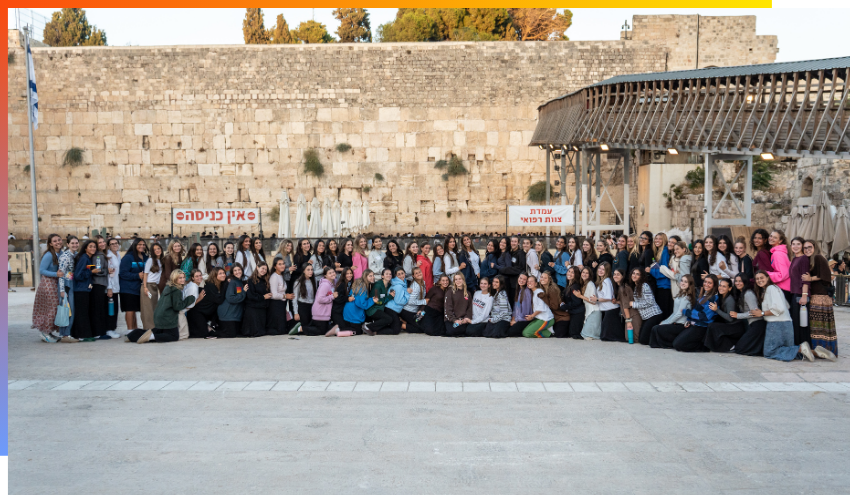
Friday night, I walked into a packed room filled with students beginning the new year in our Eber Family Gesher (efg@Aish) program. Some were beginning their first year, others were returning for Shana Bet, and all of them had come to Jerusalem with a desire to grow, learn, and discover more about who they are as Jews. Right next door, a group of our Spanish speaking students from Mexico was having Shabbos dinner. A few floors away, the remarkable young women of Aspire, many of whom arrived with limited Jewish educational backgrounds, were celebrating Shabbos together. The next day, I had lunch with our Shana Bet students in the Suzana and Ivan Kaufman Aish Institute for Women’s Education Building.
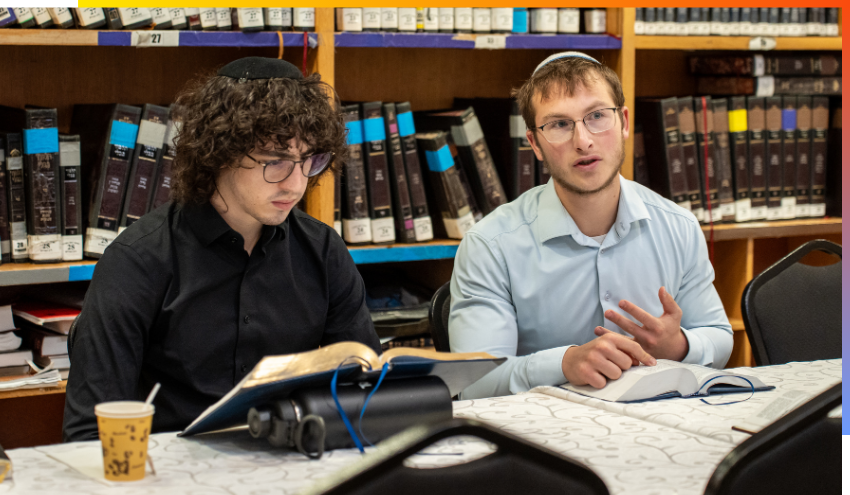
Everywhere I went, there was Torah being learned, conversations taking place, friendships being formed, and young Jews thinking seriously about the lives they want to build.
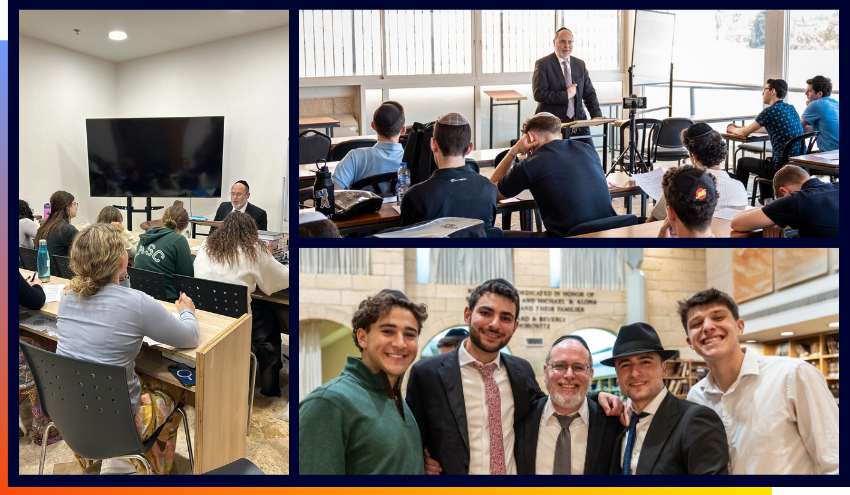
Thank God, we are bursting at the seams. Every bed is occupied. Our classrooms and batei midrash are filled. Walking through the buildings this Shabbos, though, reminded me that what matters most is not how many students are here. It is what we are asking those students to become.
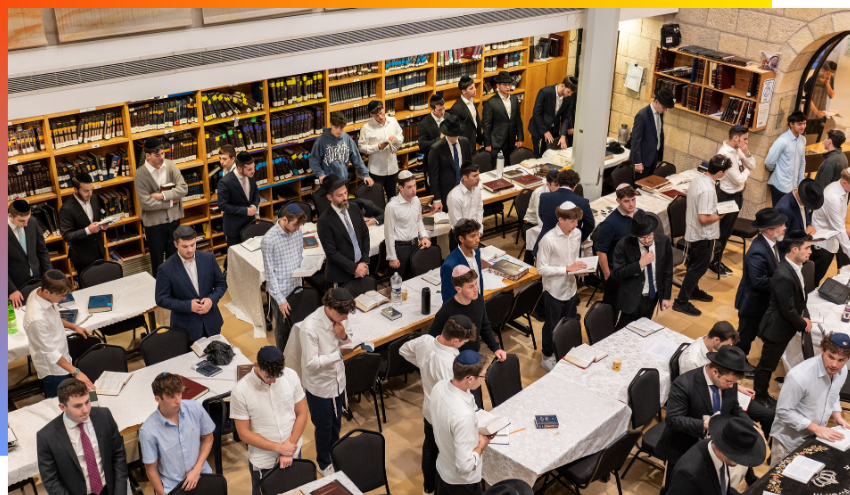
Aish has never simply been a place to study Torah. Aish is a place that creates Jewish leaders.
Rav Noach Weinberg, zt”l, built Aish around the conviction that Torah learning must lead somewhere. Our Rosh Yeshiva, Rav Yitzchak Berkovits, continues that tradition today. We want our students to fill themselves with the wisdom of Torah, yet we also want them to understand that leadership means taking what they have learned and accepting responsibility for other Jews and for the future of the Jewish people. Whether they ultimately become rabbis, educators, professionals, parents, community leaders, or simply the person willing to stand up when something needs to be done, we want them to leave Aish understanding that every Jew has the capacity to lead.
Over Shabbos, we had a wonderful reminder of exactly that. It was announced that three of our students who became rabbis had just accepted positions with outreach organizations across North America. They now join a constant stream of Aish alumni serving and leading Jewish communities throughout the world. I cannot tell you how often I travel somewhere, walk into a Jewish community, and discover that someone who once sat in our beit midrash is now teaching, building, inspiring, leading, and taking responsibility for others.
That is Aish.
Our three core values are Wisdom, Love, and Responsibility, and in many ways they are also our formula for leadership. Wisdom is what we fill ourselves with, the wisdom that God has given us through Torah. Love is how we share that wisdom, with genuine love for every Jew. Responsibility is the moment when we recognize that what we have learned and who we have become obligates us to step forward and lead.
Spending Shabbos with these students filled me with tremendous pride and gave me enormous energy for the week ahead.
I spent the rest of the week in Israel meeting with our staff, and that same energy was everywhere. Over the past five years, Aish has dramatically expanded the ways in which we reach the Jewish people. Aish.com remains an extraordinary destination for Jewish wisdom, our podcasts are reaching growing audiences, and our social media community has grown to well over four million followers around the world.
Late one afternoon, I bumped into two brand new students from our Foundations program outside my office, one from South Africa and the other from Australia. I introduced myself and explained what I do, and they asked if they could come into my office to talk.
As we spoke about everything Aish is doing online, they asked me, “What are you doing with AI?”
I turned my computer screen toward them, opened Aish.com, and clicked on our AI Rabbi.
“What would you like to ask it?” I said.
They thought for a moment and came up with the perfect question: “Is it moral and ethical to have an AI Rabbi?”

Within seconds, the AI Rabbi gave them a thoughtful response about both the opportunities and limitations of seeking rabbinic guidance through artificial intelligence rather than speaking with a living, breathing rabbi.
I loved the moment because, in a small way, it captured what Aish has always tried to do: use the tools of today to transmit the eternal wisdom of Torah.
The medium changes. The wisdom does not.
That brings me to one of the most important projects we discussed this week: Aish U, Aish University.
Millions of Jews around the world now turn to Aish for Jewish wisdom. Our next responsibility is to give them the opportunity to go deeper. We want to create a place where someone with virtually no Jewish educational background can enter, know where to begin, and then climb step by step toward genuine Jewish literacy, understanding, and connection.
As we raced forward to build Aish U, we discovered something important. Our technology had moved ahead faster than our curriculum. That realization caused us to refocus on the heart of the project. Aish U cannot simply be an enormous collection of disconnected Torah classes. It needs to provide a pathway through Torah.
Pirkei Avot describes Jewish learning as precisely such a progression:
“Five years old for Scripture, ten years old for Mishnah, thirteen for the commandments, fifteen for Talmud.” (Pirkei Avot 5:21)
The particular ages are not the point for us. The principle is. Jewish learning has a path. One level prepares us for the next. Knowledge becomes understanding, understanding becomes connection, and ultimately connection must lead to responsibility.
That is what we want Aish U to accomplish.
I feel enormously blessed that Rabbi Dovid Rosman, who leads our educational programming, is helping lead the development of this curriculum together with many of the extraordinary rabbis and rebbetzins of our yeshiva and seminary. Our goal is to create a pathway where a Jew who begins knowing almost nothing can enter and know where to start, what comes next, and how to continue climbing.
Technology will give us remarkable new ways to travel that path. AI can personalize the journey. Video can bring extraordinary teachers into someone’s home anywhere in the world. Interactive learning can make Torah accessible in ways that Rav Noach could scarcely have imagined when he founded Aish. Yet technology is only the vehicle. The mission remains what it has always been: helping another Jew acquire the wisdom of Torah and make it part of who they are.
September 1 marked our kickoff, and we gathered our team for a town hall to discuss where Aish is going and what we are building together. With our students back in the batei midrash, our buildings bursting with Jewish life, and our staff focused on bringing that experience to Jews around the world, it felt like exactly the right way to begin a new year.
Perhaps that is especially appropriate right now.
We are in Elul, approaching Rosh Hashanah and Yom Kippur, when Judaism asks each of us to stop and examine where we are going. Rosh Hashanah this year begins on Friday night, bringing the holiness of Rosh Hashanah together with the holiness of Shabbos. It is an extraordinary opportunity to step away from the noise and ask ourselves some of the most important questions we can ask: Who am I becoming? Where do I need to grow? What needs to change? What can I accomplish in the year ahead that I have not yet accomplished?
What is true for individuals is also true for institutions.
Aish must constantly ask those questions of itself. We honor our past not by standing still, rather by taking the eternal mission that Rav Noach entrusted to us and asking how we can bring it to the Jewish people of today. Aish U represents an enormous part of that next chapter, creating a doorway through which Jews anywhere in the world can enter the universe of Torah and begin climbing.
The best part is that all of you are coming with us.
This coming Shabbos is, in a sense, our final Shabbos before the final week of the Jewish year. I hope we can use these precious days to think about the three values that guide Aish and perhaps allow them to guide us personally as well.
Let us fill ourselves with Wisdom.
Let us approach every Jew with Love.
Let us accept Responsibility for the future of the Jewish people.
After the Shabbos I just experienced, surrounded by young Jews from around the world who are beginning to do exactly that, I enter this final stretch toward Rosh Hashanah with tremendous hope for what lies ahead.
Wishing you and your families an incredible Shabbos.