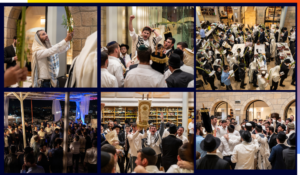
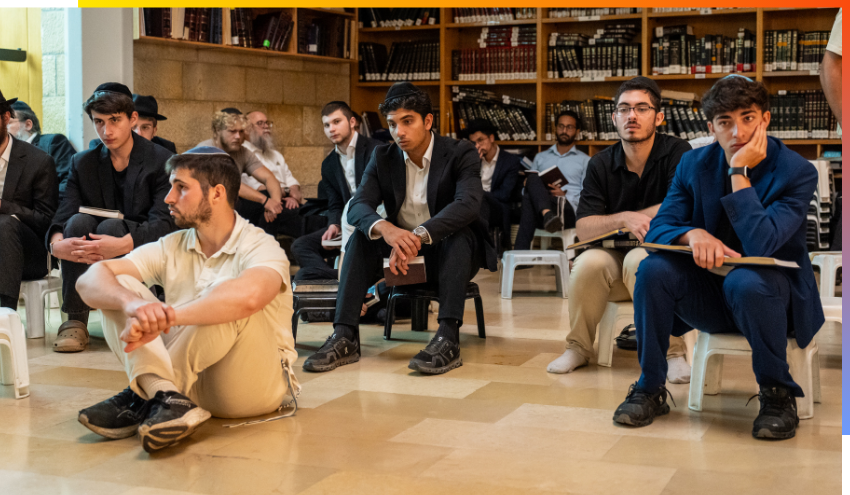
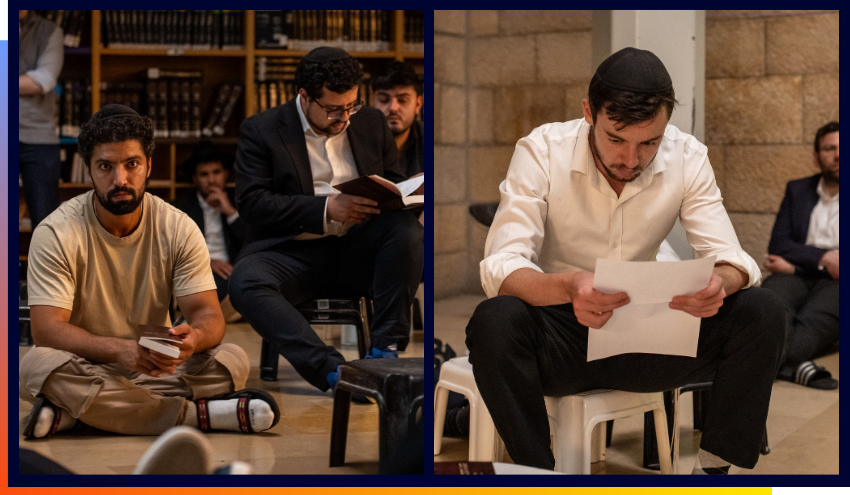
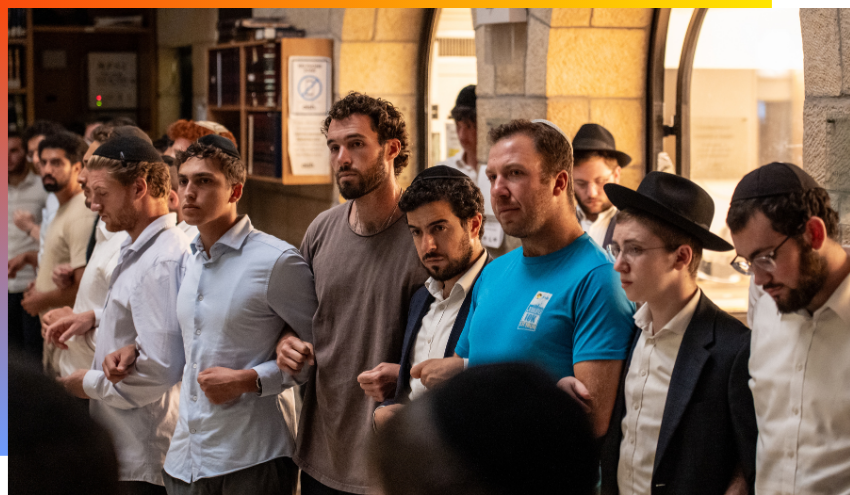
This week we experienced the emotional journey of Tisha B’Av. We fasted together. We mourned the destruction of the Beit HaMikdash. We reflected on the tragedies that have shaped Jewish history. We prayed with all our hearts that this will be the final Tisha B’Av before we merit to see the rebuilding of the Beit HaMikdash in Jerusalem.
Tisha B’Av always forces us to look backward. This year it also reminded me why we should look forward with hope.
I travel frequently, and I rarely come home with remarkable stories from airports or car rides. Earlier this week, however, I found myself in an Uber driven by a man who had spent many years teaching high school in China before moving to the United States to provide greater educational opportunities for his children. Our conversation naturally turned to education. He asked what I had studied in graduate school, and I told him that I earned my master’s degree in Medieval Jewish History.
That answer almost always leads to interesting conversations.
He asked what Medieval Jewish history was like, and immediately I was reminded of something that happened many years ago. A close Christian friend of mine, who was serving in public office, joined our family for Shabbat dinner. His wife was in graduate school, and our academic backgrounds became part of the conversation. When I mentioned Medieval Jewish History, he smiled and said, “I love medieval history. Knights on horseback, castles, jousting. It is such an exciting period.”
I smiled and replied, “Our families experienced medieval history very differently. Your ancestors may have been carrying the lance. Mine were usually running from it.”
That simple observation captures much of Jewish history.
As I spoke with my Uber driver, our discussion naturally moved from medieval Jewish history to modern Jewish history, Israel, Gaza, and the explosion of antisemitism throughout the world. He was remarkably thoughtful and genuinely sympathetic toward the Jewish people. His questions gave me an opportunity to explain something that studying two thousand years of Jewish history has taught me.
We have seen this story before.
The accusations change.
The countries change.
The technology changes.
The slogans change.
The hatred rarely does.
Generation after generation, facts often become irrelevant whenever Jews become the target. We are blamed for opposing forces. We are accused of impossible contradictions. We are demonized regardless of the reality on the ground.
Yet there is another constant that history teaches with equal clarity.
The Jewish people endure.
Empires rise and disappear.
Kingdoms flourish and collapse.
Powerful civilizations become chapters in history books.
The Jewish people continue to build, to learn, to teach, to pray, and to contribute to the world.
That resilience is not an accident.
It is the fulfillment of Hashem’s promise that Am Yisrael lives.
Coming out of Tisha B’Av, I found tremendous comfort in that realization. Hashem has never abandoned His people. Even during our darkest chapters, He has carried us forward. Every generation has faced enemies convinced that Jewish history was coming to an end. Every generation has ultimately demonstrated that they were wrong.
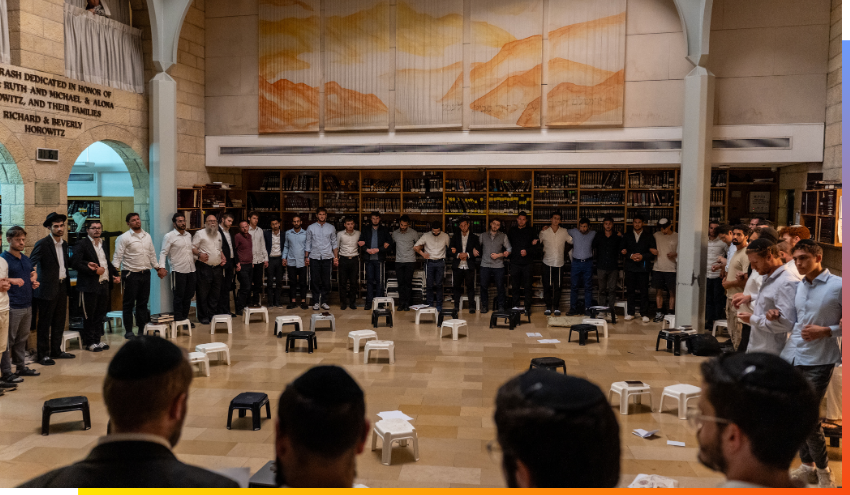
Tisha B’Av also reminds us that our greatest challenges have not always come from outside.
The Gemara teaches that although the First Beit HaMikdash was destroyed because of idolatry, immorality, and murder, the Second Beit HaMikdash was destroyed because of sinat chinam, baseless hatred among Jews (Yoma 9b). Chazal were teaching us something profound. Internal division can accomplish what external enemies cannot.
The Talmud also teaches, “Any generation in which the Beit HaMikdash is not rebuilt is considered as though it was destroyed in that generation” (Jerusalem Talmud, Yoma 1:1). This statement is not meant to discourage us. It is meant to inspire us. Every generation has the opportunity to repair what was broken.
How?
By replacing baseless hatred with unconditional love.
By replacing suspicion with understanding.
By replacing division with Torah.
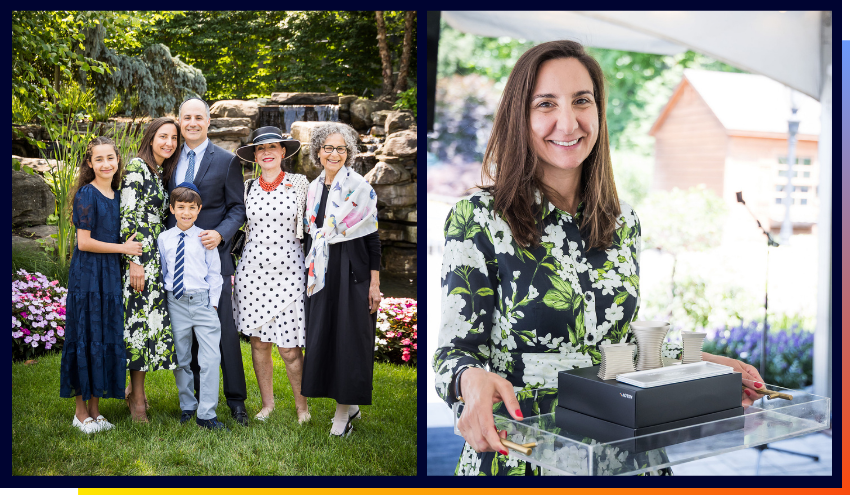
I was thinking about exactly this as I attended the beautiful Aish Ignite (Mominary) gathering this past Sunday in Monsey.

Mominary has become one of the programs of which I am most proud.
Mothers of our students travel to Israel to learn together in our seminary. They deepen their connection to Torah, strengthen their families, and return home inspired.
Standing beneath the tent in Monsey, I looked around the room and saw something extraordinary.
I saw remarkable women from Englewood who helped launch Mominary.

I saw inspiring leaders from the greater Flatbush community.
I saw respected women from the Chassidic community of Monsey.
Women representing many different communities, backgrounds, traditions, and hashkafot sat together as one.

What united them was not politics.
What united them was not geography.
What united them was Torah.
They had gathered to hear Rabbi Dr. Daniel Rowe teach about Tisha B’Av.

At that moment, I found myself thinking about the three values that define Aish.
Wisdom.
Love.
Responsibility.
Everything begins with wisdom.
Hashem gave us the Torah as the greatest expression of Divine wisdom. Torah speaks to every Jewish soul regardless of background or affiliation. Torah creates a common language that transcends labels and communities. Torah reminds us that before anything else, we are one family.
When we learn together, we discover one another.
When we discover one another, love naturally follows.
That is the second value of Aish.
Love is not merely an emotion. Love is an obligation. Rabbi Akiva famously taught, “Ve’ahavta l’reiacha kamocha is a great principle of the Torah” (Sifra, Kedoshim 4:12). Hillel expressed the very same idea in the Gemara when he told the prospective convert, “What is hateful to you, do not do to your fellow. That is the entire Torah. The rest is commentary. Go and learn” (Shabbat 31a).
Those teachings are not simply beautiful ideals.
They are the blueprint for rebuilding the Jewish people.
They are the blueprint for rebuilding the Beit HaMikdash.
The third value is responsibility.
Love without responsibility remains only an emotion.
Real love takes action.
Parents understand this instinctively. Loving a child means accepting responsibility for that child’s future, safety, growth, and happiness.
The Jewish people are one extended family.
Our responsibility is to one another.
Our responsibility is to strengthen Jewish identity.
Our responsibility is to stand proudly for truth.
Our responsibility is to ensure that the next generation inherits a Judaism that is vibrant, joyful, knowledgeable, and united.
The world may seem frightening at times.
The hatred directed toward the Jewish people often feels unprecedented.
History reminds us otherwise.
Haman sought to destroy every Jew.
He failed.
The enemies who destroyed the Temples believed Jewish history had reached its conclusion.
They were wrong.
Every generation has produced those who believed they could erase the Jewish people.
Every generation has discovered that Am Yisrael lives.
That enduring strength comes from Hashem.
It is strengthened through Torah.
It is sustained through love.
Those three values are not simply the values of Aish.
They are timeless Jewish values.
They are the foundation upon which Jewish continuity has always rested.
As we leave Tisha B’Av behind and begin our journey toward a new Jewish year, let us recommit ourselves to those values with renewed determination.
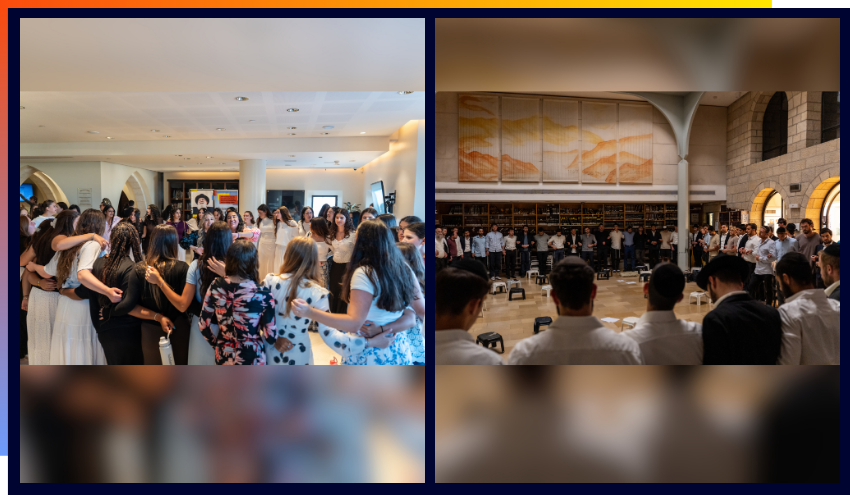
Let us study Torah with greater passion.
Let us love one another with greater generosity.
Let us accept greater responsibility for each other and for the future of the Jewish people.
May our generation merit to transform the tears of Tisha B’Av into the joy of redemption.
May we witness the fulfillment of the prophet Zechariah’s promise that the fasts of the fourth, fifth, seventh, and tenth months will one day become “days of joy and gladness and cheerful festivals for the House of Judah” (Zechariah 8:19).
May that day come במהרה בימינו.