This week I have been reflecting on what it really means to build the future of the Jewish people.
Before anything else, I want to thank every member of the Aish family. Whether you are one of our dedicated staff members, a volunteer, a donor, a board member, a student, an alumnus, or someone who believes deeply in our mission, every success we celebrate belongs to all of you. Every Jewish life touched is the result of countless people working together with one shared purpose.
I also want to give special recognition to Tehila Friedland, whose extraordinary leadership in coordinating our recent singles initiative helped turn a bold vision into a remarkable reality. The countless hours of planning, organization, and dedication that she and her team invested made an enormous difference, and I am deeply grateful.

Most importantly, I want every member of the Aish family to know that every Jewish home that may one day emerge from this historic event will exist because of your dedication, your sacrifice, and your belief in our mission. This accomplishment belongs to every one of you.
Last week gave us one of those moments that reminds us why we do what we do.
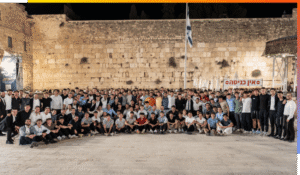
As many of you know, Aish merged with Partners in Torah because we believed that together we could create something even greater than either organization could accomplish alone. That vision came to life in an extraordinary way as the program had 14,976 registrants, all Jewish singles, and boasted 50% of attendees finding a match. This became the largest Jewish speed dating event ever held. The event was hosted by Aish Global Spokesperson Jamie Geller. Thousands of conversations began, countless new friendships were formed, and, God willing, many future Jewish homes were started over the course of those remarkable days.

One of the organizers beautifully summarized what the event represented when she said, “We are not just running an event. We are building a community, one date at a time.”
That statement captures so much of what Aish is all about.
Our values are Wisdom, Love, and Responsibility. Those values reach their fullest expression inside Jewish families. Every Jewish marriage strengthens our people. Every Jewish home becomes another place where Torah is lived, where children are raised with purpose, and where the next generation learns what it means to be part of an eternal nation. Helping Jews meet one another is not separate from our mission. It is one of the most beautiful expressions of it.

As inspiring as it was to watch thousands of Jews begin what we pray will become lifelong relationships, it reminded me that building Jewish families does not begin beneath the chuppah. It begins years earlier, when we teach our children why Judaism matters, why God matters, and why they should aspire to build their own Jewish homes. In many ways, the conversations we had with more than ten thousand singles this past week are simply the continuation of conversations that should begin when our children are young.
More than fifty years ago, Aish was founded to introduce Judaism to Jews who often knew almost nothing about it. We did not begin with advanced Talmud. We began with the foundations. We began by speaking about God. We explored why Torah matters. We taught Jewish history, Jewish purpose, and why the Jewish people exist. We helped people understand not only what Judaism asks of us, but why it matters.
That philosophy still shapes everything we do.
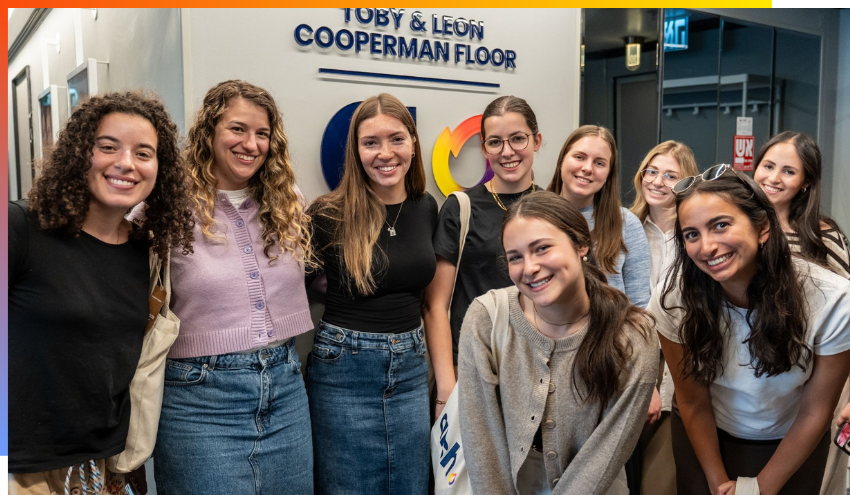
Our Essentials program is open every single day for anyone who walks through our doors. After that comes our Foundations program. Even the name teaches an important lesson. No building can stand without a foundation. Judaism is no different.
King Solomon teaches us, “Train a child according to his way, and even when he grows old he will not depart from it” (Mishlei 22:6).
Our responsibility is not merely to educate our children. Our responsibility is to give them a foundation that will accompany them for the rest of their lives. Facts can be forgotten. A deep conviction in God, Torah, the uniqueness of the Jewish people, and the purpose of Jewish life becomes part of who a person is.
I have become increasingly convinced that this lesson applies just as much to our own children as it does to those discovering Judaism for the first time.
I am an enormous believer in Jewish day schools. I believe every Jewish child should receive the gift of a Torah education, and we are blessed to have extraordinary schools throughout our communities. At the same time, I think there is a challenge that all of us, regardless of community or affiliation, need to recognize.
When children are young, we quite naturally focus on Hebrew, Chumash, Mishnah, Gemara, halachah, and all of the building blocks of Jewish learning. Those are indispensable. As our children become teenagers, however, we also need to help them understand why Judaism is true, why God matters, why Torah is relevant to their lives, and why the Jewish people have a unique mission in this world. They need not only information. They need conviction.
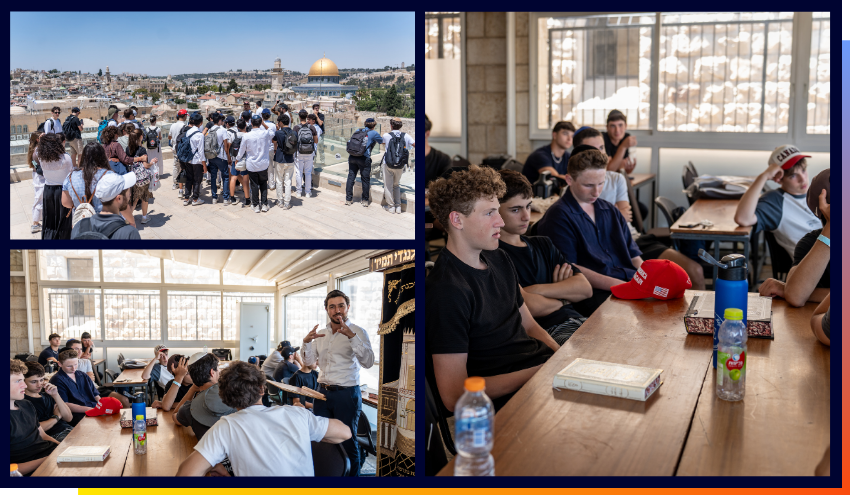
The teenage years are when many young people begin asking life’s biggest questions. Those questions should never frighten us. They should inspire us. A questioning teenager is often a teenager searching for something real, something authentic, something worth dedicating a life to. If we do not help provide those answers, someone else inevitably will.
The greatest gift we can give the next generation is not merely knowledge of Judaism. It is confidence in Judaism.
That lesson became especially real to me this past Shabbat.
I had the privilege of spending time at Camp Mesorah, where I spoke with a group of thirteen-year-old boys. Their questions were thoughtful, honest, and searching. They wanted to understand not only what Judaism asks of them, but why it matters. They are old enough to wrestle with life’s biggest questions, and they deserve thoughtful, meaningful answers. They deserve to know that God believes in them, that Judaism is intellectually compelling, and that the future of the Jewish people depends upon them.
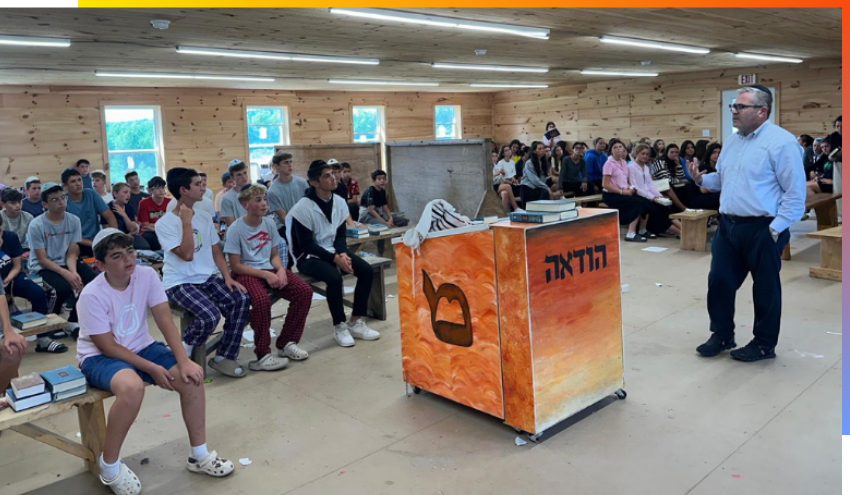
Those conversations reminded me that our children are not looking for less Judaism. They are looking for deeper Judaism. They want to know that Torah speaks to the challenges they face, that faith can withstand difficult questions, and that their lives have genuine meaning and purpose. When we give them those foundations, we prepare them not only to remain committed Jews, but to become future builders of the Jewish people.
This is not a conversation for one community or another. Whether someone identifies as Chassidic, Yeshivish, Modern Orthodox, Centrist, or anything else, every Jewish child deserves a strong foundation of faith, purpose, and connection.
There is another lesson that I believe is equally important.
Young people need responsibility.
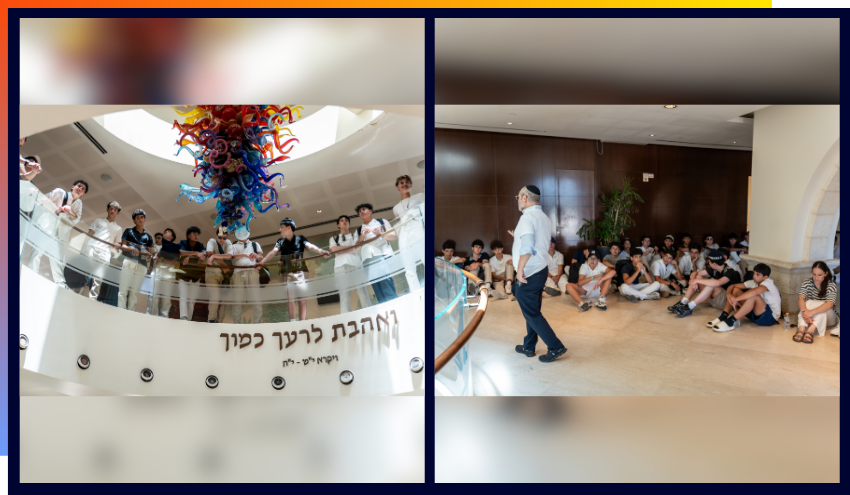
One of the things I have always admired about Chabad is the way they entrust children with real missions from a very young age. They encourage them to help another Jew put on tefillin. They involve them in acts of kindness. They ask them to become active participants in Jewish life rather than simply observers.
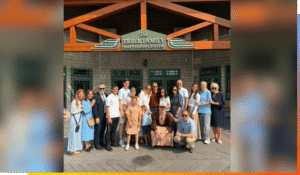
Recently I was in the Berkshires and watched the young children of local shluchim selling challah and babka before Shabbat. They were not merely helping their parents. They were learning that they already have an important role to play in strengthening the Jewish people. They understood that they were contributors, not spectators.
That reminded me of my own childhood.
My father served as a rabbi in Flatbush for more than forty-five years, and one of the greatest lessons he ever taught me had very little to do with what he said from the pulpit. He believed that children become connected to a synagogue when they are needed by the synagogue. He understood that ownership creates identity. He was constantly looking for ways to give young people meaningful responsibility because he knew that when a child feels essential to a community, that community becomes part of who they are.
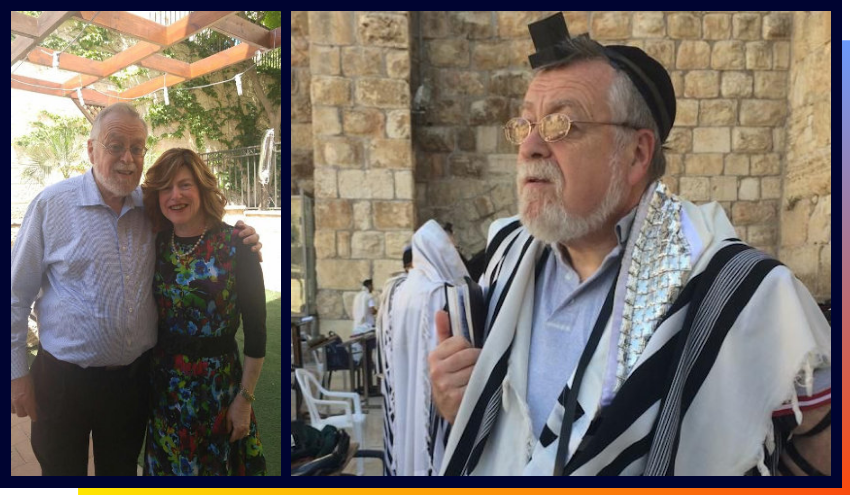
I often joke that his synagogue probably violated child labor laws.
Before the High Holidays, we switched the siddurim for the machzorim. We did it.
Setting up Seudah Shlishit. We did it.
Running errands. We did it.
Welcoming guests. We did it.
There was always another job waiting for us.
Looking back, I realize my father was teaching us something much deeper than responsibility. He was teaching us belonging. We were not simply attending the synagogue. We were helping build it. That sense of ownership stayed with me long after the individual jobs were forgotten, and I believe that lesson is just as relevant today as it was then.
Perhaps one of the greatest blessings of our generation is that so many Jews have access to remarkable schools, gifted teachers, and opportunities our grandparents could scarcely imagine. Along with those blessings comes a challenge. Comfort can sometimes replace responsibility. We have become very good at educating our children. We must become equally intentional about giving them meaningful opportunities to contribute, to lead, to serve, and to feel that the Jewish future depends upon them.
When a young person knows they are needed, Judaism ceases to be something they simply inherit. It becomes something they help build.
That idea is deeply connected to the values that guide Aish.
Wisdom gives us knowledge.
Love gives us purpose.
Responsibility is the manifestation of love.
Love that never becomes action is only a feeling. When we truly love someone, we take responsibility for them. Parents understand this instinctively. Teachers understand it. Leaders understand it. The Jewish people have survived for thousands of years because, generation after generation, they have accepted responsibility for one another.
That is why Responsibility stands alongside Wisdom and Love as one of Aish’s defining values. Wisdom teaches us what is true. Love inspires us to care. Responsibility transforms those ideals into action.
That understanding of responsibility came back to me recently while I was visiting Monsey, where I had the privilege of hearing our longtime friend Steve Rosenberg speak in memory of Rabbi Shmuley Altein zt”l.
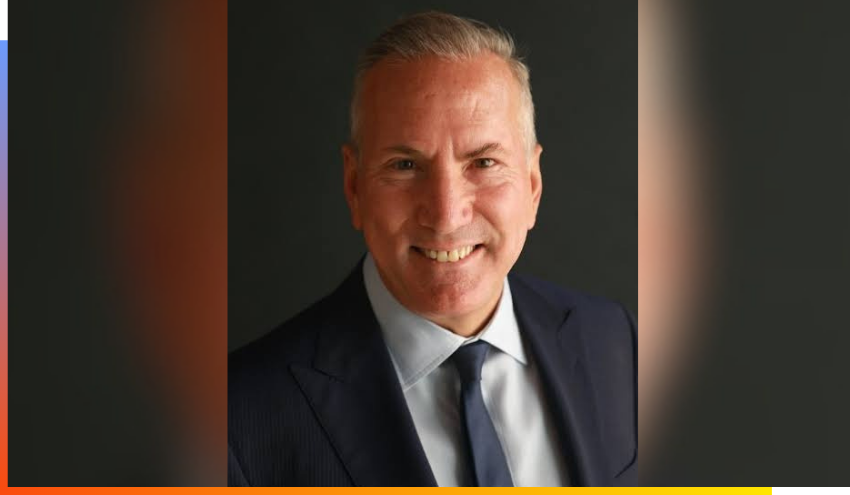
Steve described a man whose life was defined by kindness, humility, and genuine concern for every person he encountered. As he reflected on Rabbi Altein’s remarkable life, he shared a challenge that has remained with me ever since. After every interaction, we should ask ourselves a simple question: Did I leave that person better than when I found them? Did I elevate them?
Imagine if every one of us adopted that philosophy.
Every encounter presents an opportunity to leave another human being stronger than we found them. It may be the waiter serving dinner. It may be the security guard standing outside a school. It may be a coworker, a neighbor, or a stranger we will never meet again. Every conversation gives us the opportunity to bring a little more dignity, kindness, encouragement, and God’s presence into the world.
Perhaps that is one of the simplest and most profound expressions of responsibility. We often think of responsibility as something grand or burdensome. More often, it is found in the quiet moments. A smile. A kind word. A listening ear. A sincere compliment. A person who feels seen because we took a few extra moments to truly notice them.
People often speak about tikkun olam, repairing the world. Unfortunately, that beautiful phrase has been pulled in many different political directions. Its authentic meaning is both simpler and far more profound. God places each of us into this world with the responsibility to leave it just a little better than we found it. Sometimes we accomplish that by changing a life. Sometimes we accomplish it simply by changing someone’s day.
During one of my talks at Camp Mesorah, I shared a thought that has stayed with me. Unity built upon hatred never lasts. It eventually consumes itself. Only unity built upon love can endure.
That was Abraham’s model.
He did not build the Jewish people by teaching people whom to hate. He built them by teaching them whom to love. He opened his tent to every passerby. He welcomed strangers with dignity. He taught the world about God through compassion, kindness, and hospitality. Love was not merely one of his virtues.
It was his strategy for changing the world.
That lesson begins in our own homes.
Our children must know that they are loved without condition. They must know that even when they struggle, even when they ask difficult questions, even when they travel a different path than we had hoped, our love never disappears.
Love is not the reward for perfection. Love is the foundation upon which growth becomes possible.
Years ago, when we adopted Wisdom, Love, and Responsibility as Aish’s guiding values, some questioned whether Love belonged alongside the others. With every passing year, I have become more convinced that it sits at the very center of everything we do.
Wisdom teaches us what is true.
Love gives us the reason to care.
Responsibility transforms that love into action.
Those three values are not independent of one another. They are inseparable. Together they form the blueprint for building stronger Jews, stronger families, stronger communities, and ultimately, a stronger Jewish future.
If we can raise a generation that knows God, loves the Jewish people, embraces responsibility, and believes that their lives have meaning and purpose, there is no challenge that the Jewish future cannot overcome. That is the future we strive to build at Aish every single day, one Jewish soul, one Jewish family, and one act of responsibility at a time.
May we merit to continue building Jewish homes, strengthening Jewish families, giving our children deep foundations of faith, inspiring them with meaningful responsibility, and filling their lives with unconditional love. May we raise a generation that embraces Wisdom, lives with Love, and accepts Responsibility for the Jewish people and for God’s world.