First, I need to say this clearly and without hesitation. This week marked one of the most significant and emotional moments for the Jewish people in the last two-and-a-half years.
Since October 7, every one of us remembers exactly where we were when we first heard what had happened in Israel. We remember the shock, the fear, the grief, and the unbearable pain of knowing that our brothers and sisters had been massacred, taken hostage, and brutalized simply for being Jews. From the very beginning, it was understood that this was not only about the living hostages. The terrorists took the dead as well, fully aware of how deeply this cuts the Jewish soul. For us, the bond does not end with death. The need to reunite families with their loved ones, whether alive or no longer living, is sacred.
This week, we finally brought home the last of our sons and daughters for burial.
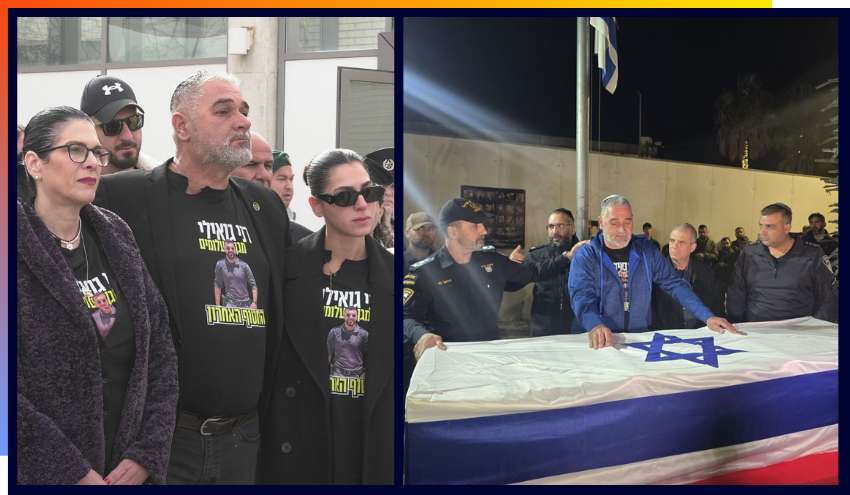
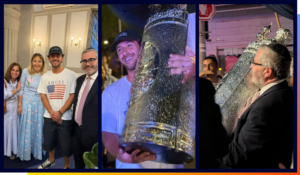
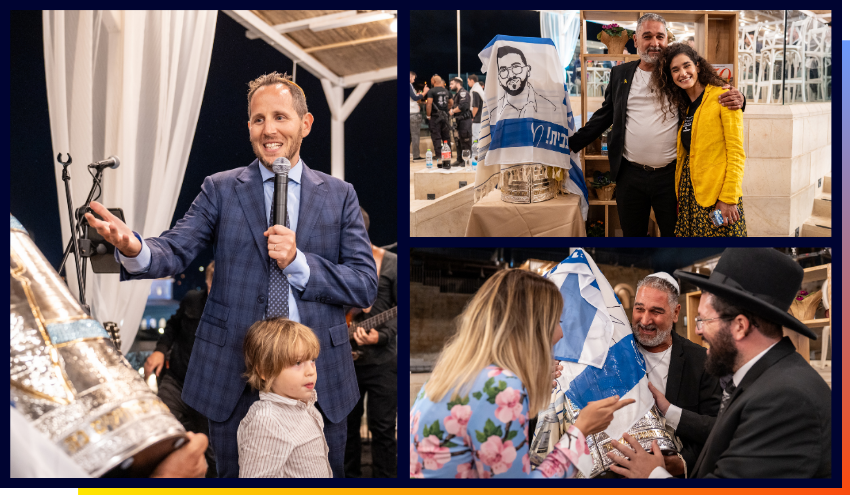
Ran Gvili was one of the great heroes of October 7. He had broken his shoulder and was in the hospital preparing for surgery. When he heard what was happening, he put on his uniform and ran to defend his brothers and sisters. Through the Erber family, who dedicated a Torah in Ran’s memory this past Sukkot, I had the privilege of getting to know the Gvili family. I was recently with Ran’s mother, Talik, and sister, Shira. They are extraordinary people, filled with dignity, strength, and love. Witnessing their reunification with Ran brought everything into focus.
This week was also International Holocaust Remembrance Day. That connection was impossible to ignore. During the Holocaust, millions of Jews were murdered with no graves, no funerals, and no one left to mourn them. Entire families disappeared into smoke and ash. Here we are, facing the largest massacre of Jews since the Holocaust, yet refusing to move forward until every last one of our brothers and sisters is brought home. I do not believe there is another people in the world who would fight so relentlessly to recover even the bodies of the fallen. We do this because we are not just a people. We are one family.
I was on a plane waiting to take off when the news broke. A woman I know from Florida walked up to me to make sure I had heard. She said she needed to speak to someone who would understand. Jews speak a language that often requires no words. It is the language of family. One look says everything. That moment on the plane captured something profound about who we are.
Hodu LaHashem Ki Tov. Gratitude to G-d for allowing us to reach this moment and bring our children home for burial.
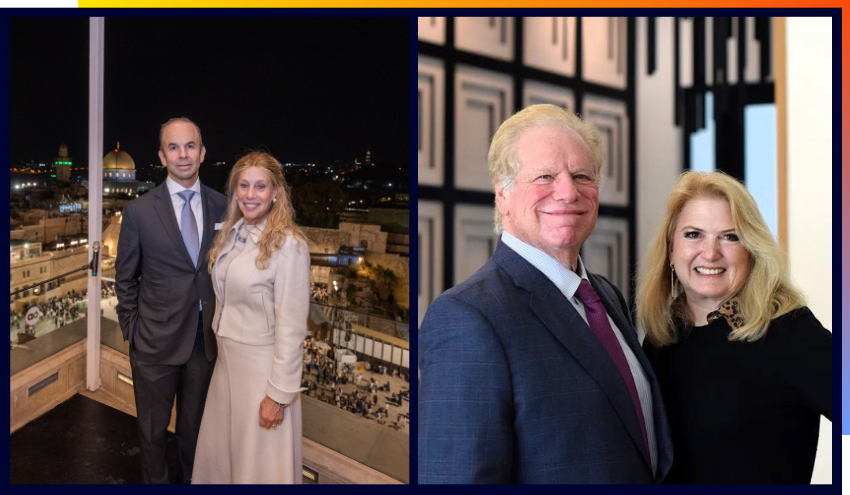
The very next day, I traveled to Washington, DC, where I attended an extraordinary event with Rabbi Meyer May, Aish’s Executive Vice President. Our close friends Elliott and Robin Broidy, who are deeply involved with the Counter Extremism Project, organized a concert at the Kennedy Center for the Performing Arts titled Enduring Music, Compositions from the Holocaust. The evening featured music written during the Holocaust by Jews who were murdered and by survivors who lived to tell their story through sound. Music is a window into the soul, and listening to these compositions on International Holocaust Remembrance Day was overwhelming. These were voices that history tried to erase and failed to silence.
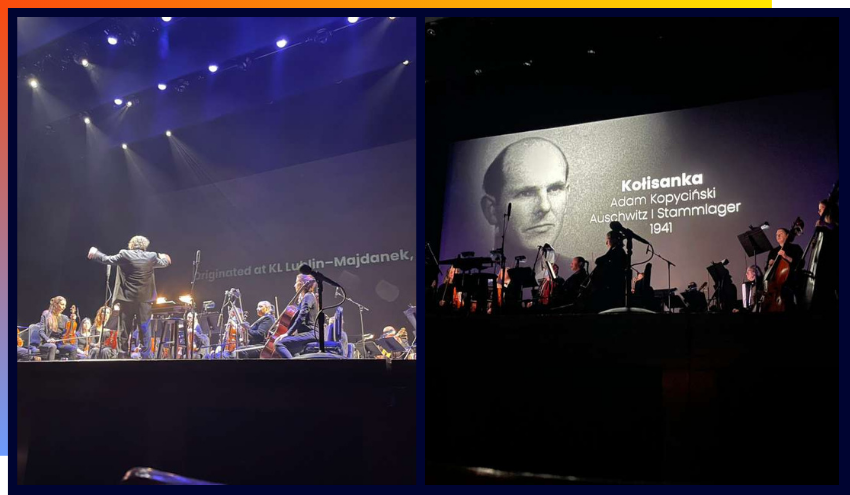
It was also deeply meaningful to share that evening with Sander and Tracy Gerber, who played an important role in making the night possible. Seeing two extraordinary Aish families, the Broidys and the Gerbers, standing at the forefront of Holocaust remembrance and the fight against antisemitism, filled me with pride. Mourning, memory, and resistance matter deeply. Education is how we ensure the future, and these families understand that better than most.
From Washington, I traveled to Lakewood, New Jersey, to attend the Shevatim Community Mekarvim Conference hosted at Torah Links, one of Lakewood’s great outreach institutions. Torah Links built a beautiful yeshiva for those with a limited Jewish background, and we have been proud to partner with them. Years ago, there was an organization called the Association for Jewish Outreach Professionals. That space disappeared, leaving a void for those dedicated to reaching unaffiliated and marginally connected Jews. Rabbi Netanel Friedman from Atlanta helped revive that vision through Shevatim, a community organization cofounded by my friend, Charlie Harari. Walking into a room filled with passionate, young Jewish professionals committed to outreach was electrifying. An additional layer of meaning was that this event took place on the fourteenth yarzheit of Rav Noach Weinberg zt’l, who was the revolutionary who started the outreach movement. It was noted, and it was a very powerful moment.
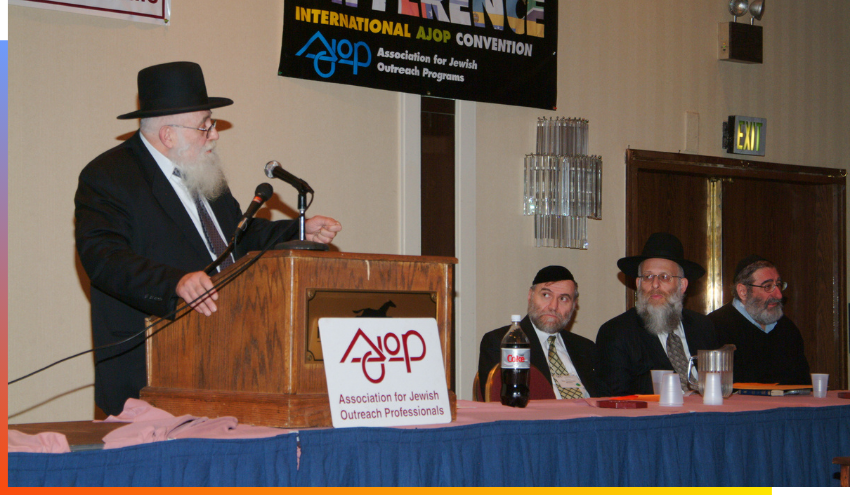
I spoke on a panel and led a session for institutional leaders. I shared something I believe deeply. We are living in a completely different universe post-October 7. Jews who once felt disconnected are now asking serious questions. The world’s reaction to Jewish victimhood shattered illusions and forced clarity. Antisemitism revealed itself immediately and unapologetically. In that moment, something shifted inside the Jewish soul.
When I began my career, outreach lived on the fringe. Today, it sits at the center of our future. Inspiration, education, and connection are no longer optional. They are essential. The broader Jewish community, including the Orthodox world, desperately needs voices that uplift, unify, and inspire love between Jews. Leadership now means stepping forward and refusing to wait for permission.
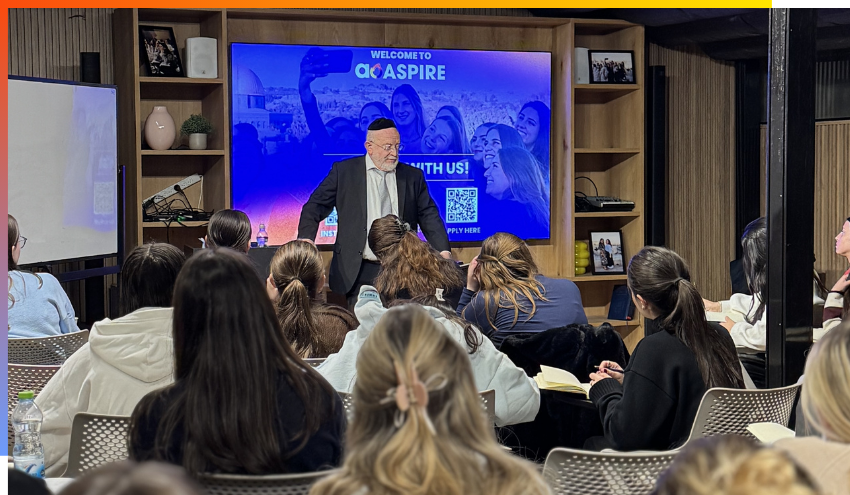
Many of the professionals at the conference were people who stood with us during our work with the World Zionist Congress. Now, as we move forward within the World Zionist Organization with our own division, it was powerful to share how Aish continues to lead and grow.
This entire week carried a single rhythm. Remembering where we came from. Mourning those we lost. Honoring the unfinished music of the Holocaust. Bringing our fallen heroes home. Looking forward with resolve and hope.
Every one of you is a leader. Leadership means remembering the last two and a half years, the last eighty years, and the last two thousand years, then choosing to envision a stronger, brighter Jewish future and committing to build it together.