For eleven years, I have made it a priority to be in Israel for Yom HaZikaron and Yom Ha’atzmaut. Those two days, side by side, capture something essential about the Jewish story. They remind us who we are, where we have come from, and what it has cost us to stand here today.
This year began like so many others. Even before boarding my flight, I was sitting in the lounge at Newark Airport with my dear friend David Magerman. David is one of those rare individuals who does not just speak about caring for Israel, he lives it. He is constantly present, constantly giving, constantly building. As we spoke, he shared his schedule for the week, the people he would be with, the causes he would support, and the ways he would simply show up. That conversation lifted me before I even stepped onto the plane.
There is something fundamentally different about being in Israel. Supporting from afar is meaningful and necessary. Being there with the people, feeling their strength, their pain, their resilience, that is something else entirely. My trip began on a high, and I carried that sense of purpose with me as I arrived.
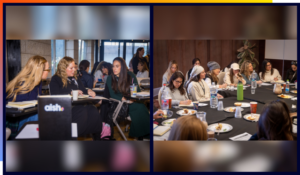
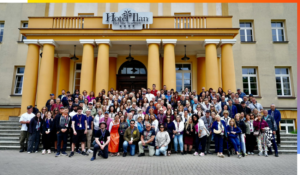
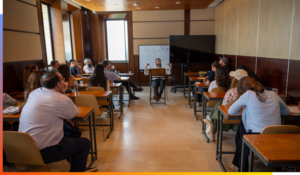
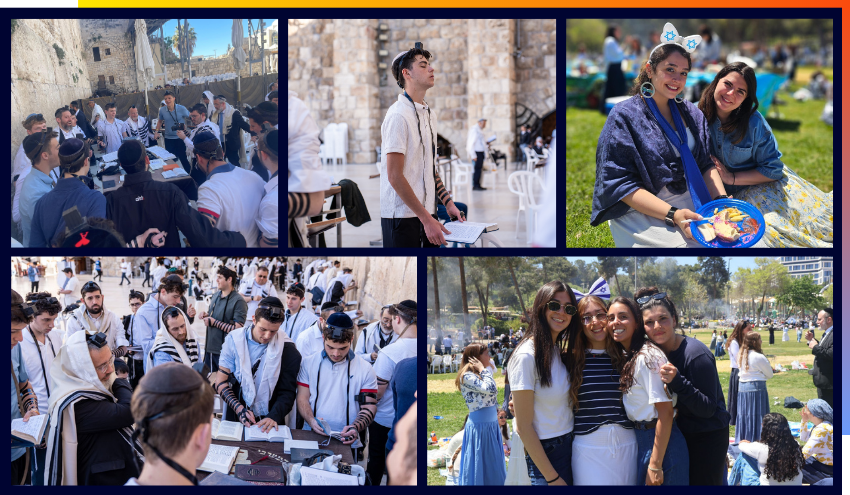
I had the privilege of spending time with our yeshiva and seminary students. Watching them engage, reflect, and grow filled me with pride. On Yom HaZikaron, I attended multiple ceremonies honoring the heroes we have lost, particularly from the IDF and the security forces. Since October 7th, everything has taken on a deeper intensity. The names, the faces, the stories are no longer distant. They are immediate, personal, overwhelming.
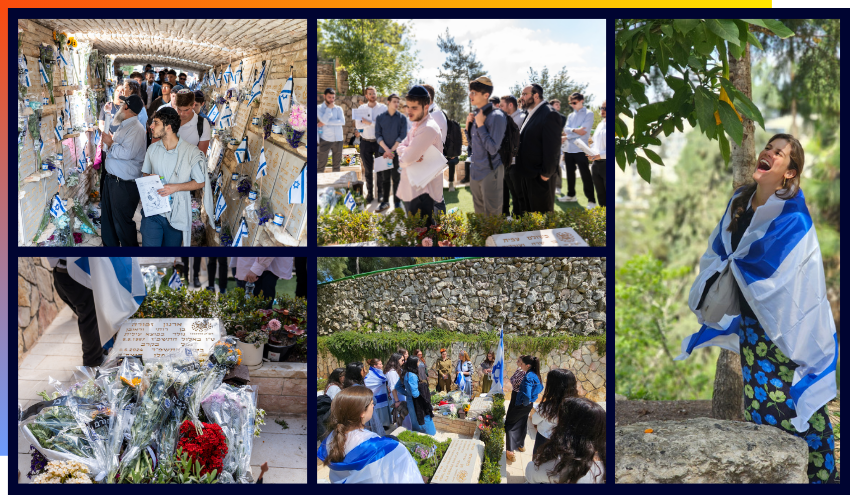
Young men and women who did not hesitate. Who ran toward danger to save their brothers and sisters. Who gave everything so that others could live. Standing in those ceremonies, surrounded by families, friends, and a nation in mourning, I felt both broken and uplifted at the same time. This is what it means to be part of the Jewish people. We carry memory as a sacred responsibility. We do not move forward by forgetting. We move forward by remembering.
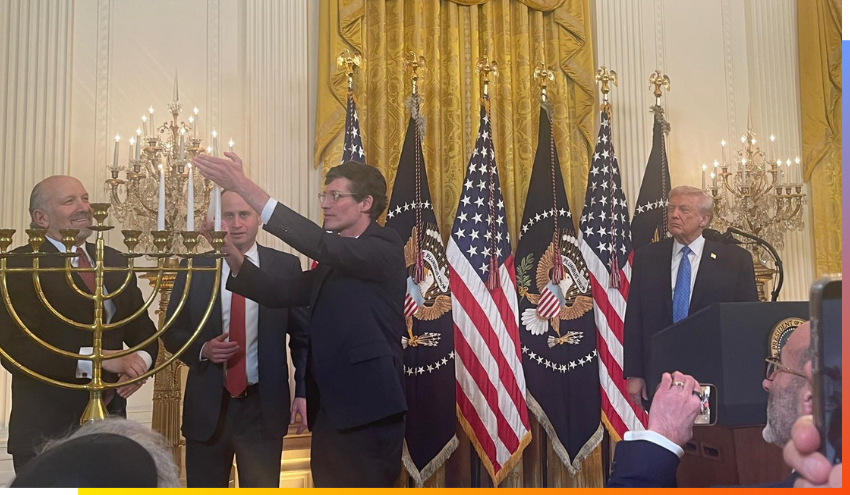
That idea has stayed with me in so many settings. I remember a conversation at the White House Hanukkah party, when President Donald Trump spoke about his evolving understanding of the Jewish connection to the hostages. He initially thought the focus was on bringing back the living. He came to understand that even those who were murdered must be brought home. Closure matters. Dignity matters. Every life matters.
This is who we are. We are dreamers, but we are not detached from reality. From the earliest pages of the Torah, we see dreams shaping destiny. Yosef dreamed. The prophets dreamed. Judaism is built on the belief that tomorrow can be different from today. That hope is not naive. It is the engine of our survival. At the same time, dreaming requires memory. It requires knowing where we come from and honoring those who carried us here.
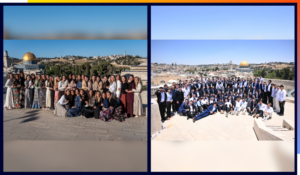
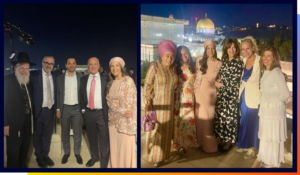
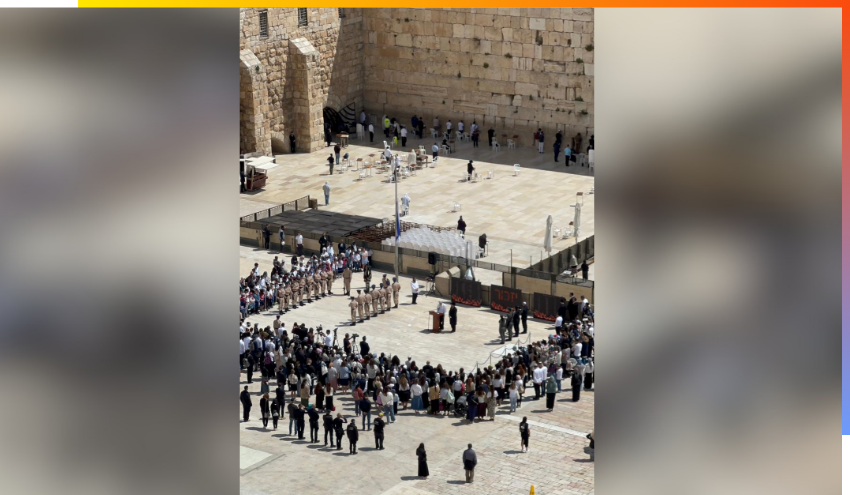
On Yom Ha’atzmaut, that balance between memory and hope comes alive in a different way. I was blessed to be at the Kotel, to watch our students sing Hallel with deep gratitude.
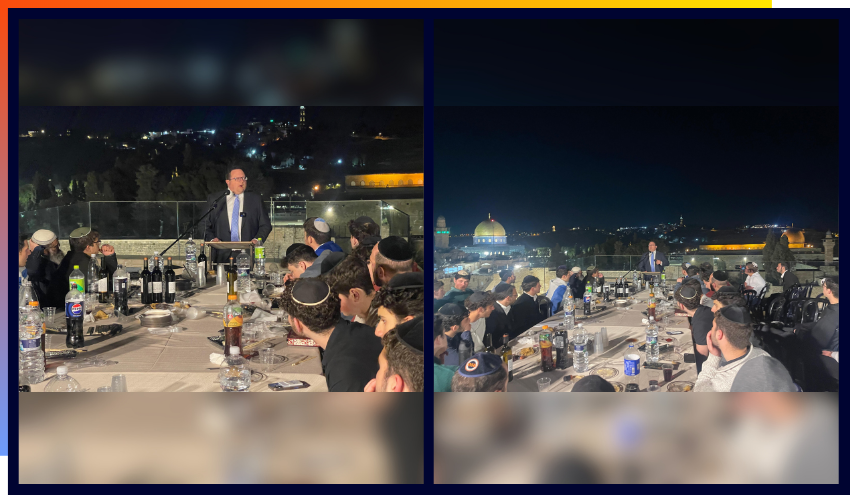
The night before, our students gathered on the roof of the Dan Family Aish World Center for a tish filled with music, Torah, and reflection. Rabbi Uri Pilichowski, the head of education for Nefesh B’Nefesh, spoke about the modern miracles we are witnessing, not only over seventy-eight years, but even in the last two and a half. Our students celebrated not just a country, but a destiny unfolding in real time.
On the day itself, I had an experience that I will never forget. My friend Gilles Gade, the CEO of Cross River Bank, invited me to join him at the Magen David Adom headquarters in Ramla. Together with Aish’s good friend Avishai Neuman and their teams, they organized and sponsored a week dedicated to appreciating the families of Magen David Adom volunteers. These are people who have spent the last few years running toward emergencies, often sleeping at headquarters, often going days without seeing their loved ones.
What I saw there moved me deeply. Families gathered together. Children playing. Food trucks, music, celebration. Behind all of it was a simple message of gratitude. Thank you to those who give everything without asking for anything in return.
I walked through a new training facility and saw simulations preparing medics for the most intense scenarios imaginable. I stood among volunteers from every part of Israeli society. Secular and religious. Jewish, Druze, Arab. At that moment, none of the labels mattered. They were united by one mission. To save lives.
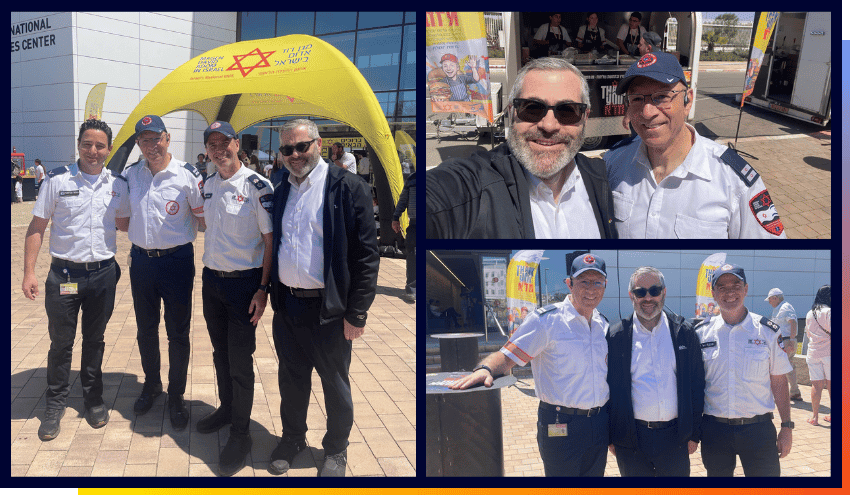
I found myself overwhelmed again and again. These are our heroes. Not because they seek recognition, but because they act with courage, humility, and purpose.
At the same time, I cannot ignore a growing concern. From my vantage point, speaking to people across communities and countries, I sense that we are at a critical moment. October 7th awakened something powerful within the Jewish people. We came together in extraordinary ways. The generosity, the unity, and the care we showed each other were inspiring.
That unity is fragile. I am beginning to see cracks reemerge. Political divisions are intensifying. Elections are approaching. Old patterns of infighting are returning. This worries me deeply.
The future of the Jewish people is tied to the future of Israel. That is true not only for those who live there, but for every Jew around the world. At a time when antisemitism is rising, when truth is being distorted, when the Jewish story is being twisted beyond recognition, we must be stronger together, not weaker apart.
Israel must be rooted in Torah. Without Torah, Israel risks becoming just another nation. Without Israel, Torah lacks its fullest expression. These two are inseparable. Our challenge is to find a way to live this truth together, across all sectors of society.
I speak to secular Israelis, to religious Israelis, to Haredi, to Dati Leumi (National Religious), to every segment of our people. The same message applies in the diaspora. We must learn how to live together without losing ourselves. We must engage without demonizing. We must listen without surrendering our values.
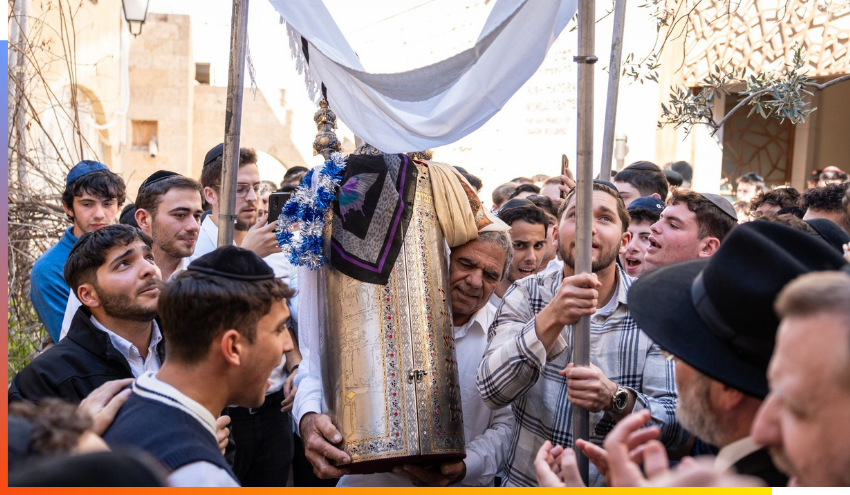
This is not easy. It was never meant to be easy. At times, I have been called a Zionist and an anti-Zionist on the same day. That tension reflects the complexity of the moment. It also reflects the need for leadership that builds bridges rather than walls.
One of the most powerful images I carry from this trip is the sight of Magen David Adom volunteers working side by side. They do not agree on everything. They do not come from the same backgrounds. Yet when a life is at stake, they move as one.
This is the model we need.
We live in a world that often misunderstands us. A tiny people, scattered across the globe, is portrayed as a great threat. The distortion is astonishing. We have never sought domination. We have sought the ability to live, to build, to contribute, to bring light.
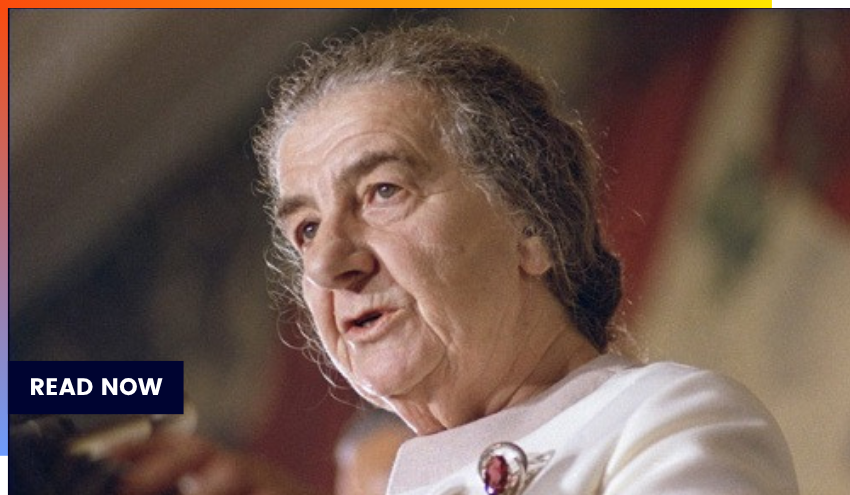
Golda Meir once said that if our enemies laid down their weapons, there would be no more war. If we laid down ours, there would be no more Israel. That statement is not about power. It is about survival. It is about the painful reality that the Jewish story has always required both hope and vigilance.
Our response cannot be anger alone. It must be clarity. It must be unity. It must be a deep commitment to who we are and what we are meant to be.
At Aish, we speak about three core values. Wisdom, love, and responsibility. Wisdom derives from Torah, which gives us the lens to see the world clearly. Love binds us together even when we disagree. Responsibility calls us to act.
Each of us has a role to play. Every conversation matters. Every act of kindness matters. Every effort to build rather than divide matters.
As we celebrate seventy-eight years of Israel, we must ask ourselves what comes next. Not just as a nation, but as a people. We are here to be a light unto the nations. We are here to heal a fractured world. We are here to build something better.
May we rise to that calling together. May we strengthen one another. May we never lose sight of our purpose.
Am Yisrael Chai. I look forward to celebrating together next year in Jerusalem.