This week, as I send greetings from Jerusalem, I found myself thinking deeply about Yom HaShoah, Israel’s Holocaust Remembrance Day. As the siren sounded across the country and an entire nation stood still, a powerful and painful thought echoed. In Israel, the siren goes off at two moments. When our enemies are trying to kill us, and when we remember when our enemies succeeded in killing us. Those are the two times the sound pierces the air. That reality alone says more than words ever could.
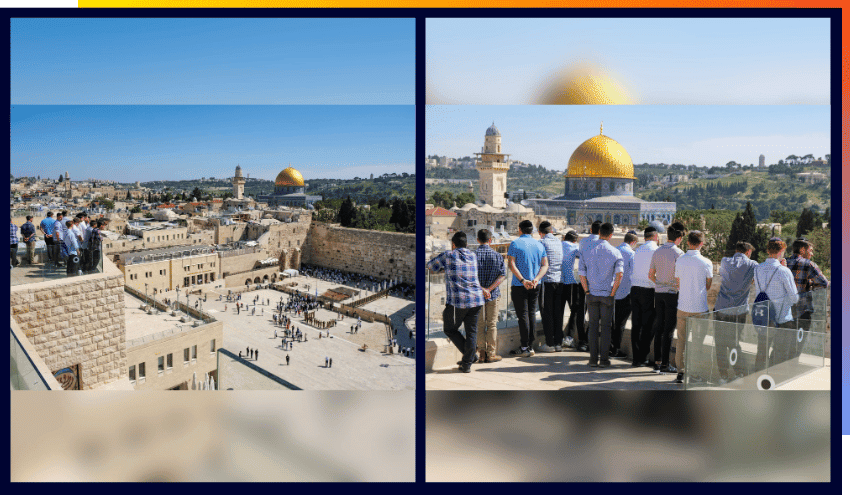
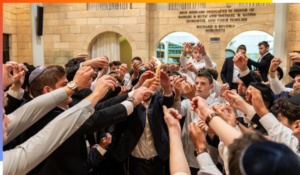
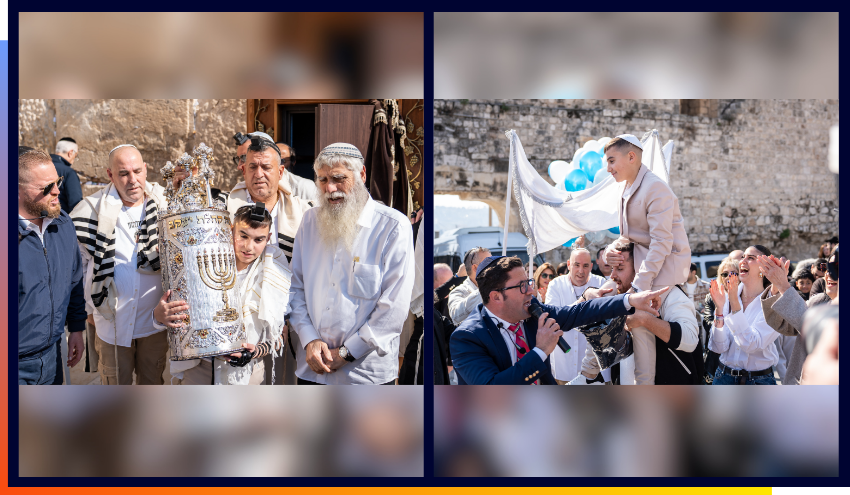
My mind kept returning to some of the most powerful moments I have experienced at Aish. Over the years, we have had the privilege of hosting bar mitzvah celebrations for Holocaust survivors. Many of them had been children during the Holocaust and were robbed of that milestone. To stand with them at the Kotel, and then bring them into the Dan Family Aish World Center, overlooking that same sacred place, a space built to inspire Jewish continuity and make moments like this possible, to celebrate what was taken from them, was unforgettable. There was something profoundly moving about watching someone reclaim a moment that history tried to erase.
Those memories feel even more present now. After October 7th, Aish hosted bar and bat mitzvah celebrations for children from the north and south of Israel who were suddenly uprooted from their homes and denied that same milestone. Different generations. Different circumstances. The same story of disruption, resilience, and ultimately, renewal.
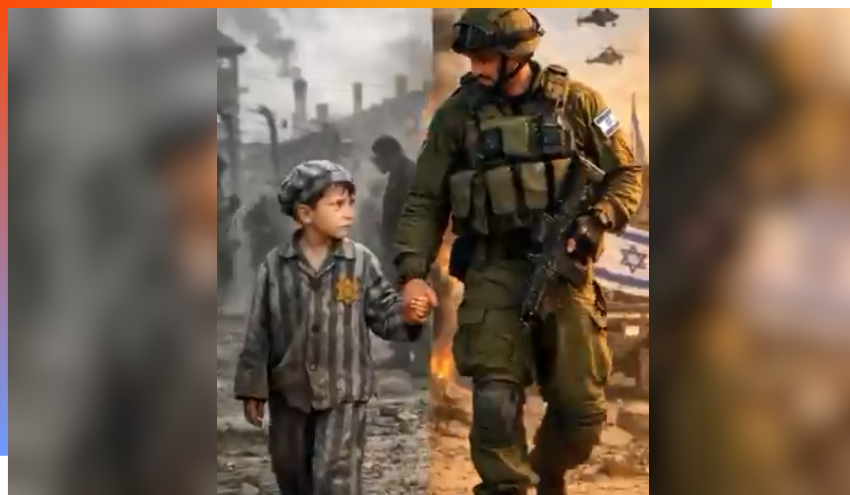
This week also brought another unsettling realization. A voice on social media suggested that perhaps we should stop using the word Holocaust and instead use Shoah. The argument was simple and painful. The world has taken the word Holocaust and distorted it, weaponizing it against Israel, accusing the Jewish state of genocide.
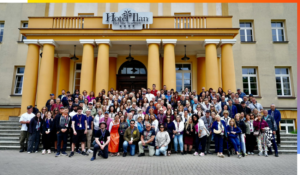
I have spent much of my life in Holocaust education. I have traveled to Poland many times with students. I have seen firsthand how essential it is for Jews, and for the world, to understand what happened. The term genocide did not even exist until after the Holocaust. Raphael Lemkin, a Jewish lawyer from Poland, gave the world that word and fought to have it recognized as a crime against humanity. For the Jewish people, that was a moment of moral clarity. A moment when the world seemed to understand.
Today, that same term is being twisted and used against Israel in ways that are both false and deeply unjust.
It forces a difficult question. Did we make a mistake? Should we regret bringing Holocaust education and the concept of genocide to the forefront of global consciousness?
The answer is no.
The Jewish people stand for something far greater than how the world chooses to interpret our words. We stand for God’s vision of morality, of ethics, of what it means to build a just and humane society. That mission does not change based on public opinion.
Look at the world around us. The Iranian regime continues to spread terror and destruction, responsible for the deaths of countless innocent people, including Jews across the globe. I remember standing at the site of the AMIA bombing in Argentina, a brutal attack carried out by operatives of the Iranian regime, where Jews were murdered simply for being Jews. Evil exists. It is real. It is persistent.
Israel stands against that evil, firmly and unapologetically, not for conquest, but for survival and for community. The sirens that have sounded so often in recent months are a reminder of that reality. Innocent Israelis have paid the price in blood.
Despite everything, we continue to be accused of the very crimes that were committed against us.
That pain is real. Watching what has unfolded on university campuses over the past few years has been heartbreaking. Places that once felt like homes for Jewish growth and contribution have, in many cases, become hostile environments. The experiences of Jewish students today demand our attention and our action.
Yet none of this changes who we are.
The Jewish people have carried a mission for over 3,000 years. From Sinai until today, we have brought morality, ethics, and a sense of responsibility to the world. As Rabbi Lord Jonathan Sacks zt”l so powerfully said, “Jews were the people who introduced into the world the idea that morality is not just a human convention, but a divine command.”
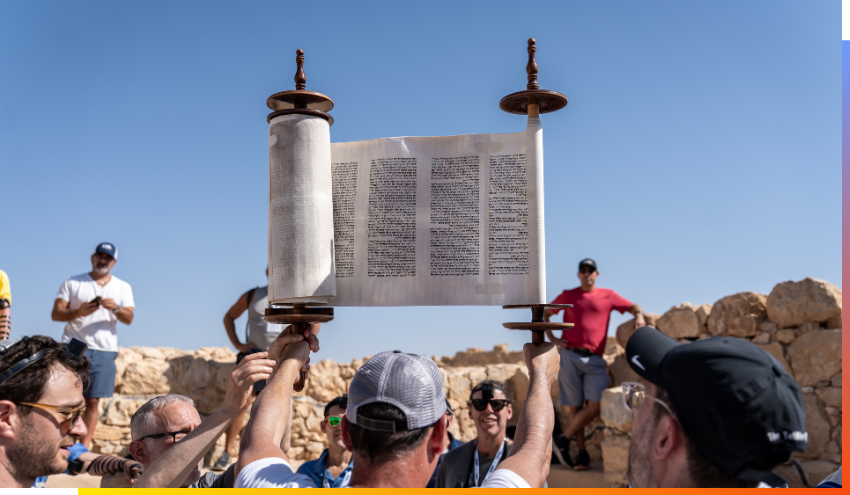
That is our story. That is our responsibility.
As Benjamin Disraeli, the Jewish Prime Minister of Great Britain in the 1800s, once responded to an insult about his Jewish identity, “When your ancestors were living in caves, mine were serving in the Temple.”
That is not arrogance. That is history.
Yom HaShoah is a moment to remember. To mourn. To reflect. It is also a moment to reaffirm who we are. We are the people of the book. We are the people who must stand for what is right, even when it is unpopular, even when it is misunderstood.
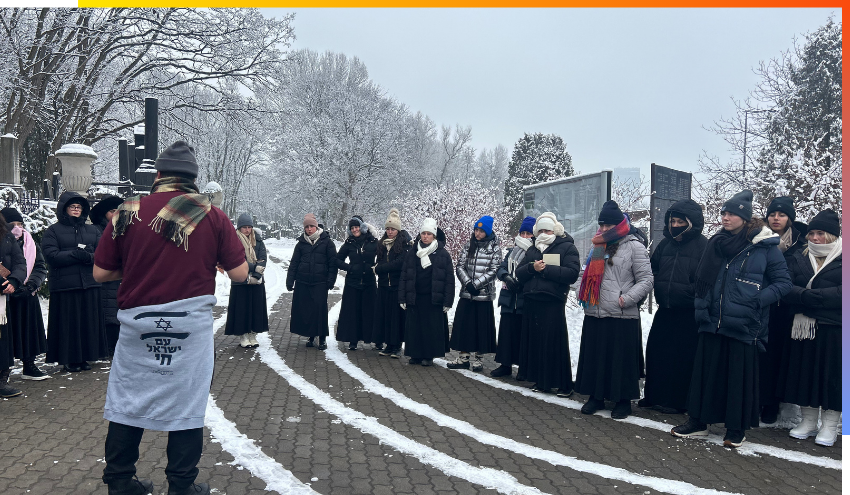
Never again is not just a slogan. It is a commitment. A commitment that Jews will never again be defenseless. A commitment that evil will not go unanswered.
I remember a conversation from my time at the Simon Wiesenthal Center. A group of young Jews asked why it still mattered to pursue aging Nazis. The question was understandable. The answer was simple. Anyone who harms a Jew must know that we will never forget and never stop seeking justice. Simon Wiesenthal himself said it best. This was never about revenge. It was always about justice.
That is who we are.
Aish exists to carry that mission forward. To teach, to inspire, to strengthen Jewish identity. To ensure that the next generation stands proudly with the Jewish people, with Israel, and with each other.
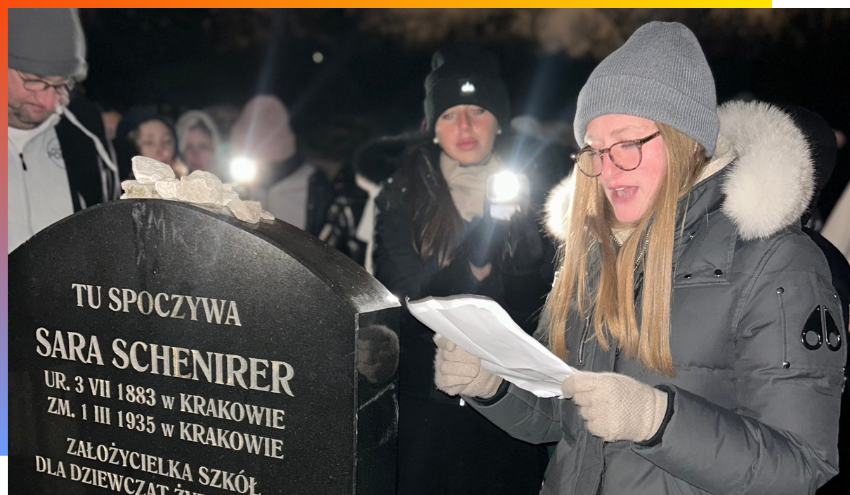
We are one family. A family that must continue to stand together. A family that refuses to abandon its responsibility to make the world a better place, no matter how difficult that task may be.
The world may misunderstand us. It may even try to turn us into the villain.
Our mission remains unchanged.
Am Yisrael Chai!