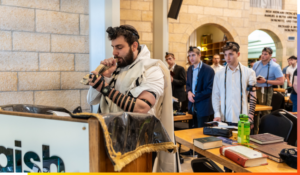
One of the great blessings of my work over the last thirty-five years has been the opportunity to become part of so many Jewish communities around the world. Growing up in Brooklyn as a born-and-bred New Yorker, the world often felt very small. In New York, we sometimes think the universe begins and ends somewhere between Brooklyn and Manhattan. I certainly did not understand the depth and beauty of Jewish life across America, let alone across the globe.
As my career expanded, I had the privilege of meeting extraordinary Jews in cities and communities I never imagined I would one day call family. To this day, the greatest highlight for me is the people. Not the speeches, the events, or even the accomplishments, but getting to know the people. Sitting with Jews from every walk of life, hearing their stories, sharing their dreams, and witnessing the incredible strength and warmth of our people, that is what I enjoy the most.
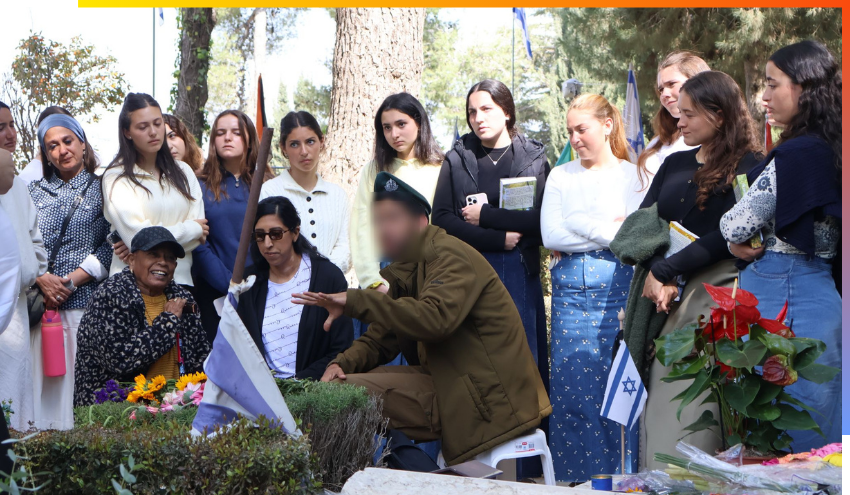
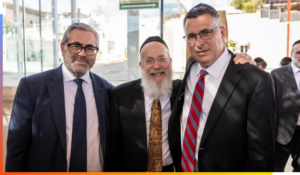
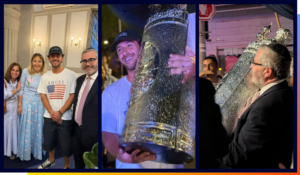
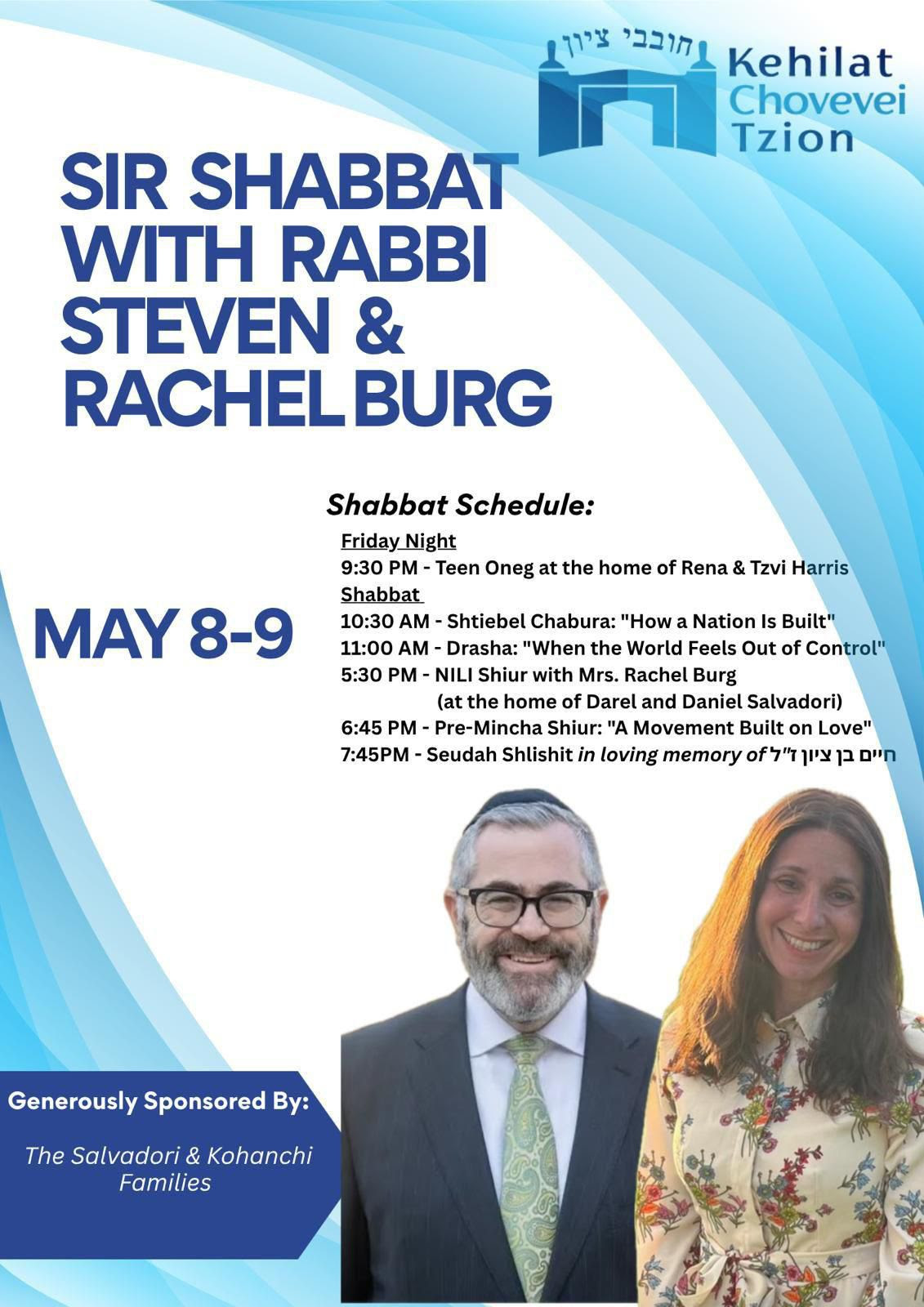
This past Shabbos, my wife Rachel and I had the privilege of spending Shabbos in the beautiful community of Skokie, Illinois, at Kehilat Chovevei Tzion. The visit originally began because of a close friend, Daniel Salvadori, whom I know through YPO Mosaic, a chapter for pro-Israel CEOs. Daniel is an executive at a major pharmaceutical company, and like so many people today, our schedules constantly move in different directions. For years, we kept saying we needed to spend time together. Finally, we said, “Let’s do Shabbos.”
Daniel connected me with Rabbi Shaanan Gelman, an extraordinarily warm and thoughtful leader, and together they arranged for me to spend Shabbos there as scholar in residence.
What an incredible community.
From the moment we arrived, we felt embraced. There was warmth everywhere. There was sincerity everywhere. There was Jewish life everywhere.
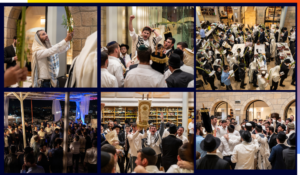
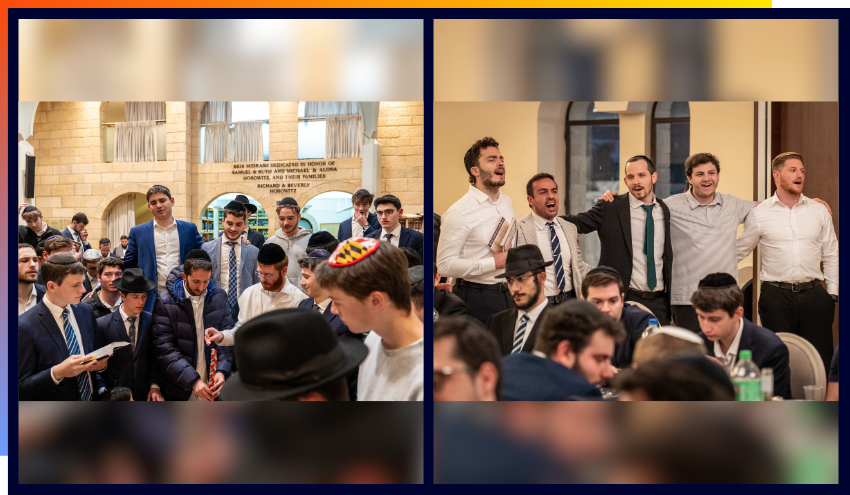
On Shabbos morning alone, I had the opportunity to experience four different minyanim within the synagogue. I began with the early Shacharis minyan. From there, I spent time in the Sephardic minyan, which has its own beautiful sanctuary filled with vibrancy and spirit. Then I went downstairs to what they lovingly call the “shtiebel minyan,” where there was a beautiful Kiddush and an opportunity to speak with the community in a more intimate setting. Later, I spoke in the main sanctuary as well.
Everywhere I went, I encountered remarkable people.
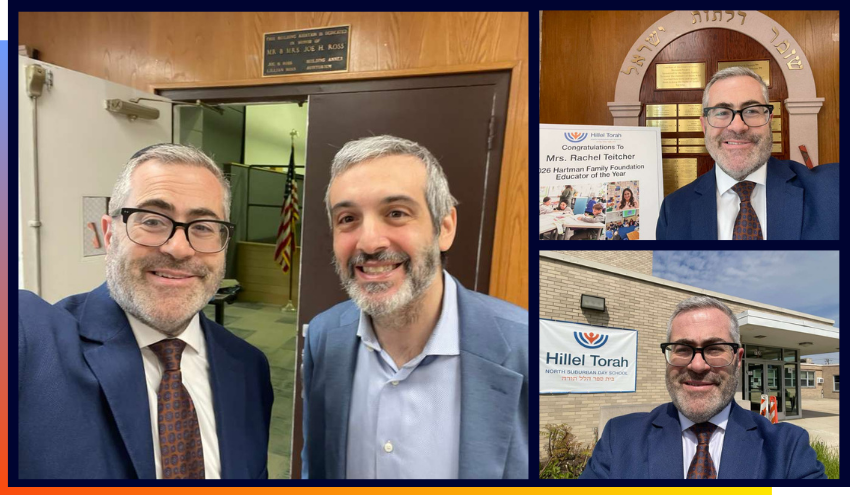
On Friday, I also had the opportunity to stop at Hillel Torah, one of the great Jewish day schools, led by an old friend from yeshiva days, Rabbi Menachem Linzer. Standing there speaking to seventh and eighth graders, seeing their excitement, their pride, and their connection to Judaism filled me with hope.
Friday night, I joined an oneg with teenagers from the community. Rachel spoke Shabbos afternoon to nearly seventy women gathered in the Salvadori home. Every encounter reminded us of something profoundly important: Jewish life is alive, vibrant, and beautiful.
As I reflected on the experience, I could not stop thinking about the moment we are living through right now as a people.
For the past several years, and especially since October 7th, we have experienced a level of hatred that has shaken Jews around the world. The irony is painful. The greatest slaughter of Jews since the Holocaust should have produced universal sympathy and moral clarity. Instead, we have watched hatred erupt openly and unapologetically across campuses, cities, media platforms, and governments.
For many years, I have often noted that before the Holocaust, there was enormous antisemitism throughout Europe. After the Holocaust, there was almost a pause, almost as if society collectively realized it had gone too far. Yet today that pause has ended. Pollsters and historians have noted that the guilt associated with the Holocaust has faded, and the old hatred has resurfaced with terrifying confidence, including here in North America.
Jewish communities are struggling with this reality every single day.
Yet this past Shabbos in Skokie, I saw something stronger than hatred.
I saw the answer.
The answer is Shabbos.
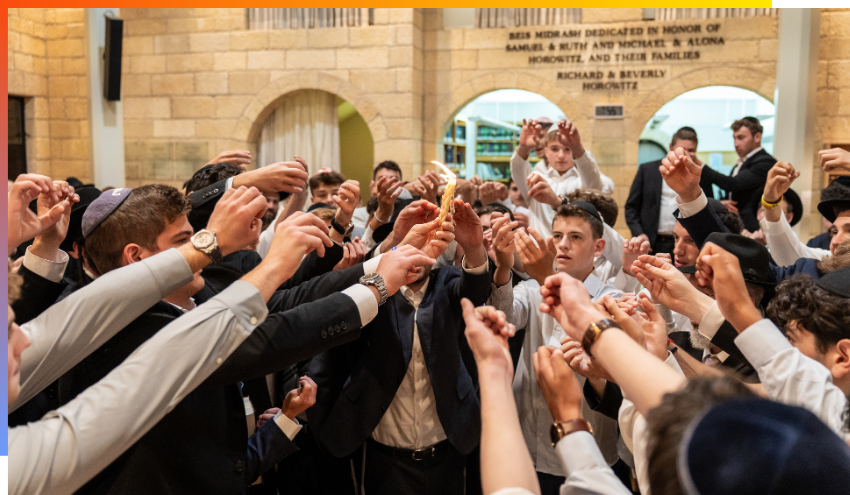
Shabbos builds community. Shabbos creates connection. Shabbos reminds us who we are. Shabbos pulls people away from isolation and brings them back to each other.
Recently, President Trump declared that in honor of Jewish Heritage Month, everyone should keep one Shabbos. I was reminded at the same time of the beautiful message continually shared by my dear friend Chief Rabbi Warren Goldstein of South Africa, who has spent years encouraging Jews around the world to rediscover the transformative power of Shabbos.
People often say Shabbos is important because it gives us a break from technology and electronics. That may be true, but that alone is not enough. Shabbos is not simply a wellness strategy. Shabbos is from God.
God, in His infinite wisdom, gave us something that would preserve the Jewish people through every exile, every persecution, and every generation. As the famous Ahad Ha’am quote goes, “More than the Jews have kept Shabbos, Shabbos has kept the Jews.”
This is not an accident.
Shabbos forces us to gather. It forces us to slow down. It forces us to open our homes, our tables, and our hearts.
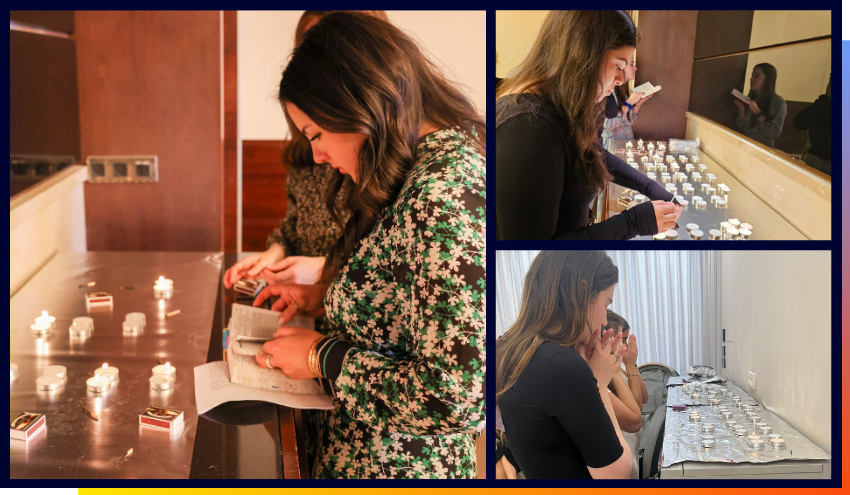
I recently saw an online commentator reminiscing about the old days when children played in the streets, and neighbors knew one another, contrasting it with today’s world, where everyone stares endlessly at their phones. Someone responded that this still exists every Saturday in traditional Jewish communities.
They were right.
Spending Shabbos in Skokie reminded me of that truth. You parachute into a community for twenty-four hours, and suddenly you know people. You feel connected. You feel embraced. You feel loved.
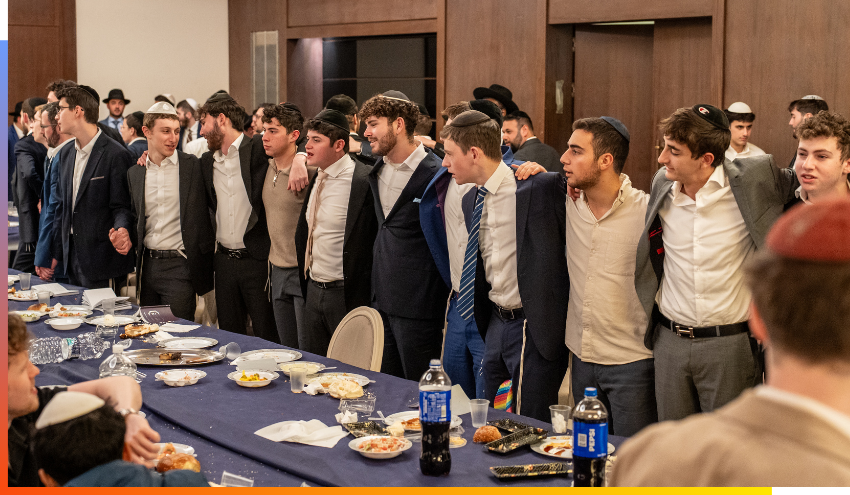
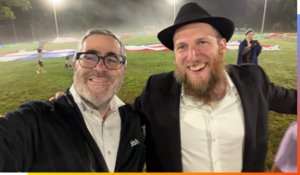
One of the most emotional parts of the weekend for me personally was reconnecting with so many young people I had known decades ago in Detroit, Los Angeles, and other communities around the world, who had now built beautiful Jewish lives in Skokie. Seeing them raising families, building homes filled with Torah, and contributing to such a warm community was deeply moving.
I left with one overwhelming realization.
We need to rally around Shabbos.
While it was beautiful that a president encouraged the world to keep Shabbos, we must understand that the ultimate King, Hashem Himself, has already been telling us this for thousands of years. This is the way forward for the Jewish people.
I was also inspired recently by a story that led me to write an op-ed that appeared in The Algemeiner.
It began with a TikTok video from a young Air Force cadet named Joel Usher, who was not Jewish. At the Air Force Academy graduation ceremony, graduates stand at attention until a loved one or friend taps them on the shoulder, signaling that they can break formation and celebrate.
Joel posted that he had no family there. No friends. No one to tap him out.
He stood there alone.
Then suddenly, another cadet who had befriended him pushed through the crowd, walked directly over to him, and tapped him on the shoulder. The two embraced, and Joel broke down crying.
One small act of kindness changed everything.
That story immediately made me think of the legendary Rabbi Meir Schuster, of blessed memory, standing near the Kotel for decades, tapping Jews on the shoulder and asking, “Do you have a place for Shabbos?” It made me think of my dear friend Jeff Seidel, who still stands there today inviting Jews to connect, to learn, to experience a Shabbos table.
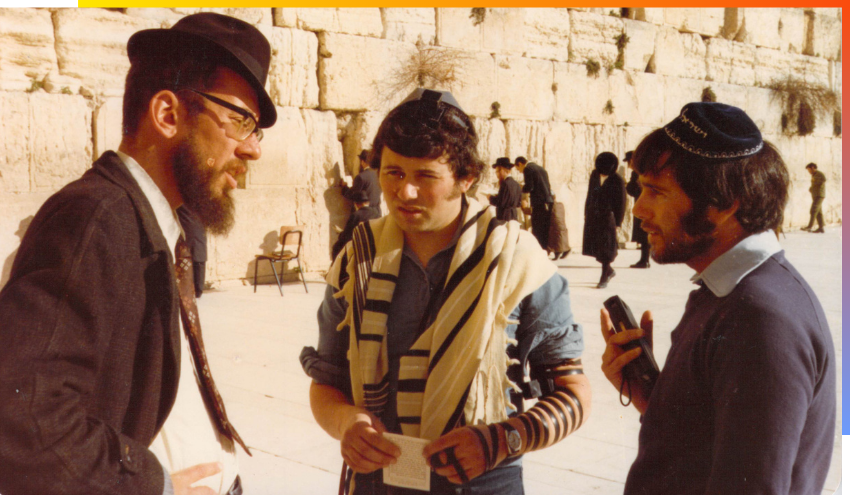
That is Judaism.
Judaism is tapping someone in.
It is noticing another Jew who may feel disconnected, isolated, intimidated, or alone and saying, “Come sit with us. Come experience this beauty with us.”
That is exactly what we need right now.
The haters want Jews to feel embarrassed about being Jewish. Our response cannot be retreat. Our response must be to double down and triple down on the beauty of Judaism. We must double down on Torah learning. We must double down on Jewish wisdom. We must double down on Shabbos.
This is who we are.
If I could step into a time machine and walk into a synagogue two thousand years ago on Shabbos, I would hear the very same prayers. I would see the same holiness. I would witness the same traditions. That continuity is the miracle of the Jewish people.
This is the inheritance of our mothers and fathers.
So this Shabbos, I want to encourage all of you to tap someone in.
Invite someone to your table. Reach out to a coworker, a neighbor, a doctor, a lawyer, or a Jew you know who may feel disconnected. Go to Aish.com and send someone an inspiring article to read over Shabbos. Open the door for another Jew.
One tap on the shoulder can change a life.
Wishing all of you a beautiful, holy, uplifting Shabbos filled with family, connection, meaning, and love.