Today carries an extraordinary amount of emotion for me.
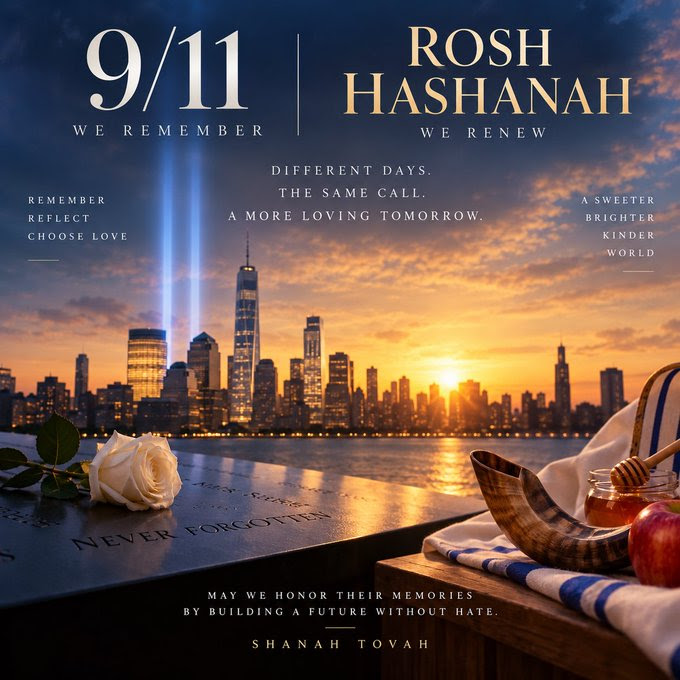
Tonight, Jews around the world will gather to celebrate Rosh Hashanah, the beginning of the Jewish New Year and one of the most solemn and sacred days of the entire year. This weekend also marks the 25th anniversary of September 11, 2001, the horrific terrorist attack on the United States that murdered thousands of innocent people. For me personally, Rosh Hashanah is also the fifth yahrzeit of my beloved father.
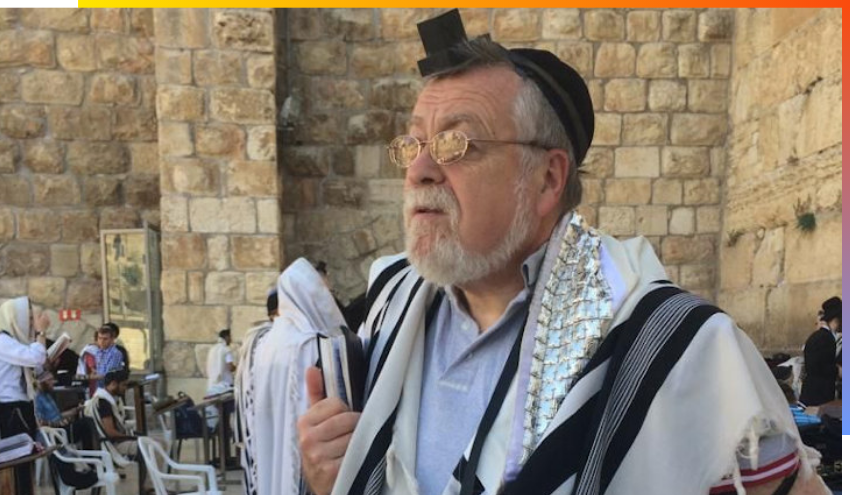
Rosh Hashanah, September 11, and my father’s yahrzeit are three very different moments, yet there is a lot swirling around in my heart as I think about all three. I have been thinking about them in the context of Jewish history, in the context of American history, and in the context of my own life. The more I think about these very different moments, the more I realize that there is a thread connecting them.
That thread is love.
I am a New Yorker by birth. I was born in the Bronx and grew up in Brooklyn. New York is part of who I am. On September 11, 2001, however, I happened to be living on the West Coast. I was in Seattle when I first learned that a plane had struck one of the Twin Towers.
I wound up having to drive from Seattle to Los Angeles, and I listened to the radio for virtually that entire drive as the events unfolded. Hour after hour, I listened as the enormity of what had happened became clearer. It was almost impossible to comprehend.
Thousands of innocent people had been murdered. Their only crime was going to work that morning. They woke up, kissed their spouses and children goodbye, got onto trains and airplanes, sat down at their desks, went to meetings, and began what they assumed would be another ordinary day.
A few months earlier, I had participated in a mission to Washington. A significant part of that mission focused on terrorism, the threats facing America, and what might happen. I met a very nice woman there. Months later, on September 11, she happened to be at Windows on the World for a meeting.
She did not survive.
Suddenly this enormous national tragedy also had a face.
September 11 forced many of us to confront something we would rather not confront. There is evil in this world. There are people and movements that become so consumed by hatred that they convince themselves that murdering innocent civilians is justified by their cause. I remember thinking at the time that the world had changed forever.
America had been attacked simply for being America. We watched people burn American flags. We heard the hatred directed toward the West. We saw an ideology that could celebrate the murder of people whose only crime was showing up for work.
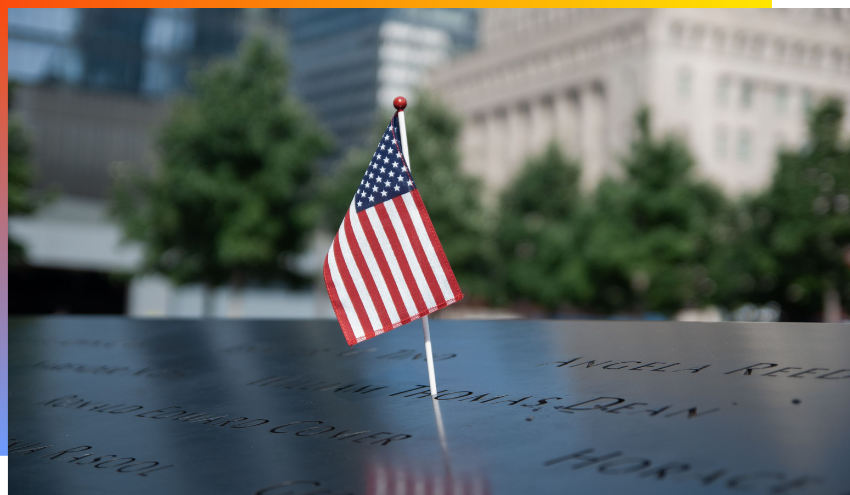
Twenty-five years later, I am struck by how familiar some of this feels.
The same forces that have hated America have so often hated Israel. The same people who burn American flags burn Israeli flags. The same ideologies that speak about death to the West have long directed their fury toward the Jewish people and the Jewish state.
October 7 brought that reality home in a way that none of us will ever forget.
For many Jews, watching October 7 unfold was psychologically like watching September 11 all over again. Innocent people were murdered, tortured, kidnapped, and brutalized. Young people were slaughtered at a music festival. Families were attacked in their homes. Children and elderly people were dragged into captivity. Their crime was being Jews living in Israel.
For a brief moment, the moral clarity seemed obvious. Then, astonishingly, we watched much of the world turn. Israel defended itself, and somehow Israel became the villain. Lies were repeated so often that they began to be treated as truth. We have even watched people rediscover the writings of Osama bin Laden and other evil figures from history and try to rehabilitate ideas built upon hatred and murder.
There is a remarkable passage in the Talmud, in Bava Batra 10b, that I have been thinking about a great deal. The Gemara tells us that Yosef, the son of Rabbi Yehoshua ben Levi, became gravely ill and came so close to death that he experienced something of the World to Come. When he recovered, his father asked him, “What did you see?”
Yosef answered, “Olam hafuch ra’iti. Elyonim lematah v’tachtonim lema’alah.”
“I saw an upside-down world. Those who are above here are below there, and those who are below here are above there.”
His father responded, “Olam barur ra’ita.”
“You saw a clear world.”
What looked upside down from our perspective was actually the world seen with perfect clarity. Sometimes popularity is mistaken for morality. Sometimes power is mistaken for righteousness. Sometimes a lie repeated loudly enough is mistaken for truth. Our task is to search for the “olam barur,” the clear world beneath all the noise.
How do we do that? I keep coming back to something very simple. Look at what a movement is built upon. Look at what it loves.
If a movement is based upon hatred, if it is fueled by demonizing other human beings, and if it celebrates the murder of innocents, then there is something fundamentally wrong at its core. A movement built upon love, responsibility, human dignity, and the desire to make the world better is something entirely different.
Judaism begins with Avraham Avinu, Abraham. Abraham had an extraordinary love for other human beings. His tent was open, and his heart was open. People flocked to him. He spread belief in one God not through violence or coercion, but through kindness, hospitality, wisdom, and love.
That became part of the spiritual DNA of the Jewish people. We love God, we love Torah, we love our families, and we love the Jewish people. We are commanded to love the stranger. We believe that every human being is created in the image of God. We want to make the world better.
Love is also an essential part of the Aish philosophy. Our founder, Rabbi Noah Weinberg z”tl, of blessed memory, believed deeply that Torah could never simply be information. You have to care. You have to feel responsibility for another Jew. You have to look at another Jewish soul and understand how infinitely precious that person is.
Wisdom. Love. Responsibility.
Those words have become central to the way I think about Aish and, frankly, the way I think about Judaism.
Which brings me back to Rosh Hashanah.
Rosh Hashanah is a solemn day. Our tradition teaches that from Rosh Hashanah through Yom Kippur, during these Ten Days of Repentance, God sits in judgment. We pray about health and illness, livelihood, our families, and life itself. So many things that we imagine are under our control really are not.
There is awe in that realization, yet there is also tremendous comfort. The God who judges us is the God who created us.
He loves us.
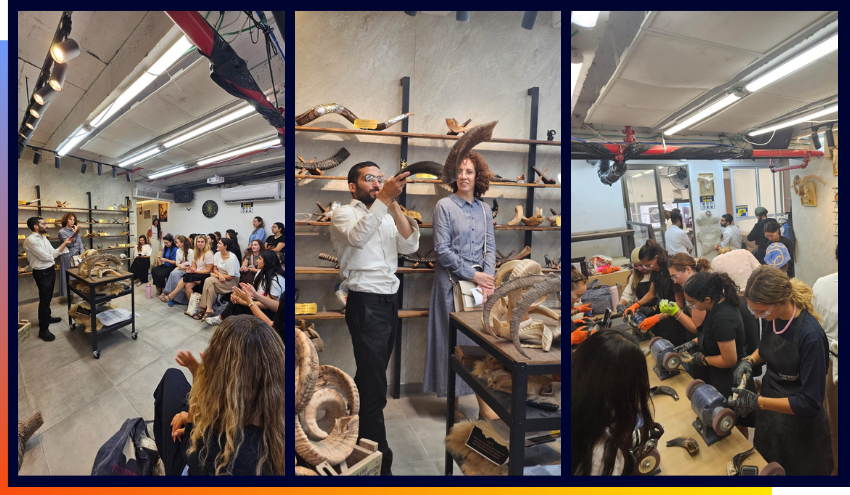
We were created out of love, and our task is to respond with love for Him, for His Torah, for His children, and for the world He entrusted to us. To me, the shofar is a clarion call reminding us to wake up, to remember who we are, to remember what matters, and most importantly, to remember whom we love.
One of the most powerful lessons of September 11 came from the final moments of the victims themselves. People trapped in the towers and aboard the airplanes realized that they might have only minutes left to live.
What did so many of them do?
They called the people they loved. They called husbands and wives, parents and children, and they said, “I love you.”
When everything else was stripped away, that was what mattered.
There is an extraordinary lesson in that. We should never wait to tell the people we love that we love them. We should never assume they know. We should never allow pride, disagreement, a busy schedule, or the million distractions of life to prevent us from saying the words that matter most.
Love should never wait.
That lesson is especially personal for me this Rosh Hashanah because it is the fifth yahrzeit of my father.
My father was a rabbi for close to fifty years, forty-five of those years in Brooklyn. I had the privilege of watching him up close, not simply as my father, but as a communal rabbi and leader.
Whenever there was a minyan in the synagogue, my father would come half an hour early because he wanted to be available. Someone might need to speak to him. Someone might have a question or a problem at home. Someone might need advice. Someone might simply need the rabbi to notice that he had walked through the door.
My father wanted to be there.
Last Shabbat, I had the privilege of spending a wonderful Shabbat in Atlantic Beach. I gave several classes and spent time with a beautiful community. During the weekend, someone who had known my father came over to me and said something incredibly simple.
“Your father was just a great guy.”
I have been thinking about that ever since.
What a beautiful way to be remembered.
My father genuinely loved his congregants. Being a rabbi was not a job for him. It was a labor of love. If you were part of his synagogue, you were part of his family. Nothing was a bother, and if someone needed him, he was there.
He especially loved the young people in the synagogue. He was constantly giving kids jobs and responsibilities, asking them to help with something, take care of something, build something for the shul, or come along with him to do something important.
Looking back, I realize that he was building leaders. He was telling young people, often without ever saying the words, “You matter. I believe in you. You have something to contribute.”
That is leadership.
I speak all the time about the Aish ethos of wisdom, love, and responsibility. My father embodied all three. He did not simply teach those values. He lived them.
Perhaps that is why, as I enter this Rosh Hashanah, I am thinking so much about what we choose to love.
There is so much anger in our world. There is hatred directed at Israel, Jews, and America. There is political hatred, religious hatred, and a culture online that seems to reward us for finding people to despise.
We cannot allow other people’s hatred to teach us how to hate.
Our answer has to be greater love.
Recently, while studying the Kitzur Shulchan Aruch by Rabbi Shlomo Ganzfried, I came across a teaching that struck me deeply. Before a person begins to pray, he should accept upon himself the mitzvah of “V’ahavta l’reacha kamocha,” to love your fellow as yourself.
Think about that. Before I stand before God and ask Him for something, I have to think about whether I love His children.
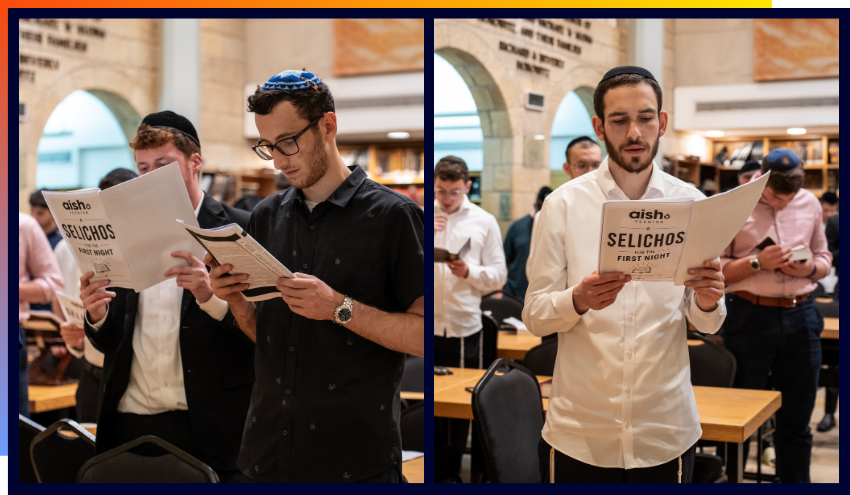
I have actually started pausing before I enter the synagogue and trying to put myself into that frame of mind. Do I love every Jew?
That does not mean I agree with every Jew. Judaism has never demanded uniformity. Open a page of Talmud, and you will find arguments everywhere.
There is another remarkable passage in the Talmud, in Bava Metzia 84a, that teaches us something profound about disagreement. Rabbi Yochanan and Reish Lakish had one of the great intellectual relationships in Jewish history. They challenged each other constantly in their search for truth.
After Reish Lakish died, the rabbis sent Rabbi Elazar ben Pedat to study with Rabbi Yochanan. Every time Rabbi Yochanan made a statement, Rabbi Elazar brought a proof showing that he was correct.
Rabbi Yochanan could not stand it.
He explained that Reish Lakish would challenge him with twenty-four questions, and he would respond with twenty-four answers. Through that process, the Torah became clearer and deeper.
Rabbi Yochanan did not miss someone who agreed with him. He missed the person who challenged him.
That is such a powerful idea. Sometimes love means agreeing, and sometimes love means embracing. Sometimes love means saying, “I think you are wrong, and I respect you enough to tell you why.”
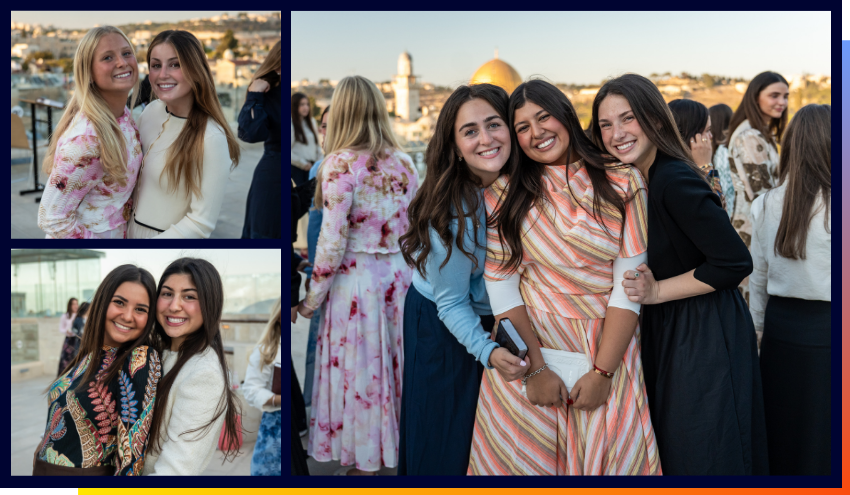
Disagreement is not the opposite of love. Hatred is.
We had a fascinating example of this at Aish when Nas Daily visited us. Nas, whose real name is Nuseir Yassin, is an Israeli Arab and one of the largest social media personalities in the world. He came to Aish to create a story about Judaism and became fascinated by the concept of chavruta, the Jewish tradition of studying Torah with a partner.
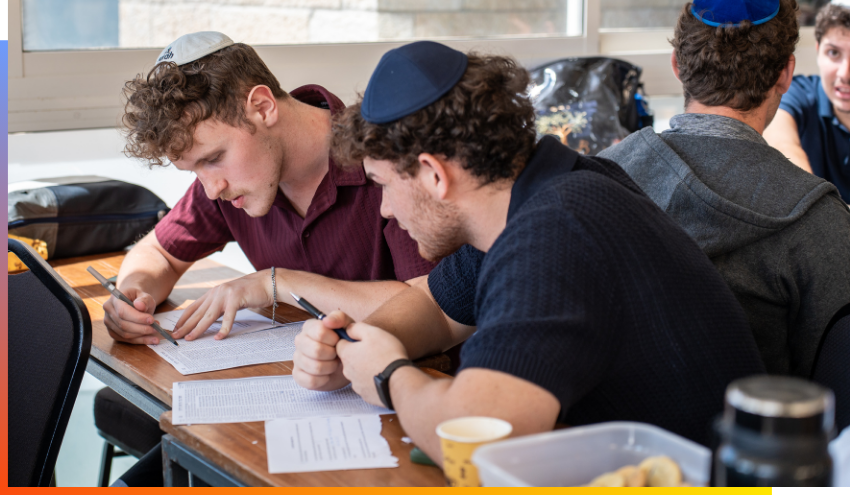
He watched our students learning in the beit midrash, arguing, gesturing, and challenging one another. To someone unfamiliar with a beit midrash, it could look like everyone was fighting. In a sense, they were fighting, but they were fighting to get to the truth.
Nobody hated anybody. They cared about Torah, they cared about truth, and they cared enough about one another to challenge each other.
That is Judaism.
We do not need a world without disagreement. We need a world in which disagreement is surrounded by love.
This weekend, all of these thoughts come together for me. I am remembering September 11 and the innocent people who went to work and never came home. I am thinking about October 7 and the Jewish families whose lives were changed forever. I am thinking about America and Israel. I am thinking about my father and the example he gave me of what it means to love a community. I am thinking about Rosh Hashanah and standing before God to ask for another year of life.
Most of all, I am thinking about what kind of people we want to be in that year.
We cannot control whether other people choose hatred. We can decide what will define us.
Hatred can destroy buildings, murder innocent people, spread lies, and turn the world upside down. It cannot build a family, a community, the Jewish people, or a future.
Only love can do that.
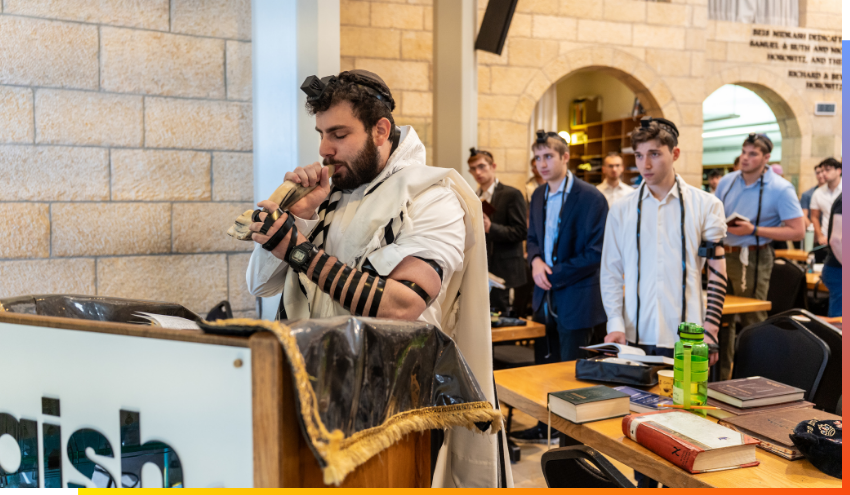
This Rosh Hashanah, I keep returning to those final phone calls from September 11, to the sound of the shofar, and to the example of my father.
Do not wait to say “I love you.” Do not wait to repair a relationship, to call someone, to forgive, or to tell someone that you believe in them. Life is simply too precious, and sometimes too unpredictable, for us to assume there will always be another opportunity.
Love should never wait.
May the sound of the shofar wake us up to what matters most. May God bless all of us with a year of peace, health, happiness, success, meaning, and tremendous love. May He protect the State of Israel, the United States of America, and Jewish communities around the world. May He give us the strength to recognize evil and stand against it without allowing evil to harden our own hearts. May He give us the wisdom to seek truth, the courage to take responsibility, and the capacity to love more deeply.
As I remember my father on his fifth yahrzeit, I pray that I can carry a little more of his love into the world. I pray that I can follow his example by being there for people, believing in them, helping them become greater, and making them feel like family.
That is the legacy I want to carry forward, and that is the kind of year I am praying for all of us.
I love you all very, very much.
Wishing you and your families a Shana Tova U’Metuka, a sweet, healthy, peaceful, joyous, and blessed New Year.