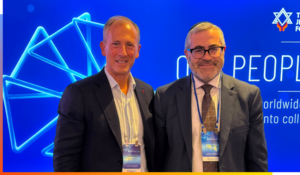
The past few weeks have been filled with joy.
Graduation season is upon us, and few moments are more meaningful for parents. A child is born, grows up, goes to school, and before your eyes becomes a remarkable person. That is why graduations matter so much. They are not simply celebrations of academic achievement. They are celebrations of growth, maturity, and the incredible journey of a young person stepping forward into the next stage of life.
This week, we celebrated two graduations in the Erber Family Gesher programs. On Sunday evening, we held our banquet for the young women. On Monday evening, we celebrated the young men before they returned home. These programs have become an essential part of Aish over the past decade.
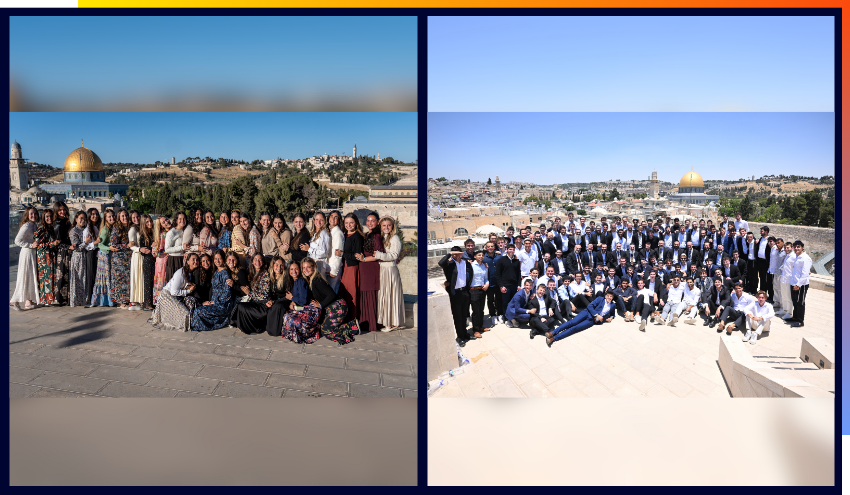
Many of the students come from day school backgrounds, while others arrive from public schools and diverse educational experiences. What unites them is a desire to deepen their connection to Judaism and discover their place within it.
Aish was founded more than fifty years ago to address a challenge facing the Jewish world. Many Jews had little or no Jewish education. They had not learned Torah, halacha, or Jewish philosophy. They were searching for meaning and connection. Rav Noah Weinberg z”tl, built Aish to answer those questions.

Rav Noah wanted every student to understand one fundamental truth: God loves you.
That message can sometimes get lost in a world filled with noise, hardship, and uncertainty. People often direct their frustrations toward the unseen. Rav Noah understood that challenge and addressed it with extraordinary clarity.
I often tell the story of a young man who came to Rav Noah and said, “I can’t believe in an angry, vindictive God.”
Rav Noah smiled and replied, “Neither can I. I also don’t believe in an angry, vindictive God. I believe in a God of love.”
That response transformed the young man’s perspective. Truthfully, it transformed mine as well.
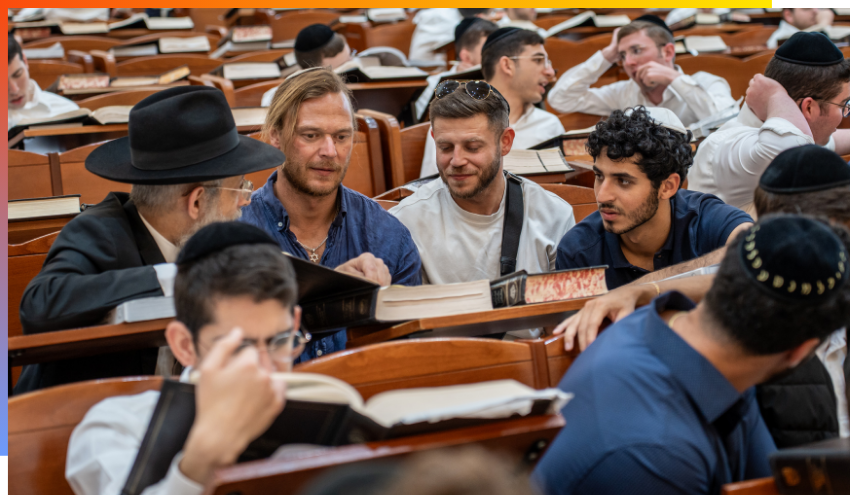
During my years at Aish, one lesson has stood out above all others: at Aish, God is real. God is discussed. God is contemplated. God is part of everyday conversation.
That lesson is just as important today as it was when Aish was founded.
The Orthodox community has done an extraordinary job preserving Torah and mitzvot. Judaism contains immense detail. There are 613 biblical commandments, along with countless rabbinic laws and traditions. Living a Jewish life requires commitment and attention.
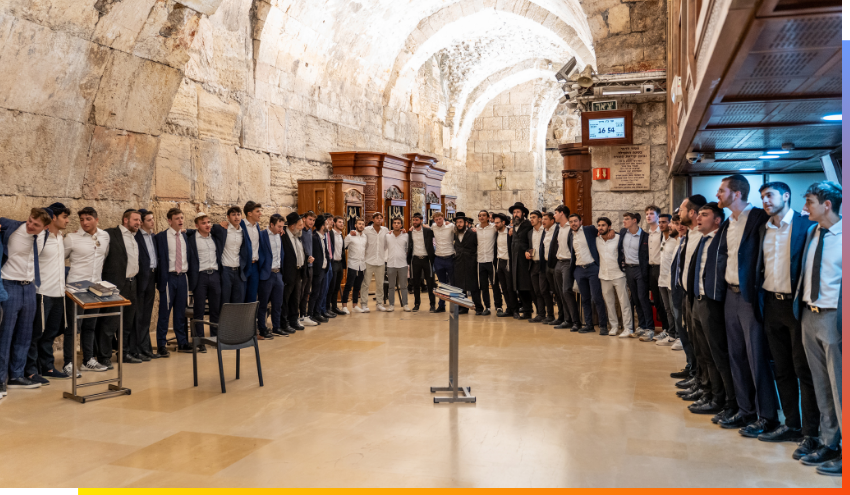
The greatest things in life are often found in the details.
Many people who become frustrated with religious minutiae are perfectly comfortable debating every detail of an NBA Finals game. Entire broadcasts analyze whether a player’s foot touched the line. Multiple referees run up and down the court to ensure every rule is followed correctly.
Rules matter.
At the same time, we must never lose sight of the bigger picture.
Torah and mitzvot are a means to an end. That end is a relationship with God.
If Torah and mitzvot do not bring a person closer to God, something essential is missing.
That message has resonated not only with Jews who grew up without Jewish education, but also with those who grew up immersed in it. Educators from schools around the world have come to Aish to learn how we teach about God so they can bring those ideas back to their own communities.
The Erber Family Gesher programs embody that mission.
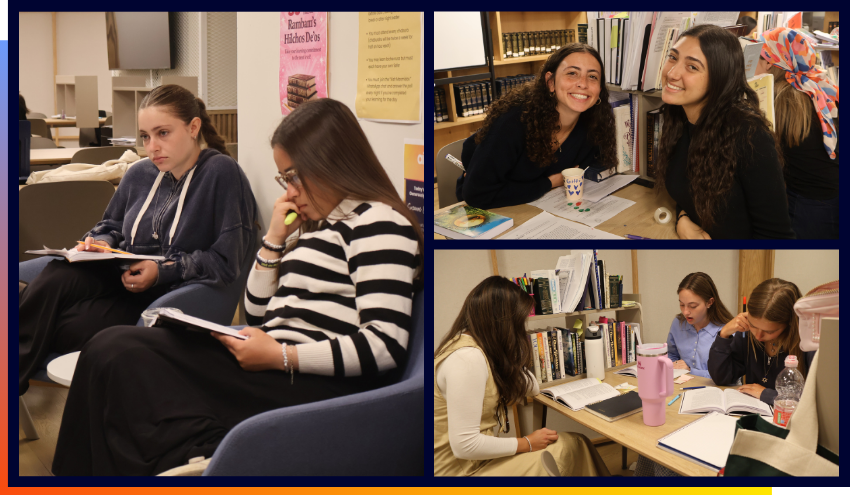
Under the leadership of Rabbi Yitzhak Berkovits, our Rosh Yeshiva, our students learn that belief in God carries responsibility. If God created the world with a purpose, then each of us has a role to play within that purpose.
One of the most powerful Torah ideas I have ever heard was told to me by Rabbi Yitzhak Berkovits.
The first of the Ten Commandments begins, “I am the Lord your God,” and immediately continues, “Who took you out of Egypt.”
The Sefer Mitzvot Katan (Smak), written in the 13th century by Rabbi Yitzchak ben Yosef of Corbeil, is one of the classic works enumerating and explaining the mitzvot in a practical and accessible format, asks a fascinating question. If the commandment is to believe in God, why mention Egypt? The Exodus was a historical event. Why is it included within the commandment itself?
The answer is profound.
The commandment is not merely to believe that God exists. The commandment is to believe that God exists and that He has a plan for the world.
At Aish, that is the message we strive to communicate to every student.
There is a God who loves you.
There is a God who has a plan for the world.
You are part of that plan.
Your task is to discover how you can contribute to it.
At Aish, we often describe our mission through core AISH Values: Wisdom, Love, and Responsibility. Wisdom means seeking God’s truth and understanding His Torah. Love means recognizing the infinite love God has for us and developing that same love for our fellow Jews and all humanity. Responsibility means understanding that each of us has a unique role to play in improving the world around us. These values are not abstract ideals. They are a roadmap for living a meaningful Jewish life. When a young person understands that God loves them, learns His wisdom, and embraces responsibility for His world, extraordinary things become possible.
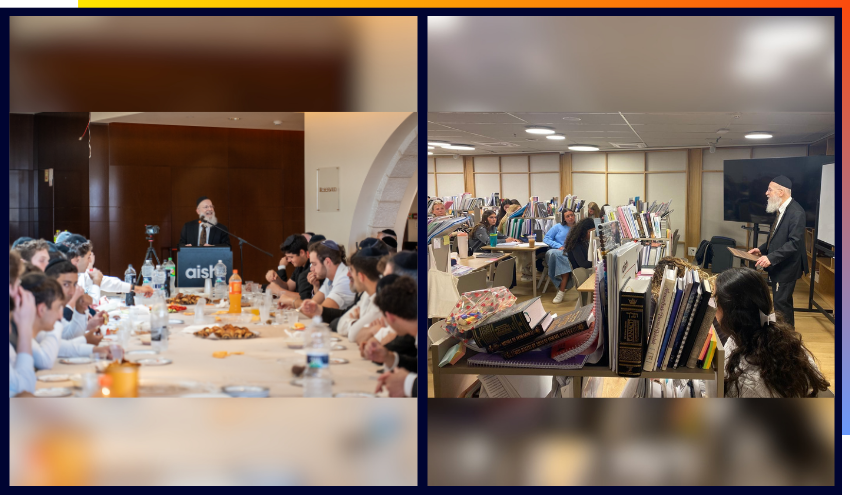
As our newest graduates leave Jerusalem and return home, I have tremendous confidence in them. They are intelligent, thoughtful, passionate young Jews. They will accomplish great things and positively impact countless lives.
While one group graduates, another arrives. This summer, we welcome outstanding college students, leadership participants, and many other programs. Rabbi Elliot Mathias is leading an exceptional leadership initiative, and our campus remains full of energy and activity.
None of this would be possible without the extraordinary work of Rabbi Dovid Rosman, who oversees our educational programming and the Aish Educational Institute. Rabbi Rosman, together with his remarkable staff, guides the educational vision of our yeshiva, seminary, and programs throughout Aish. Their dedication, creativity, and commitment to our students have helped shape another exceptional year of growth and achievement. I am deeply grateful to Rabbi Rosman, EFG Executive Director David Cutler and their entire team for everything they do to inspire and educate the next generation of Jewish leaders.
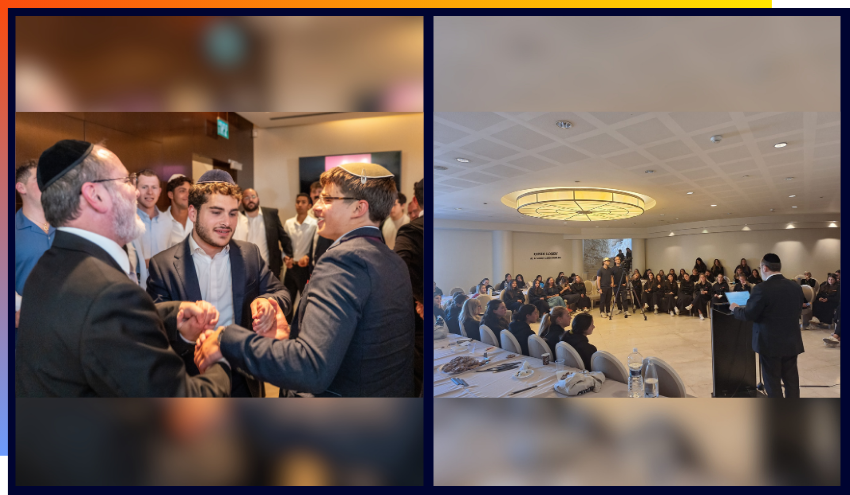
One of the greatest privileges of my role is speaking with students who want to change the world.
Almost every week, students come to me seeking advice about a dream, a project, or an idea.
My answer is often the same.
People will tell you it cannot be done.
Whatever the goal may be, someone will explain why it is impossible.
Rav Noah z”tl famously said that first people tell you it cannot be done. Then they watch you do it. Then they copy it. Finally, they tell everyone it was their idea in the first place.
Nothing made Rav Noah happier.
If someone adopted an Aish idea and spread it further, he considered it a victory. It meant he could move on to solving the next challenge.
Yesterday, I was discussing Aish University and some of the exciting initiatives we are building. During the conversation, someone asked whether I was concerned about people taking our content.
My answer was simple.
I hope they do.
We do not own Torah.
Our mission is not to protect Torah. Our mission is to share Torah.
The more people who spread its wisdom, the better.
As we watch another remarkable group of students graduate, the message remains the same.

God exists.
God loves you.
God has a purpose for the world.
You have a role within that purpose.
Jews are a people of action. We are called upon to improve the world around us. Our responsibility is to leave the world better than we found it.
As summer begins, many of us will travel, spend time with family, and enjoy a change of pace. Along the way, we will meet people searching for meaning, purpose, and hope.
Let us share what we know.
Let us share our belief in God.
Let us share God’s love.
The world remains complicated. Challenges facing Israel and the Jewish people continue to demand our attention and our strength.
Hate can never be allowed to diminish our capacity to love.
Love for God.
Love for our fellow Jews.
Love for humanity.
That is how we fulfill our mission. That is how we honor the Almighty. That is how the Jewish people continue to thrive and flourish.
Am Yisrael Chai.