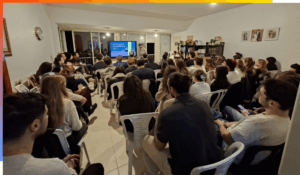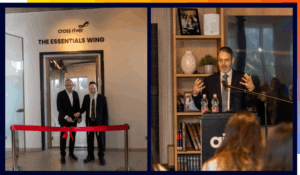
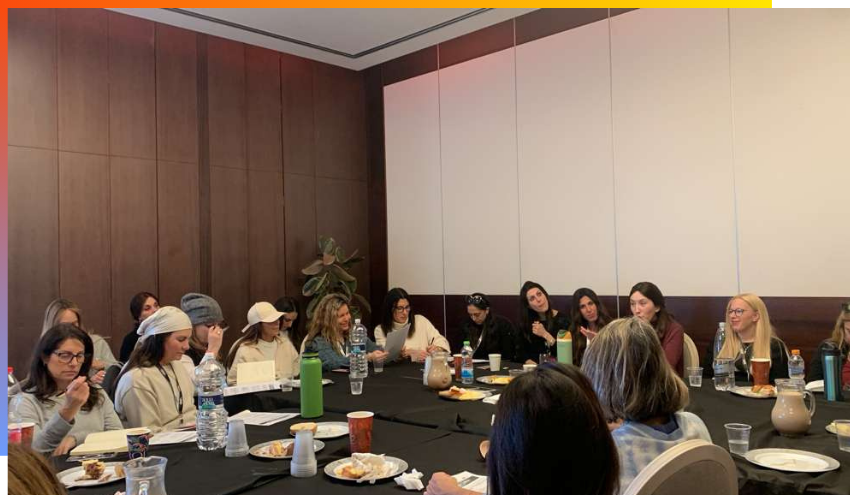
This past week, we experienced one of our most innovative programs and I was blessed to participate in it. The program was Mominary (also known as AISH Ignite). Mominary was created with the understanding that many of our seminary students have mothers who never attended seminary or have not been in a seminary environment for a very long time. We wanted to create a different type of program in Israel that could cater to their needs. Many visitors come for missions that take them around the country to see various sites. Mominary offers something completely different. It was built for women to come from Sunday through Thursday to sit and study, and do it at Aish.
One of the ideas that I believe is critical to understand, and I have said many times, is that the mission of Aish is for every single Jew in the world to study Torah. We believe that Torah study is the pathway to knowing G-d. G-d gave us the Torah as the means to connect with Him. Every Jew needs a place and a set time to grow in Torah study. The best place for that has always been a yeshiva or a seminary, where people come together, exchange ideas, and challenge one another.
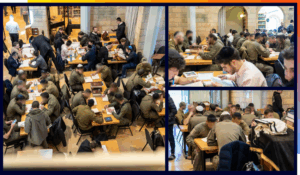
A year and a half ago, we hosted Nas Daily, a fascinating and proud Zionist Arab with a massive online following, who came to Aish to learn and talk about Judaism. He spent time with Rabbi Dov Ber Cohen and various members of our staff. He chose to focus on the concept of a yeshiva and especially the chavrusa model of learning. When a person walks into a university library, they will find silence. When a person enters a Beit Midrash, they will find voices raised in discussion because Judaism has always encouraged questioning and the challenging of ideas. We do not believe in blind faith. Faith must be worked on. Questions must be asked. Aish has always been the place where people find answers. That openness has been the secret of our success.

Ideally, every Jew should spend time in a yeshiva or seminary. We understand that this is not always possible. We are therefore developing additional programs like the Mominary, including future programs for men, that will allow people to come study with a cohort for a week, grow together, and strengthen one another. Local synagogues and schools that offer study opportunities, another program of Aish, Partners in Torah, or even having a regular chavrusa are also ideal. These are the best ways to grow in Torah knowledge, through dialogue, questions, and discussion.
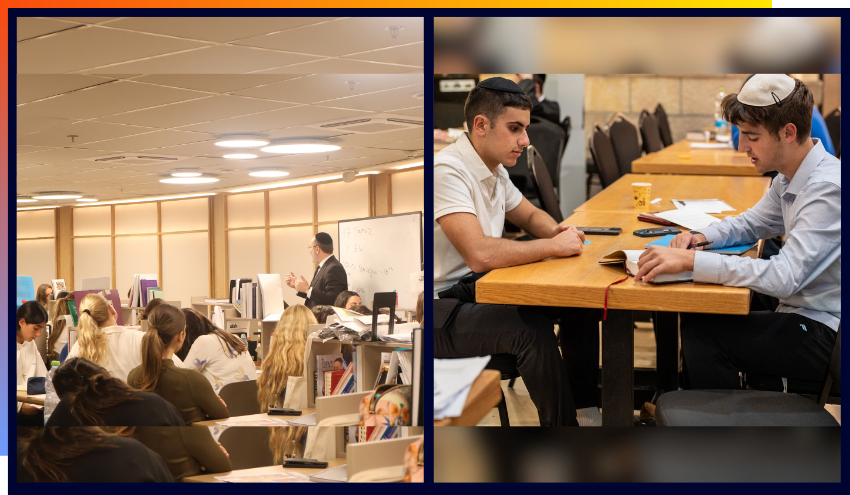
We also know that not every Jew can access these opportunities, which is why we moved online. Our online efforts exist to reach every Jew in the world. It is, essentially, a yeshiva or a seminary without walls. This type of study has been the heart of the Jewish people for two thousand years. Even more importantly, the idea of a yeshiva goes back to the earliest chapters of our history. Our sages teach that long before the giving of the Torah at Sinai, there already existed a place of deep spiritual learning known as the Yeshiva of Shem and Ever. This appears in Midrash Bereishit Rabbah as well as in Rashi’s commentary on Genesis. The Patriarchs learned there. Abraham studied in that environment according to Midrash Aggadah. Isaac continued that path. Jacob immersed himself in years of study there before encountering Esau, as Rashi notes on Genesis chapter twenty-five. The idea of Jews gathering to learn in a formal setting begins at the very dawn of our people.
This tradition continued when the Jewish family traveled to Egypt. The Midrash teaches in Bereishit Rabbah chapter ninety-five that Jacob sent his son Judah ahead of the family to establish a house of Torah learning so the people would have spiritual strength even in exile. The message could not be clearer. Jews cannot survive without a place to learn. Even when entering a foreign land, the priority was to build a center of Torah study because learning has always been the anchor of Jewish identity. We are called the People of the Book only when we study the book together. This is why programs like Mominary matter so deeply. They continue a chain that is thousands of years old. The importance of this was brought home when Mominary dedicated a study session in the merit of Ran Gvili, whose body is the last Jewish hostage being held in Hamas captivity in Gaza. Over Succos, we hosted the Gvili family when the Erber Family donated a sefer Torah in his memory, and it highlights how much Jews are responsible for each other.
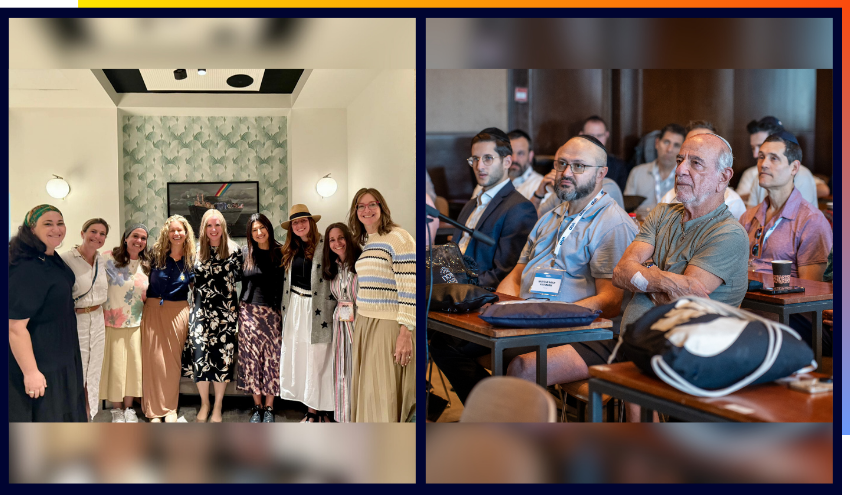
This is why Moiminary is very close to my heart. I had the honor of giving a class to the Mominary cohort on the values of Aish, focusing on wisdom, love, and responsibility. I explained some of the Biblical foundations of these values and why they remain so precious to us. I shared this with our cohort of thirty-two women. The demand was so strong that we already have a waiting list for the next cohort. We will need to expand these programs.
I want to thank our staff, especially Jamie Geller and Rachel Spinner, who worked extensively with the seminary staff. The seminary team, led capably by Mrs. Michal Dubov and, of course, Rabbi Rosman, the director of our educational institutions, put enormous effort into the program. I also want to acknowledge Stephanie Pomerantz and Shari Alter, who, as dynamic Aish partners, had the vision for this program. As well as Seth and Sharon Damski, who have supported its growth. I also want to thank my wife, Rachel Burg, who was deeply involved in shaping the educational content. Mominary reflects the essence of Aish. It represents who we are.

I encourage all of you to take steps in your own Torah growth. Join Aish’s Partners in Torah and find a chavrusa. Attend a local program. If you are in Israel, you can come study at Aish at any time. We offer open Essentials classes every day. You can walk in and learn for free. This is something we take great pride in. It is especially important now, in a post-October 7th world, when forces have tried to define us and to revive antisemitism in horrific ways. We must know who we are. Knowledge of who we are is the foundation of our strength.
I was deeply disturbed to read an article about Sami Steigmann, a Holocaust survivor I met fifteen years ago. He survived Nazi medical experiments as a baby and became one of the most inspiring human beings I have ever met. To hear that a New York City educational administrator banned him from speaking in a school because he was considered too pro-Israel was shocking. We live in a changed world. We must fight this hatred, yet our ability to fight depends on knowing who we are. Our base must be a deep understanding of what it means to be a Jew.
Aish Rosh Yeshiva Rav Yitzchak Berkovits taught us at the beginning of our journey that we need to redefine what it means to be a Jew. Being a Jew is not simply believing in tikkun olam. Being a Jew means being Judaically knowledgeable, knowing Torah, knowing our history, and knowing where we come from. That is the mission of Aish. Mominary is another step toward reaching every Jew with that mission.
I would also like to welcome David Cutler to the Aish team. David has been a friend for many years, and who joins us from NCSY. I had the honor of recruiting him years ago to lead NCSY summer programs, which became the premier summer experience for Jewish teenagers. He succeeded far beyond expectations. His heart has always been with Israel. As of December 1st, David Cutler joined our team as the executive director of the Erber Family Gesher program. He has already reached out to many in our growing movement. Together with Rabbi Meyer May, who serves as our Executive Vice President and has been a wonderful partner in leading Aish, we are building a very strong team. David is someone you should meet. He has spent two decades ensuring that tens of thousands of young people experience Israel, connect to the land, defend the land, and love the land. We are thrilled he is joining us.

All of this reflects the strength of Aish. We are building momentum. The future is bright. Our in-person programs are expanding. Partners in Torah continues to grow. Our online presence and the development of AishU using artificial intelligence are reaching countless Jews who might never walk into a building. We are strong because our people grow, move into the broader Jewish world, and bring our values of wisdom, love, and responsibility with them. We are strong because new leaders join and bring fresh energy to our mission.
I invite all of you to connect with our staff and explore how you can take the next step in your own growth. Aish exists to help build a stronger Jewish tomorrow. Judaism thrives when Jews know who they are. Judaism thrives when Jews learn. Judaism thrives when we move forward together.