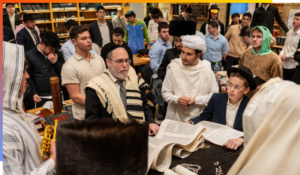
Tonight, Jews across the world will gather around their Seder tables.
Families, friends, strangers who become family for the night. We will open the Haggadah, follow a structure thousands of years old, and tell a story that changed the course of human history.
The Seder is more than a ritual. It is a curriculum.
It is the original curriculum of the Jewish people, a guide created by our sages so that every Jew, no matter their background, can sit down and engage. Hebrew or English. Scholar or beginner. Child or adult. Everyone has a seat. Everyone has a voice.
That idea sits at the very heart of Aish.
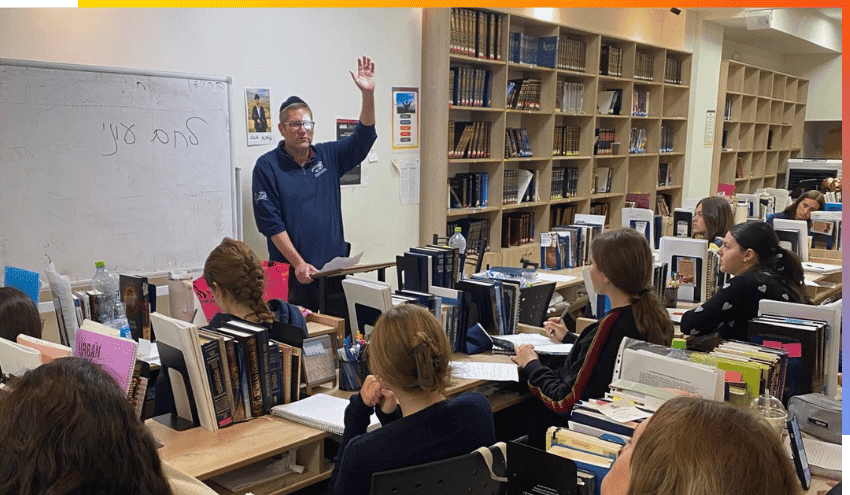
Fifty years ago, Rabbi Noah Weinberg z”tl arrived in the Old City of Jerusalem with a vision. He saw a generation of Jews who did not know Hebrew, who did not have the tools, who felt disconnected. He refused to accept that reality.
He built a different kind of yeshiva.
A place where you did not need to know anything to walk in. A place where questions were welcomed. A place where learning was not reserved for the few but open to everyone.
Then he did something radical.
After just a few weeks, he would turn to students with no background and say, “Now it’s your turn to teach.”
They were stunned. Nervous. Unsure.
Then they did it.
Those same students went on to become leaders, teachers, and rabbis. Many have told me that this moment changed their lives. When you teach, you do not just learn. You own it. You internalize it. You become part of the chain that goes all the way back to Sinai.
That is who we are.
From the moment Moses brought down the Ten Commandments, we became a nation of teachers. A nation that carries wisdom, ethics, and responsibility to the world.
The Seder is where that identity comes alive.
I remember hearing about Jews in Soviet gulags who risked everything just to mark Pesach. They had nothing, yet they held onto the idea of freedom. That story sustained them.
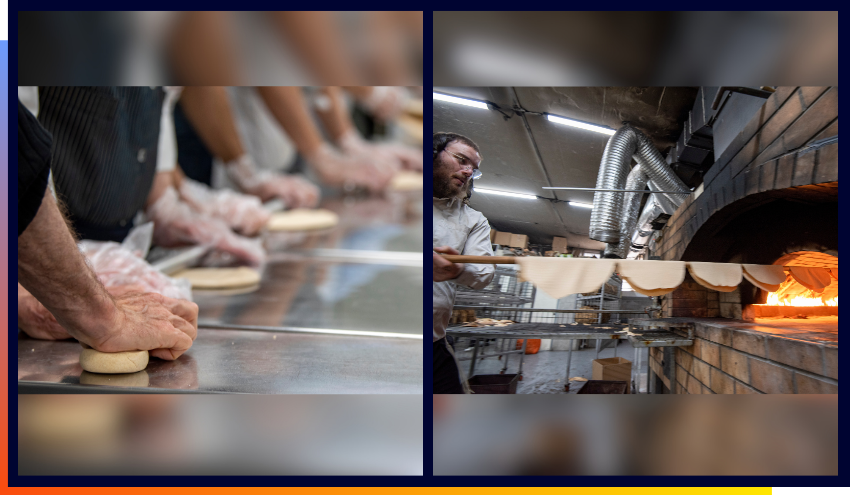
There are also countless stories from the Holocaust. Jews, under the most brutal conditions imaginable, would risk their lives to bake even a small piece of matzah, to whisper the words of the Haggadah, to hold onto Pesach in any way they could. Surrounded by one of the most evil forces in history, they still chose to remember freedom.
That memory of freedom carried them. It gave them strength to endure, to survive, and for some, to rebuild.
In our own time, many of the hostages that were held by Hamas held on to whatever they could of Pesach even in the most inhumane conditions imaginable. Former hostage Agam Berger revealed that she and fellow captives marked Passover in Gaza by creating makeshift Haggadahs from paper scraps, cleaning their dark, confined space, and eating their own “bread of affliction” (corn flour pitas). Held in tunnels and apartments, they maintained faith and honored the holiday as best they could despite severe conditions.
The message of Pesach is not theoretical. It is the story of a people who stood up to tyranny, who faced Pharaoh, a ruler willing to murder Jewish children, and who walked out of Egypt and out of slavery into freedom with God guiding them.
That idea transformed the world.
Today, there are still nations crying out for that same freedom. The people of Iran suffer under a regime that brutalizes its own citizens. Lebanon struggles under the grip of Hezbollah. Across the globe, people yearn for dignity, for liberty, for hope.
Israel stands for that freedom, no matter how it is portrayed.
We should be proud. Proud of who we are. Proud of what we have given the world. Proud that Jews have always sought not only to survive, but to elevate humanity.
I recently said in an interview that Jews have disproportionately won Nobel Prizes. That is not an accident. It reflects something deeper. We do not create to benefit ourselves alone. We build to improve the world.
That is in our DNA.
We are meant to be a light unto the nations.
Pesach reminds us that this mission depends on freedom. Only a free people can bring light, build, and lead.
This is why Pesach is, in many ways, the holiday of Aish.
Tonight is about wisdom. About asking questions. About learning deeply.
It is about love. About sitting together, connecting, sharing, and caring for one another.
It is about responsibility. About understanding that our story is not just for us. It is meant to shape the world.
I encourage you to visit Aish.com and explore the incredible resources that can elevate your Seder.
More importantly, when you say “Next year in Jerusalem,” mean it.
Not someday. This coming year.
Come to Jerusalem. Come to the Old City. Walk into Aish. Sit in a class. Be part of something timeless and transformative.
We are living through challenging times. There is uncertainty. There is pain. Yet we have been here before.
We will come out stronger.
God believes in us. He believes in every one of you. His love for you is greater than anything we can imagine.
If we embrace wisdom, live with love, and take responsibility for our role in the world, there is no limit to what we can accomplish.
Wishing you and your family a beautiful Pesach.